texto
Why Cathodic Protection Systems Stop Working: 7 Problems Operators Should Know
Corrosión y protección catódica
Ingeniería
 Ingeniería Dreiym

Según una estudie, the cost of corrosion to companies worldwide may be as high as 2.5 trillion dollars. This cost covers aspects such as replacement costs and damages to products and the environment caused by corroding pipes and other structures. On buried metal, that’s the kind of loss deep groundbed cathodic protection is meant to stop.
Por ello, las empresas de distintos sectores llevan mucho tiempo buscando una forma de evitar la corrosión. Aunque los metales no corrosivos y los revestimientos anticorrosión siguen siendo una opción popular, otra gran opción para el metal subterráneo son los sistemas de lecho profundo. Qué son y por qué importan es el tema que vamos a tratar.
¿Necesita que se diseñe o repare un lecho de puesta a tierra?
We design and troubleshoot deep anode groundbeds and full cathodic protection systems in Texas and Colorado. The designs are PE-stamped and sized to the soil at your site.
Para entender los sistemas de electrodos de puesta a tierra profundos, es necesario comprender protección catódica y cómo puede proteger contra la corrosión. La protección catódica consiste en aplicar una pequeña corriente eléctrica a una superficie de acero, convirtiendo dicha superficie en un cátodo o electrodo cargado negativamente.
El La tubería también está conectada a otro metal. superficie llamada ánodo, una superficie con carga positiva. Este sistema protege el cátodo de la erosión mientras que la mayoría de los efectos se transfieren al ánodo.
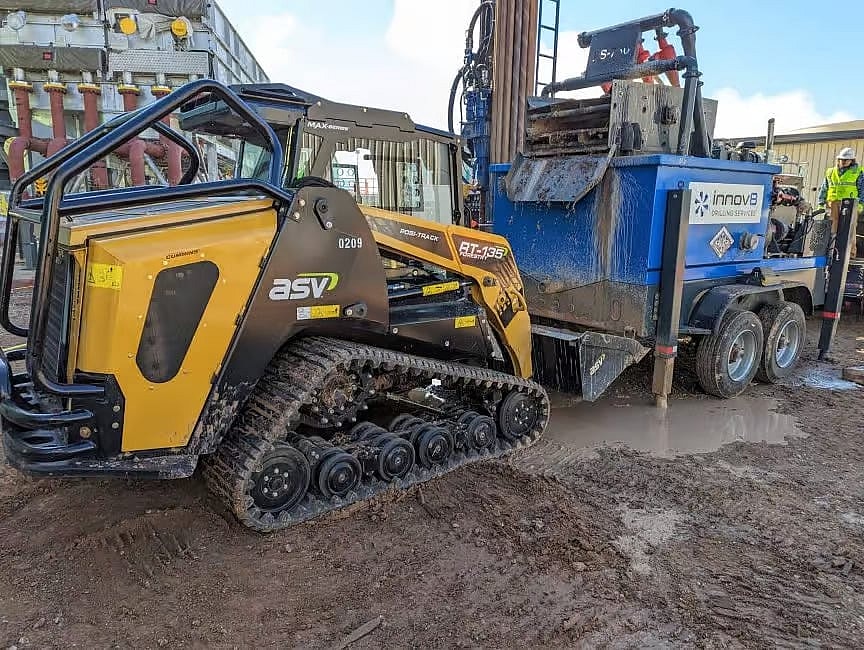
En algunas circunstancias, enterrar simplemente los ánodos en el suelo no funcionará. Por ejemplo, en zonas donde el suelo de un sistema no es muy conductor, puede afectar a la eficacia de un protección catódica sistema. Por eso, en algunos casos, las empresas instalan en su lugar un sistema de lecho de tierra.
Un sistema de lecho de tierra coloca el ánodo y otros componentes importantes en lo que se llama un "ánodo de pozo profundo". Este pozo permite colocar el ánodo a mayor profundidad en una carcasa rodeada de un relleno de carbono llamado lecho de coque.
Catódico los sistemas de protección detienen la corrosión before it starts, helping mitigate the costly effects. A properly designed system that’s monitored and kept within its acceptance criteria can arrest external corrosion for the life of the asset. There’s no single number for how many years that adds. It depends on how corrosive the soil is, what shape the coating is in, and how well the system is maintained. Shallow and distributed groundbeds keep the anodes near the surface. A deep anode groundbed (the subject of AMPP/NACE SP0572) puts the active part of the anode well below grade, typically at least 15 m (50 ft). The point of going that deep is to reach lower-resistivity strata and improve current distribution. The extra depth also cuts interference with foreign structures nearby. A deep groundbed system specifically allows companies to benefit from cathodic protection in a wider range of conditions.
The groundbed is the anode assembly that sends protective current into the soil. Some people write groundbed cathodic protection and some write cathodic protection groundbed, but they mean the same thing. What changes from one system to the next is where that assembly sits.
Whether a site gets a deep anode groundbed or one of the near-surface types is a design decision. It depends on the soil resistivity at depth, the coating condition, how much current the structure needs, and what else is buried nearby.
Understanding what groundbed systems are and why they matter is the first step toward benefiting from them. The next is to contact the professionals at Dreiym Engineering. We provide diseño de protección catódica, including groundbed systems, to help protect your company’s infrastructure.
¿Tienes algún proyecto en el que podamos ayudar?
Nuestros ingenieros profesionales con licencia brindan servicios de consultoría eléctrica, de corrosión y forense en todo el país. Cuéntenos qué necesita y normalmente le responderemos en un día hábil.
Póngase en contacto con Dreiym Engineering Llame al (866) 621-6920