Proven Arc Flash Labeling: What You Need To Know
Learn what NFPA 70E requires on arc flash labels, how incident energy is calculated under IEEE 1584, and when to update your arc flash study.
Contents
- What is an arc flash?
- How hot can an arc flash get?
- What is the blast force of an arc flash?
- What is the risk to a human from an arc flash?
- What are calorie limits and why are they important?
- How to label electrical equipment for arc flash hazards?
- How to Calculate Arc Flash Hazards?
- What if an arc flash injury has already occurred?
What is an arc flash?
An arc flash is a sudden release of electrical energy that occurs when a fault or short circuit causes an arc between two conductors or a conductor and a ground. An arc flash can generate intense heat, light, sound, and pressure that can harm anyone nearby.
How hot can an arc flash get?
An arc flash can reach temperatures of up to 35,000 degrees Fahrenheit, which is hotter than the surface of the sun. This extreme heat can ignite clothing, melt metal, and cause severe burns to the skin and eyes.
The heat from an arc flash can pose a serious risk to a human, even if they are not directly exposed to the arc. The radiant heat can cause second- or third-degree burns to any exposed skin within several feet of the arc. The heat can also ignite flammable materials, such as clothing, hair, or paper, and cause more severe injuries. The intense heat can also damage the respiratory system and cause inhalation injuries, especially if there is smoke or toxic gases present. Therefore, it is essential to wear appropriate personal protective equipment (PPE) and avoid working near energized electrical equipment whenever possible.
What is the blast force of an arc flash?
An arc flash can also create a powerful blast wave that can knock workers off their feet, hurl objects across the room, and damage equipment and structures. Neither NFPA 70E nor IEEE 1584 gives a way to calculate arc blast pressure, no consensus method exists for it, and NFPA 70E notes that its PPE requirements do not address injuries from the blast itself. The most-cited estimate, Ralph Lee’s “Pressures Developed by Arcs” (IEEE Transactions on Industry Applications, 1987), predicts an impulse of roughly 11.5 x I(kA) / d(ft)^0.9 in pounds per square foot, on the order of 150 to 300 lb/ft2, or about 1 to 2 psi, a few feet from a 25 to 40 kA arc. Spread over the chest and face that is still several hundred pounds of force, enough to throw a worker off a ladder. Closer to the arc, or at higher currents, the pressure climbs toward the roughly 5 psi at which eardrums begin to rupture.
What is the risk to a human from an arc flash?
An arc flash can cause serious injuries and fatalities to workers who are exposed to it. The effects of an arc flash can include:
- Thermal burns: The intense heat from an arc flash can cause deep and painful burns that can damage the skin, muscles, nerves, and organs. Burns can also lead to infections, scarring, and disfigurement.
- Eye injuries: The bright light from an arc flash can cause temporary or permanent blindness, as well as damage to the retina, cornea, and lens. Eye injuries can also impair vision, cause sensitivity to light, and increase the risk of cataracts and glaucoma.
- Hearing loss: The loud noise from an arc flash can rupture the eardrums, damage the inner ear, and cause temporary or permanent hearing loss. Hearing loss can also affect balance, communication, and quality of life.
- Respiratory problems: The smoke and gases from an arc flash can irritate the lungs, throat, and nose, and cause coughing, wheezing, shortness of breath, and asthma. Some of the gases, such as carbon monoxide, can also be toxic and cause poisoning, brain damage, and death.
- Cardiac arrest: An electric shock, which can accompany an arc flash when the worker touches energized parts or is in the arc’s current path, can stop the heart, cause an irregular heartbeat, and damage the heart muscle. Cardiac arrest can also result in brain damage, coma, and death.
- Psychological trauma: The experience of an arc flash can cause post-traumatic stress disorder (PTSD), anxiety, depression, and flashbacks. Psychological trauma can also affect memory, concentration, sleep, and relationships.
- Lung collapse: Very close to a large arc, the pressure wave can compress the air in the lungs and cause them to rupture or collapse. It takes far more pressure to injure the lungs than to rupture eardrums, so this is rare. This condition is known as pneumothorax. Lung collapse can cause severe breathing difficulties, chest pain, low blood pressure, and cyanosis (bluish skin). Lung collapse can also be life-threatening and require emergency treatment with a chest tube or surgery.
What are calorie limits and why are they important?
In arc flash work, a calorie limit is a level of incident energy: the heat energy that reaches a surface at a given distance from the arc, expressed in calories per square centimeter (cal/cm2). The one that matters most, 1.2 cal/cm2, is the incident energy at which the onset of a second-degree burn on bare skin is expected. A second-degree burn is a burn that damages the outer and inner layers of the skin, causing blisters, pain, and swelling.
Calorie limits are important because they answer two separate questions for each piece of equipment: how far from the arc a worker needs arc flash protection, and how much protection the worker needs inside that distance. The first is the arc flash boundary (older editions of NFPA 70E called it the flash protection boundary); the second is the arc rating of the clothing and PPE.
Incident energy falls off rapidly with distance from the arc source, so the arc flash boundary is simply the distance at which it has dropped to 1.2 cal/cm2. The more energy an arc at a given piece of equipment can deliver, the farther out that boundary extends and the higher the arc rating required of anyone working inside it.
For a screening number at one piece of equipment, our arc flash calculator estimates the incident energy and the arc flash boundary with the IEEE 1584-2018 model. A label still needs the values from a full study.
The 1.2 cal/cm2 limit comes from the National Fire Protection Association (NFPA) 70E standard for electrical safety in the workplace, which defines the arc flash boundary as the distance at which the incident energy is 1.2 cal/cm2. Where an arc flash hazard exists, 130.5(G) and Table 130.5(G) require that the arc-rated clothing and PPE system selected have an arc rating equal to or greater than the available incident energy at the worker’s working distance, so equipment with 20 cal/cm2 of available incident energy requires at least a 20 cal/cm2 system, not 1.2 cal/cm2.
How to label electrical equipment for arc flash hazards?
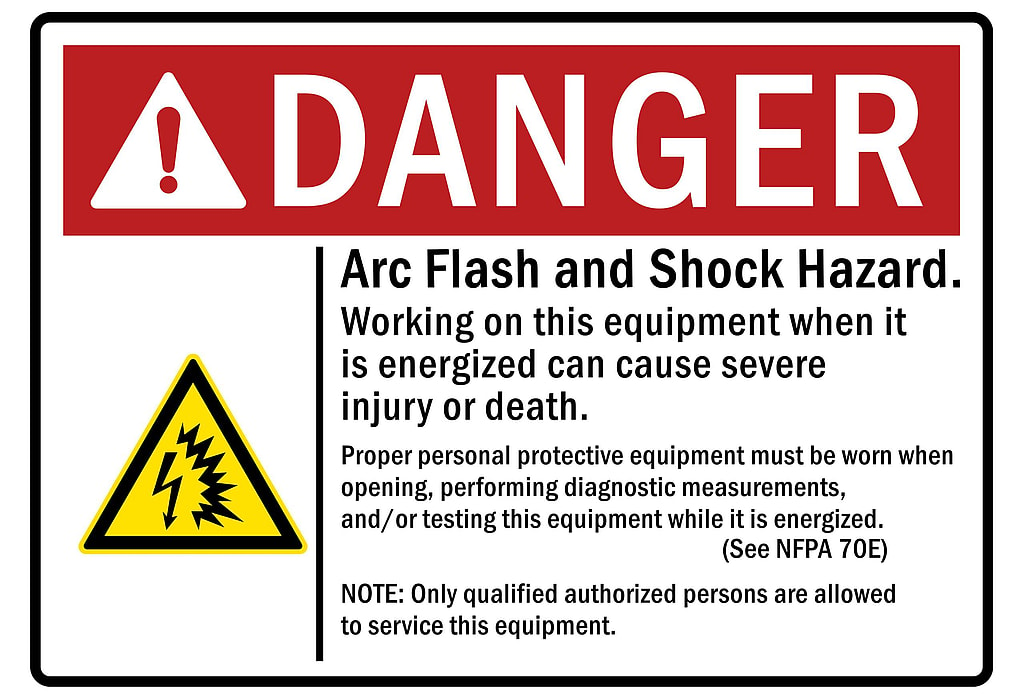
Labeling electrical equipment with information about the arc flash hazard and the required level of protection is one of the simplest ways to reduce arc flash injuries, though the safest choice is still to de-energize the equipment and establish an electrically safe work condition before working on it. Labeling electrical equipment can help workers identify the potential risks, follow the safe work practices, and wear the appropriate PPE.
NFPA 70E sets the arc flash labeling requirements in 130.5(H). The label must include all of the following:
- Nominal system voltage
- Arc flash boundary
- At least one of the following:
- The available incident energy and the corresponding working distance, or the arc flash PPE category for the equipment, but not both
- The minimum arc rating of clothing
- The site-specific level of PPE
The values on the label come from the arc flash risk assessment NFPA 70E requires, made either by an incident energy analysis (an arc flash study, usually to IEEE 1584) or by the arc flash PPE category method, never both on the same equipment. The study software can print labels from its results, but a screening calculator or a rule of thumb cannot stand in for that assessment, and an incident energy result may not be turned into a PPE category. The method and the data behind each label must be documented. Arc flash labels can also be customized with additional information, such as date, location, and warning signs.
NFPA 70E requires the label on electrical equipment, other than in dwelling units, that is likely to require examination, adjustment, servicing, or maintenance while energized, such as switchboards, panelboards, industrial control panels, meter socket enclosures, and motor control centers. The equipment owner is responsible for documenting, installing, and maintaining the label. The data behind it must be reviewed at intervals of no more than 5 years, and the label updated whenever a change makes it inaccurate. Labels should be clearly visible and durable.
How to Calculate Arc Flash Hazards?
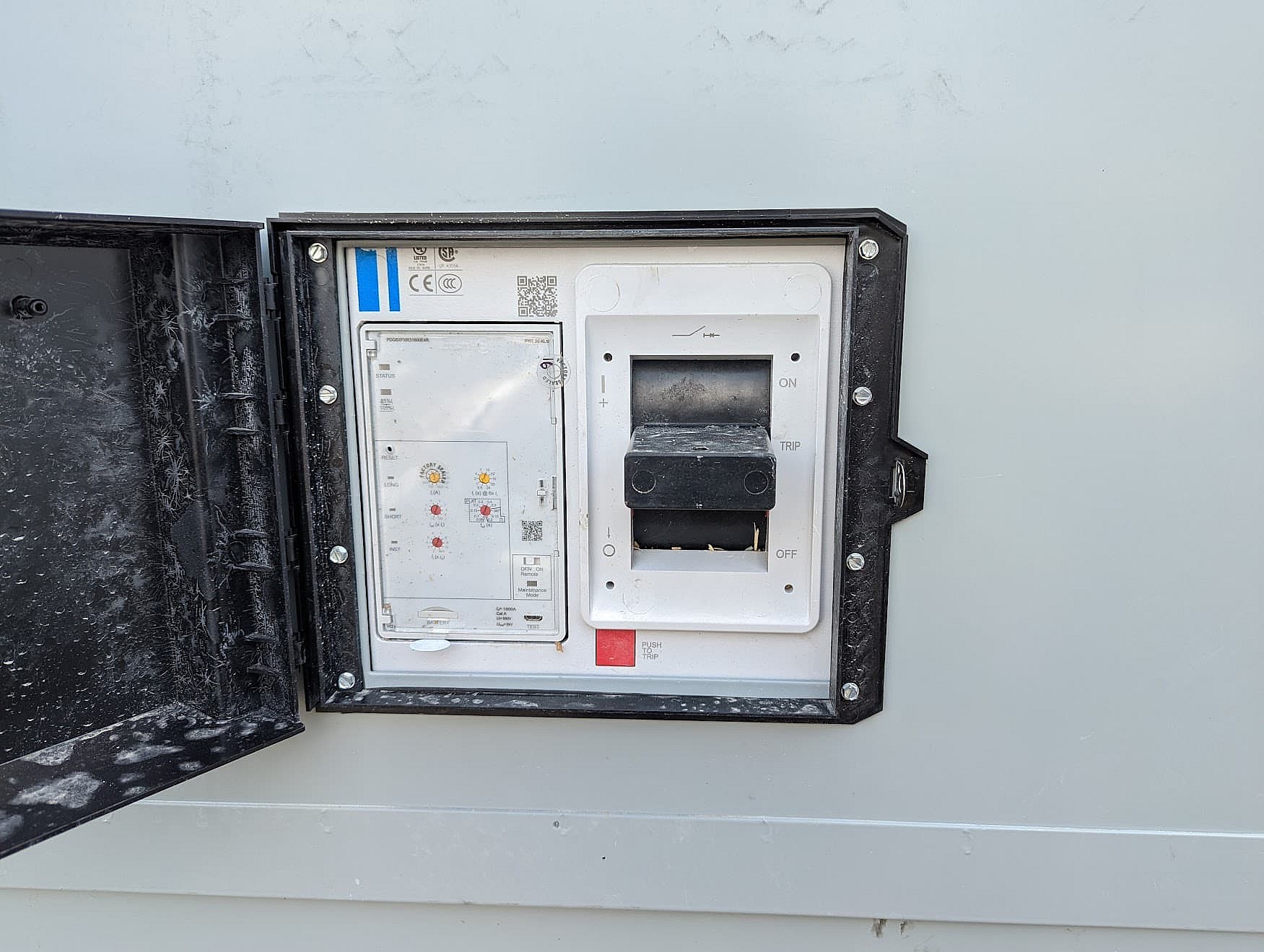
To perform an engineering calculation using ETAP or SKM, the following information needs to be collected in the field:
The type, model, and rating of the electrical equipment and the circuit breakers
The length, size, and material of the conductors
The type and location of the transformers and their impedance values
The source voltage and fault current at the service entrance
The load characteristics and power factor of the connected devices
Using this information, the software can model the electrical system and calculate the incident energy at the working distance and the arc flash boundary for each piece of equipment. The software can also generate arc flash labels based on the calculated values.
The requirement to set proper coordination of the circuit breakers is to ensure that the protective devices operate selectively and isolate only the faulty part of the system while maintaining the continuity of service to the rest of the system. Coordination of the circuit breakers can be achieved by adjusting their trip settings, such as long-time, short-time, instantaneous, and ground-fault, according to their time-current curves.
The goal of reducing arc flash times by capturing the arc fault in the instantaneous trip region of the nearest circuit breaker is to minimize the exposure of the workers and the equipment to the hazardous effects of the arc flash, such as high temperature, pressure, sound, and light. Capturing the arc fault in the instantaneous trip region means that the circuit breaker will clear the fault as fast as possible without any intentional delay, thus reducing the duration and magnitude of the arc flash. This can be done by setting the instantaneous pickup of the circuit breaker below the lowest expected arcing current at the equipment; IEEE 1584 calculates a reduced arcing current for this check, because the arcing current is lower than the bolted fault current and varies from one event to the next.
The other method NFPA 70E allows is the arc flash PPE category method. Table 130.7(C)(15)(a) (ac) and Table 130.7(C)(15)(b) (dc) give a PPE category and an arc flash boundary for listed types of electrical equipment, each within stated limits of available fault current, fault clearing time, and working distance. The tables do not calculate incident energy, and they may be used only when all of these conditions hold:
The equipment matches one of the equipment types listed in the table.
The equipment and its protective devices are properly installed and maintained according to the manufacturer’s specifications and industry standards, since a poorly maintained device may not clear the fault within the row’s time.
The available fault current at the equipment is known and does not exceed the row’s maximum.
The fault clearing time of the upstream protective device is known and does not exceed the row’s maximum.
The work is done at no less than the row’s working distance.
For example, the row for 600 V class switchgear allows up to 35 kA and up to 0.5 sec (30 cycles) at an 18 in. working distance, and the row for metal-clad switchgear rated 1 kV through 15 kV allows up to 35 kA and up to 0.24 sec (15 cycles) at 36 in.
If any of these conditions is not met, or any of the values is unknown, the tables cannot be used and an incident energy analysis is required, usually with the methods described in the IEEE 1584 standard. The IEEE 1584 standard provides equations and models to calculate the incident energy and arc flash boundary for different types of equipment, taking into account various factors such as the gap between conductors, the enclosure size, the working distance, and the electrode configuration.
The calculation methods in IEEE 1584 are more accurate and flexible than the tables in NFPA 70E, but they also require more data and expertise to perform. Therefore, it is recommended to use a qualified professional electrical engineer to conduct the arc flash analysis and to verify the results using appropriate software tools.
It is also important to note that both the tables and the calculations are based on assumptions and approximations that may not reflect the actual conditions of the electrical system at the time of an arc flash event. Therefore, NFPA 70E requires the arc flash risk assessment to be reviewed at intervals of no more than 5 years and updated when a major modification or renovation takes place; changes in the system configuration, the utility source, or protection settings are common reasons to update it. The 2018 edition of the IEEE 1584 standard incorporated new research and data on arc flash phenomena and provides revised equations and models to improve the accuracy and validity of the arc flash calculations. It is advisable to use the most current methods and standards to ensure the safety of the workers and the equipment from the arc flash hazards.
What if an arc flash injury has already occurred?
Despite taking all the necessary precautions and following the standards, there is still a possibility of an arc flash incident occurring due to unforeseen or unavoidable circumstances. In such cases, it is essential to act quickly and effectively to minimize the damage and injuries caused by the arc flash. The following steps should be taken if an arc flash injury has already occurred:
Notify the appropriate authorities and personnel about the incident and cooperate with the investigation and reporting process. Follow the established procedures and protocols for reporting and documenting arc flash incidents in your workplace.
Contact Dreiym Engineering as soon as possible for an expert electrical engineer to evaluate the cause and consequences of the arc flash incident, and to provide recommendations and solutions to prevent similar incidents from happening again. Dreiym Engineering is more than just a provider of arc flash analysis and consulting services. They are your trusted partner in ensuring the safety and reliability of your electrical system. With their team of qualified and experienced engineers, they can help you identify and eliminate the potential hazards and risks in your electrical system and provide you with the best practices and solutions to comply with the standards and regulations. Whether you need a comprehensive arc flash study, a detailed incident energy analysis, a customized training program, a forensic analysis of an arc flash event, or a reliable arc flash mitigation system, Dreiym Engineering can deliver the results you need.