Consulting Areas
Arc Flash Study Services
An arc flash study calculates the incident energy an arcing fault could release at each piece of electrical equipment and how far the arc flash boundary reaches. Our licensed PEs collect the field data, model the system in ETAP® or SKM, calculate to IEEE 1584-2018 and print the NFPA 70E® labels.
We typically respond within one business day.
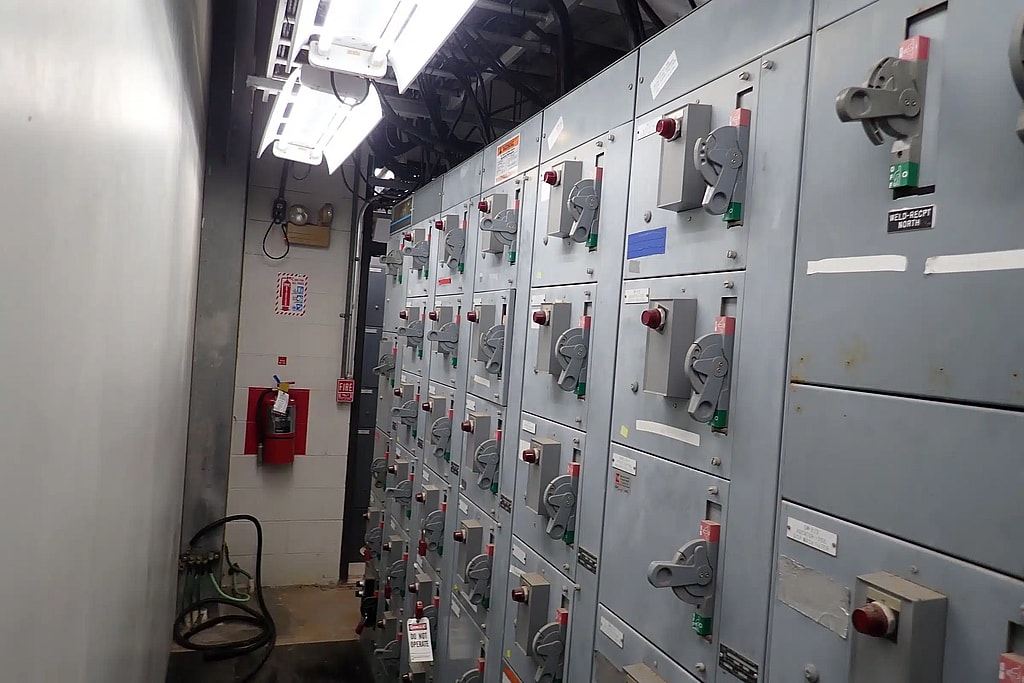
Sample study
Explore a sample arc flash study
Select a bus on the sample one-line to see its label, the inputs behind its incident energy and the device that clears the arc. The values are illustrative and are not from a real study.
Illustrative Sample system, not from a real study.
FLASH PROTECTION
SHOCK PROTECTION
Hover over, tap or tab to any line of the label to see what it means.
Inputs behind the incident energy
- Equipment class
- Low-voltage switchgear
- Electrode configuration
- VCB, vertical conductors in a box
- Conductor gap
- 32 mm
- Enclosure (H × W × D)
- 20 × 20 × 20 in
- Working distance
- 24 in
- Bolted fault current
- 42.1 kA
- Arcing current
- 27.6 kA
- Cleared by
- Main breaker 3000 A, 0.5 s short-time delay
- Clearing time
- 0.50 s
- Incident energy
- 46.2 cal/cm²
- Arc flash boundary
- 205 in
IEEE 1584-2018 turns these inputs into the arcing current, then the incident energy at the working distance. It also checks a reduced arcing current, which can take longer to clear, and the study uses the worse result.
Off: the main breaker waits out its short-time delay, so an arc at MSB lasts long enough to push the label to DANGER.
On: the main breaker trips without its delay while people work, so an arc at MSB clears far sooner and the incident energy drops sharply. The label and the work procedure must say which setting they assume.
What a real study delivers
- A report stating the method (IEEE 1584-2018 and NFPA 70E), the assumptions and the operating scenarios studied, PE-stamped where required
- Incident energy and arc flash boundary at every bus, at maximum and minimum fault current, with the minimum PPE arc rating
- Available fault current at every bus, checked against each device’s interrupting rating
- Time-current curves for the protective devices, including medium-voltage relay settings
- A list of high-energy equipment, with options for lowering incident energy taken from the same model
- Arc flash labels, printed and installed or shipped to you, and an updated one-line diagram
All buses as a table
| Bus | Voltage | Bolted fault, kA | Arcing current, kA | Clearing time, s | Incident energy, cal/cm² | Arc flash boundary, in | Label |
|---|---|---|---|---|---|---|---|
| Utility primary | 12.47 kV | 10.8 | 10.0 | 0.21 | 6.8 | 70 | WARNING |
| MSB | 480 V | 42.1 | 27.6 | 0.50 | 46.2 | 205 | DANGER |
| MCC-1 | 480 V | 31.6 | 23.0 | 0.050 | 4.1 | 40 | WARNING |
| MCC-2 | 480 V | 24.3 | 18.4 | 0.32 | 17.9 | 104 | WARNING |
| LP-1 | 208 V | 5.9 | 2.6 | 0.025 | 0.6 | 9 | WARNING |
| MSB, maintenance mode on | 480 V | 42.1 | 27.6 | 0.05 | 4.9 | 48 | WARNING |
What Is an Arc Flash Study, and When Do You Need One?
An arc flash study, also called an arc flash analysis or arc flash hazard analysis, calculates how much heat an arcing fault could deliver to a worker at each piece of equipment (the The heat an arc flash could deliver to a worker’s face and chest at the working distance, in calories per square centimeter (cal/cm²). Arc-rated clothing and face protection must be rated at or above it.See the glossary) and how far away protection is needed (the The distance from a possible arc at which the incident energy falls to 1.2 cal/cm², about where a second-degree burn to bare skin can begin. Anyone closer needs arc-rated PPE (NFPA 70E).See the glossary). Most facilities use it to meet the arc flash risk assessment requirement in NFPA 70E, Standard for Electrical Safety in the Workplace, 2024 editionThe consensus standard US employers use to protect workers from shock and arc flash. It covers the electrical safety program, risk assessments, approach boundaries, choosing PPE, and when equipment must be put in an electrically safe work condition.Plain-language summary, not the standard’s wording.See the glossary, and it puts the numbers electricians need for PPE on the equipment label.
Our arc flash study services are led by licensed Professional Engineers, and we work for industrial and commercial facilities and for utilities. When you call, you talk to an engineer. Ask for a free quote. We typically respond within one business day.
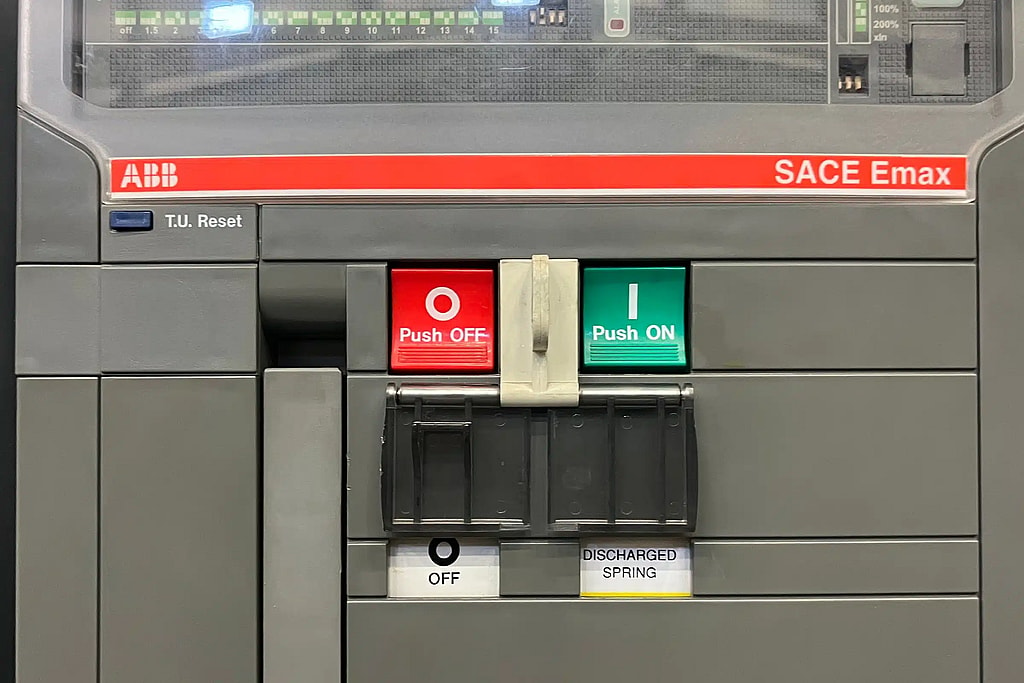
An arc flash is an electrical explosion that can burn or kill a worker and destroy equipment. No single rule uses the words “arc flash study,” but three sources together require you to know this hazard and control it.
When an arc flash study is required
- OSHA requires a PPE hazard assessment and suitable electrical protective equipment (29 CFR 1910.132(d) and 1910.335).
- NFPA 70E 130.5 requires an arc flash risk assessment before work where the hazard exists.
- The NEC requires arc flash warning labels (110.16) on equipment likely to be worked on energized.
You need a study when equipment falls outside the NFPA 70E table limits, when fault current or The time from the start of a fault until a protective device has fully interrupted it: the relay or trip unit’s operating time plus the breaker’s opening time. A longer clearing time lets an arc deliver more incident energy.See the glossary aren’t known, when your labels can’t be traced to a calculation, or when an insurer or client asks for one.
How often to update it
NFPA 70E requires a review at least every five years, and an update whenever a change could affect the results: new transformers or switchgear, breaker or setting changes, a utility change, added generation, or a study still based on IEEE 1584-2002.
New to arc flash? Our arc flash guide puts our articles, calculators and services in the order to read them.
What’s Included in Our Arc Flash Study
A detailed site walkdown
We check your one-line against what’s installed and record transformer, cable and protective device data down to trip settings. The walkdown can also turn up equipment malfunctions, abnormal current paths and ground faults.
One model, in ETAP or SKM
We build one system model in ETAP or SKM and run the short circuit, coordination and arc flash calculations on it, so the results agree.
Protective device coordination
We review time-current curves, including medium-voltage relay settings. The clearing times set here feed the arc flash calculation.
Short circuit analysis
We calculate available fault current at every bus and check it against each device’s interrupting rating.
Incident energy and report
Incident energy and arc flash boundary at every bus to IEEE 1584-2018, IEEE Guide for Performing Arc-Flash Hazard CalculationsThe calculation method behind most arc flash studies. The 2018 edition replaced the 2002 model with one based on many more arc tests. It covers three-phase AC systems from 208 V to 15 kV and accounts for how the conductors are arranged in the enclosure.Plain-language summary, not the standard’s wording.See the glossary, at maximum and minimum fault current, in a report reviewed by a licensed PE.
Arc flash labels, installed
NFPA 70E labels for each piece of equipment. We print and install them, or ship them to you on request. Training on IEEE 1584-2018 and NFPA 70E is available.
What You Receive from an Arc Flash Study
- A report stating the method (IEEE 1584-2018 and NFPA 70E), assumptions and the operating scenarios studied
- Incident energy and arc flash boundary for each bus, with the minimum PPE arc rating
- A list of high-energy equipment, and of any equipment applied beyond its The highest fault current a breaker or fuse can safely interrupt at its rated voltage, marked in kA or as AIC (amperes interrupting capacity). NEC 110.9 requires it to be at least the fault current available where the device is installed.See the glossary
- Options for lowering incident energy, taken from the same model
- Arc flash labels and an updated one-line diagram
We also study DC systems (battery, UPS and PV) and systems above 15 kV. Our free arc flash calculator (IEEE 1584-2018) gives a quick screening estimate ahead of a study. Don’t use its numbers for labels or PPE.
What Drives the Cost of an Arc Flash Study
We don’t publish a price list, because two facilities of the same size can need very different amounts of work. Pricing is on request, and these factors drive it:
- Number of buses and labeled equipment. This is the biggest driver.
- Field data collection. How much nameplate, cable and protective device data has to be gathered on site, and how much is already on record.
- Available utility data. The model starts from the fault current and protective device data the utility provides for your service. Current, complete utility data means fewer assumptions to check.
- Condition of your drawings. Accurate one-lines shorten field work. Without them, we build the one-line from scratch (see facility walkdowns and as-built drawings).
- Field access. Outages for cover removal, the number and spread of sites, and night or weekend work.
- System complexity. Medium-voltage gear, generators, multiple utility feeds and tie breakers all add scenarios to model.
- An existing model. Updating an accurate study costs less than starting over.
- Labeling scope. The number of labels, and whether we print and install them or ship them to you.
- Added scope. Setting changes, mitigation design, NEC 240.87 evaluations, label installation and training.
The schedule usually depends on outage windows, site access, and how fast the utility returns its fault current data.
Send your one-line diagrams, even old ones, and the number of sites, and we will reply with a free quote.
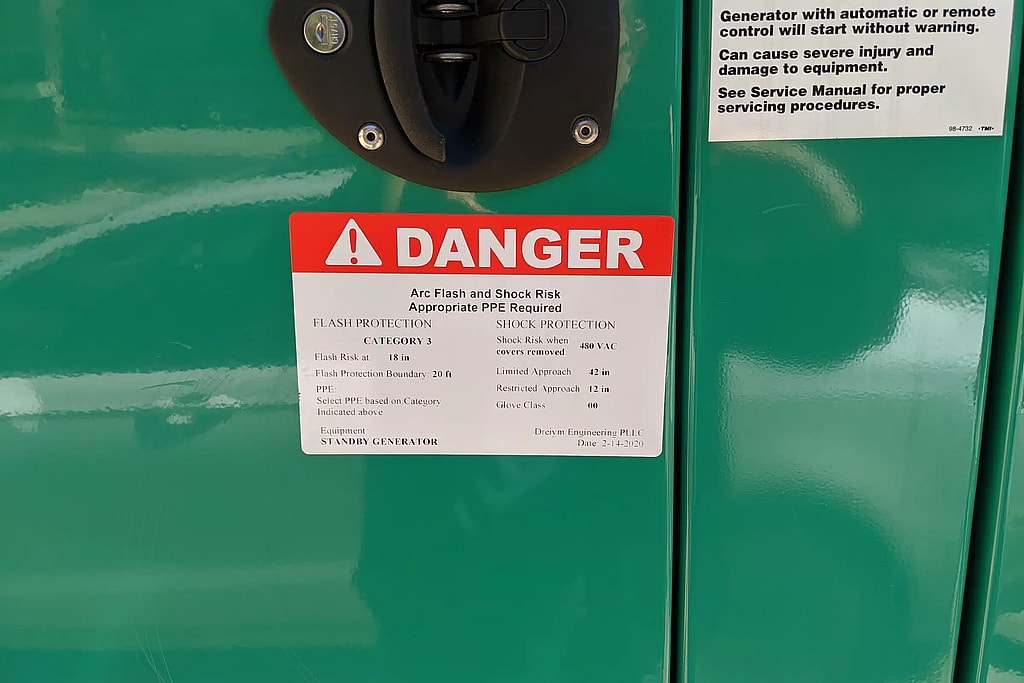
Choosing an arc flash study firm
When you compare arc flash study companies, ask each one the same questions:
- Will a licensed Professional Engineer lead the study and seal it where your jurisdiction, insurer or company policy requires?
- Will engineers collect the field data on site, or will the model rely on old drawings?
- Is the model built to IEEE 1584-2018 in ETAP or SKM, and does the same model serve the short circuit and coordination studies?
- Will the labels meet NFPA 70E and NEC 110.16, and who prints and installs them?
- Does the report state the method, the assumptions and the operating scenarios, and list the high-energy equipment with ways to reduce the hazard?
- Will the firm review the study at least every five years, and sooner when the system changes, as NFPA 70E requires?
Here is how we answer those questions.
Who performs your study
Brian J. Brackensick, M.S., P.E. leads our arc flash studies. Brian is a principal member of the NFPA 70E technical committee. Ruben A. Rodriguez, Field Engineer II, collects the field data, builds the power system model and installs the arc flash labels. Licensed Professional Engineers are in charge of the walkdown and the report, which is PE-stamped where required.
Our engineers are licensed Professional Engineers with active and past licensure in multiple states. Dreiym Engineering PLLC was founded in 2014, our team has over 30 years of combined experience, and we’re a registered Texas engineering firm (F-16324). Our memberships include IEEE, NFPA, AMPP, IAAI and ISNetworld.
Since 2018 we’ve run a standing program of arc flash and protection coordination studies for industrial facilities around Greater Houston, and we restudy each one whenever the system changes. Read about the Houston arc flash program.
Other recent studies include a large Galveston campus studied in three phases and four plants in four states.
Getting a study started
- Call (866) 621-6920 or use the contact form. You’ll reach an engineer.
- Tell us what you have: one-line diagrams (even old ones), any previous study, the number of sites and your target date.
- We send a free quote and a scoped proposal. Nothing starts until you approve it, and our rate schedule is available on request.
From our offices in Coldspring, Texas, and Westcliffe, Colorado, we serve Texas, Colorado and the surrounding states, and we take on arc flash studies nationwide. Request your free quote. We typically respond within one business day.
Before the study
Build a data request for your study
Arc flash, short circuit and coordination studies start from the same system data. Tick what applies, then print the list for whoever gathers it. Anything you cannot find, we can collect on site.
Frequently asked questions
What is an arc flash study?
An arc flash study is an engineering analysis that calculates the incident energy and arc flash boundary at each piece of electrical equipment, usually to IEEE 1584. It tells workers the hazard and the PPE required before they work on that equipment energized.
When is an arc flash study required?
You need one whenever the NFPA 70E arc flash risk assessment can’t rely on its PPE tables. That’s the case when equipment is outside the table limits, when fault current or clearing times are unknown, or when you want incident energy values on your labels.
How often are arc flash studies required?
NFPA 70E requires a review at least every five years. It also requires an update whenever a change could affect the results, such as new equipment, breaker or setting changes, utility changes or added generation.
Is an arc flash study required by OSHA?
OSHA’s rules don’t name an arc flash study. They do require a hazard assessment and suitable protective equipment (29 CFR 1910.132(d) and 1910.335), and the General Duty Clause covers recognized hazards. OSHA can point to NFPA 70E, which requires the arc flash risk assessment a study provides.
Does an arc flash study need a PE stamp?
Neither OSHA nor NFPA 70E specifically requires one, but state law, your authority having jurisdiction, or insurer or company policy may. Our studies are PE-stamped where required.
How much does an arc flash study cost?
Cost depends mostly on the number of buses in scope, then on drawing condition, field access, system complexity and whether an existing model can be updated. We give a free quote and a scoped proposal before any work starts.
NFPA 70E PPE Tables
For basic installations, the PPE category tables in NFPA 70E can be enough. They apply only when the equipment matches a table row and its fault current, clearing time and The distance from a possible arc to the worker’s face and chest, where incident energy is calculated. IEEE 1584-2018 gives typical values from 18 inches for panelboards and motor control centers to 36 inches for medium-voltage switchgear.See the glossary are known and within that row’s limits. Use either the tables or an incident energy analysis on a piece of equipment, never both. Contact us to find out which method fits your facility.
Incident Energy Calculations
An engineering study is required for equipment that falls outside the limits of the NFPA 70E tables.
Because it uses your actual fault current and clearing times, a calculated result is often less conservative than the tables while still safe. Where the tables fall short, the calculation still gives your electricians a number they can work from.
Free Arc Flash Study Quote
Get a free quote for your arc flash study.
Send us your one-line diagrams, even old ones. We typically respond within one business day.
Related Reading
- The Different Arc Flash PPE Categories Explained
Understand the four NFPA 70E arc flash PPE categories, the minimum arc rating for each (4 to 40 cal/cm2), and the gear workers must wear at every level.
- Information That Should Be On an Arc Flash Study Report
Know what an arc flash study report should include (methodology, equipment ratings, worst-case incident energy, and labels) before you hire a consultant.
- Proven Arc Flash Labeling: What You Need To Know
Arc flash labeling under NFPA 70E: what labels must show, how incident energy is calculated under IEEE 1584, and when to update your study.
- Ways to Reduce Arc Flash Incidents
Reduce arc flash incidents by lowering fault current, training workers, and maintaining equipment, then verify safety with a professional arc flash study.
Related Services
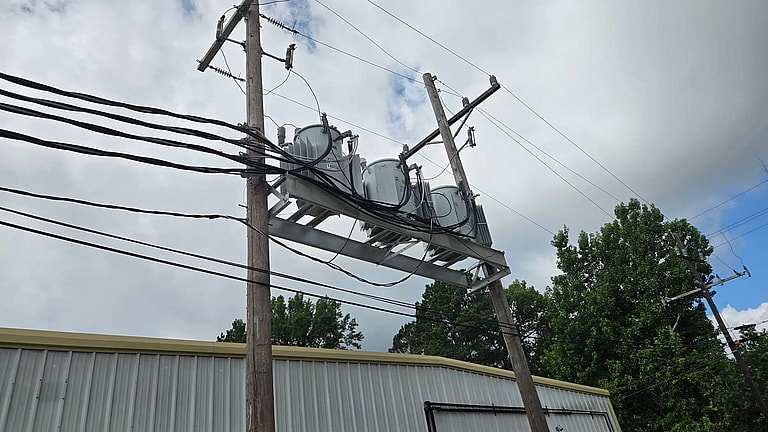
Short Circuit Analysis
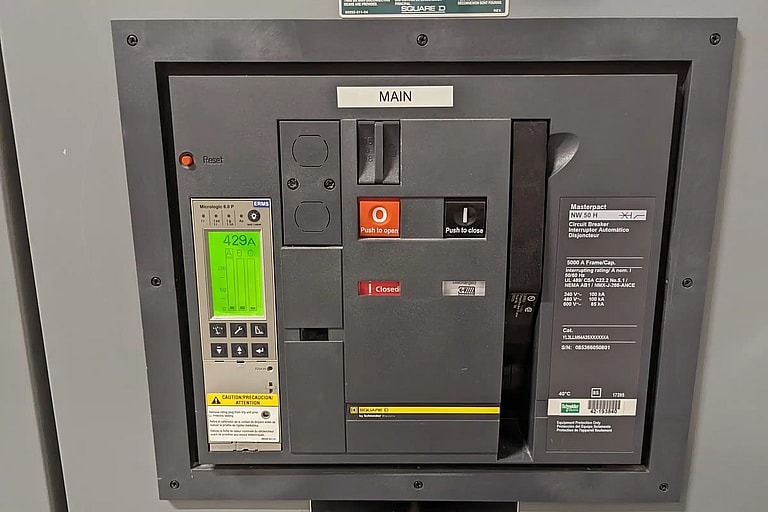
Available fault current, and whether your equipment is rated to interrupt it.
Electrical Coordination
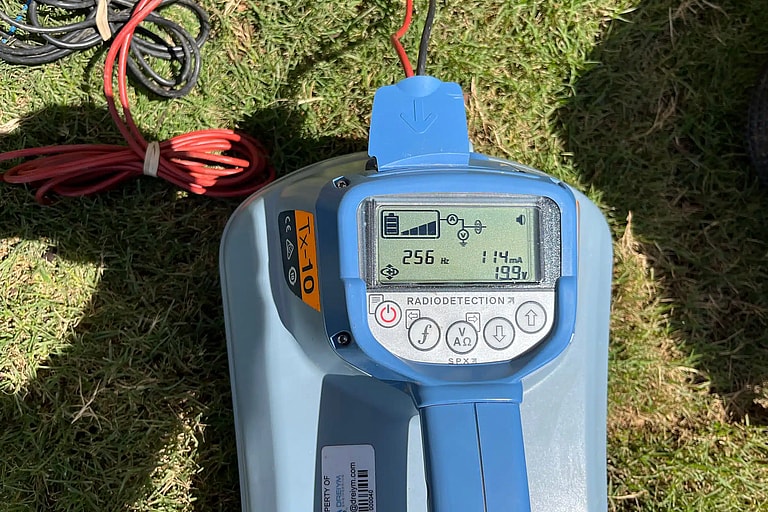
Breaker, fuse and relay settings so the device nearest a fault clears it first.
Facility Walkdowns
Facility walkdowns and as-built drawings that match what’s installed.
Project experience
Related projects
Austin, Houston and Pasadena, TX
Arc Flash Studies for Offices, Laboratories and a Grid Control Room
Arc flash, small facilities
Hattiesburg, MS, plus AZ, WA and TX
Arc Flash Studies for Four Plants in Four States
Arc flash, labels
Humble, TX
Five-Year Arc Flash Updates at an Oilfield Equipment Plant, Humble
Arc flash, coordination
Dripping Springs, TX
Arc Flash Study for a School Building Addition, Dripping Springs
Arc flash, coordination
Pflugerville, TX
Arc Flash Study at a Truss and Wall Panel Plant, Pflugerville
Arc flash, coordination
Houston, TX
Arc Flash Study and Five-Year Update at a Technology Campus, Houston
Arc flash, coordination
We also teach NFPA 70E and IEEE 1584-2018 to electricians and engineers, built around the labels from your own arc flash study. Electrical safety training →
Get your project started
We typically respond within one business day.