Consulting Areas
Cathodic Protection Services
We typically respond within one business day.
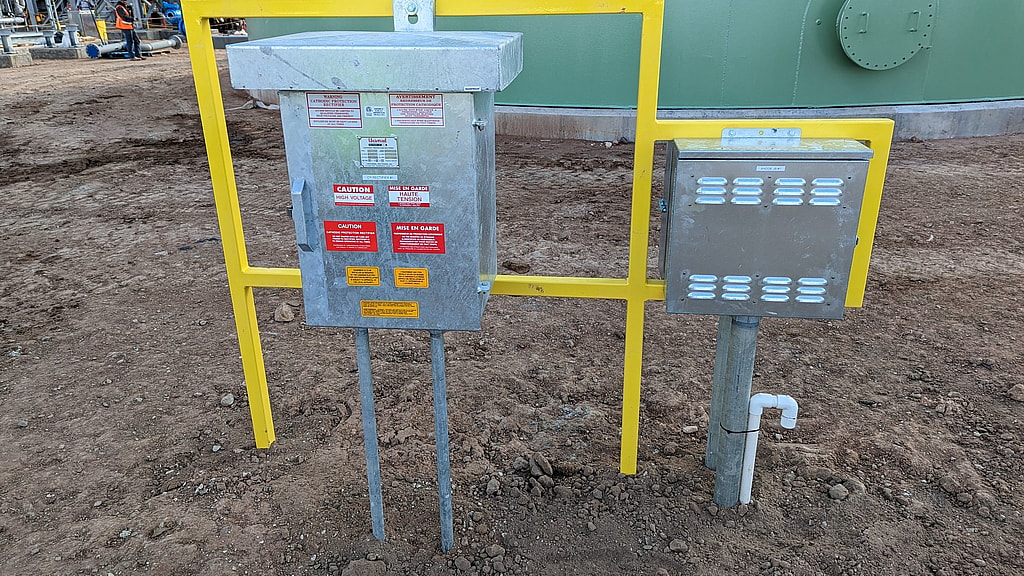
Cathodic Protection Services: Design, Installation and Testing
Cathodic protection (CP) stops external corrosion on buried and submerged steel by supplying a small, steady direct current that makes the structure the cathode of a controlled electrochemical cell, so the anode corrodes and the structure does not. It is the standard corrosion control for pipelines, underground storage tanks, water mains, tank bottoms and marine structures, and on regulated pipelines and USTs it comes with a fixed testing calendar.
Our cathodic protection services cover the whole life of a system: soil testing and design before construction, commissioning when it is built, and the surveys, rectifier inspections and interference testing that keep it in compliance for as long as it operates.
Dreiym Engineering designs, installs, tests, troubleshoots and commissions CP systems under licensed Professional Engineers, with the work PE-stamped where required. Many companies can take readings; fewer can stamp a repair design when the readings fail. We can, and we can install the repair, so a failed survey doesn’t become a second procurement.
New to cathodic protection? Our cathodic protection guide puts our articles, calculators and services in the order to read them.
Tell us what you want protected or tested, and where. Contact us for a free quote and a scoped proposal before any work begins. We typically respond within one business day.
Internal Corrosion: What External CP Can't Stop

Sweet Corrosion (CO2 Corrosion)
When CO2 dissolves in water it forms carbonic acid, which attacks steel from the inside of pipelines and vessels. This is sweet corrosion, and it commonly shows up as:
- Pitting-type corrosion
- Mesa attack corrosion
External CP doesn’t reach the inside of the pipe, so we address sweet corrosion through our internal-corrosion services.

Sour Corrosion (H2S Corrosion)
When hydrogen sulfide (H2S) dissolves in water it forms an acid and a source of hydrogen that attacks steel, leaving iron sulfides behind. This is sour corrosion, and it can cause:
- Uniform corrosion
- Pitting
- Stepwise cracking
It works from the inside of the pipe, so it is part of our internal-corrosion work, not CP.

Oxygen Corrosion
Dissolved oxygen reacts with steel quickly, and even small concentrations in water or drilling fluids keep corrosion going. Oxygen also makes CO2 and H2S corrosion worse. The usual forms are:
- Uniform corrosion
- Pitting-type corrosion
Oxygen corrosion inside a line or vessel is covered by our internal-corrosion services.

Microbiologically Influenced Corrosion
Microbiologically influenced corrosion (MIC) is driven by bacteria. Their by-products include CO2, H2S and organic acids, and the black deposits they leave can hide pitting underneath. We evaluate MIC inside lines as part of our internal-corrosion services. On the soil side, our soil corrosivity analysis includes a test for bacteria.
Cathodic Protection Services We Provide
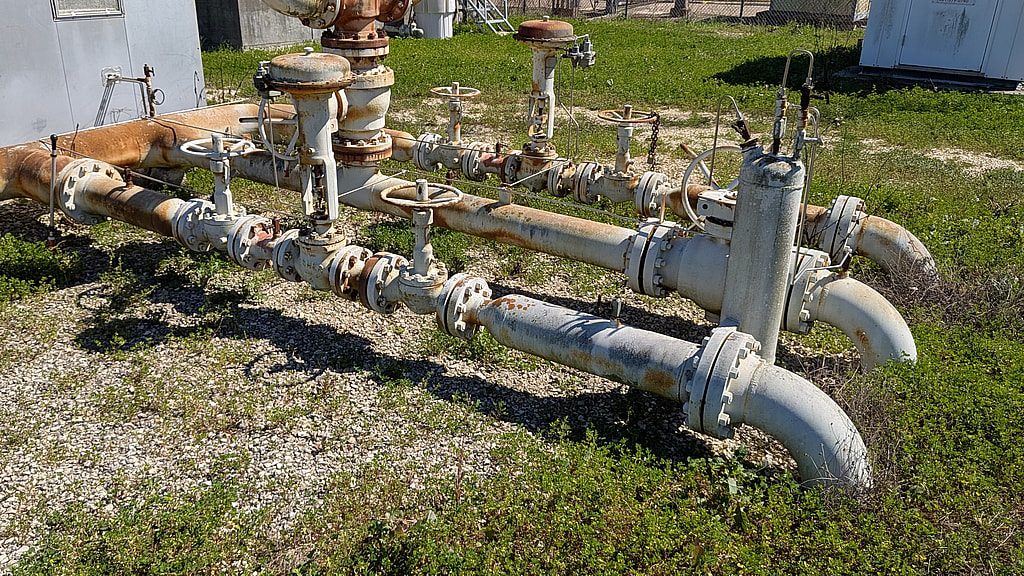
Cathodic protection is the core of our corrosion engineering practice. We design it, install it, test it and keep it working.
Design and engineering
- Cathodic protection design: galvanic and impressed current systems for pipelines, tanks, water systems, plants and marine structures, PE-stamped where required. Unless otherwise specified, we design galvanic systems for a 20-year life and impressed current systems for 30 years.
- Deep groundbed systems where surface soils are too resistive for a conventional anode bed.
- Soil corrosivity analysis: field resistivity plus lab pH, moisture, chlorides, sulfates and bacteria.
- Repair and retrofit designs, and remote monitoring design so system data reaches you between site visits.
Testing and surveys
- Cathodic protection potential surveys, annual and regulatory, checked against your acceptance criteria
- Close-interval surveys (CIS) to find gaps between test stations
- DCVG and ACVG surveys to locate and grade coating defects
- Direct assessment, depth of cover, current attenuation (ACCA) and pipeline locating
- Rectifier inspection routes and troubleshooting
Interference and AC mitigation
- Interference testing: shorted casings, foreign lines, rail transit, electrical isolation and collocated power lines
- AC interference testing and mitigation where lines share corridors with transmission lines or electrified rail
Installation, start-up and commissioning
- We install CP systems, or observe the work when your own contractor installs them.
- Start-up and commissioning: submittal review, continuity checks before backfill, then energizing, adjusting and recording baseline data.
Integrity and compliance programs
- Pipeline and tank integrity assessment: remaining strength and the high-risk areas to address first
- Municipal gas cathodic protection: the annual survey, rectifier rounds and any repair design for a town-owned gas system, in one engagement
- Colorado UST cathodic protection: the 3-year tests the state requires and 60-day rectifier inspections
- Forensic corrosion engineering when a corrosion failure becomes a claim or a dispute
Structures we protect
Pipelines and flowlines (Carlsbad and Loving, NM; statewide Colorado), tanks (Tampa tank farm), water mains (Fort Worth and Mansfield), marine structures (Freeport, Texas), plants (four Texas plants), federal installations (central Oklahoma) and cold-climate energy assets (Bismarck area, ND). More on our projects page.
How a Cathodic Protection Engagement Works
Tell us the asset, its location and your compliance dates, plus any earlier survey reports and drawings. You get a free quote and a written scope before any work begins, and our rate schedule is available on request. We take readings with calibrated instruments, and a licensed Professional Engineer interprets them against the criteria that apply. If the system fails, we find the cause, design the repair (PE-stamped where required), install it if you want us to, retest and record the new baseline.
What you receive
- Survey reports written for an inspector: what was measured, where and when, against which criterion, and what was done about failures
- Graded coating-defect lists, so the dig budget goes to the riskiest defects first
- Design packages: drawings, specifications, calculations and installation details, PE-stamped where required
- Commissioning records: as-built locations and the baseline potentials later surveys are compared against
- Rectifier logs from each round, and Colorado UST reports formatted for OPS review
Regulations and criteria we work to
- Gas pipelines, 49 CFR Part 192: an annual survey no more than 15 months apart and rectifier inspections six times a year
- Hazardous liquid pipelines, 49 CFR Part 195: monitoring on nearly the same calendar
- AMPP (NACE) SP0169 criteria for buried steel
- State programs: the Colorado PUC and ECMC Rule 1102, the Railroad Commission of Texas and the Oklahoma Corporation Commission
- Underground storage tanks: 40 CFR 280.31 and state programs, with a CP test every 3 years and a 60-day check on impressed current systems
More: cathodic protection compliance for Colorado pipelines and flowlines.
Who does the work
Stepan V. Eero, M.S., P.E. is a NACE Cathodic Protection Specialist (CP4). Brian J. Brackensick, M.S., P.E. is a NACE Cathodic Protection Technologist. Our licensed Professional Engineers have active and past licensure in multiple states, and Dreiym Engineering PLLC holds Texas engineering firm registration F-16324. Founded in 2014, the firm brings over 30 years of combined experience. We’re an ISNetworld member contractor, our memberships include AMPP, IEEE, NFPA and IAAI, and we run our Colorado cathodic protection services from the Westcliffe office.
Call (866) 621-6920 or contact us to tell us what you want protected or tested. We’ll send a free quote and a scoped proposal. We typically respond within one business day.
Frequently asked questions
What is cathodic protection?
A corrosion control method for metal in contact with soil or water. It supplies direct current so the structure’s surface becomes a cathode, and the corrosion moves to an anode. Coatings do most of the work on a modern pipeline or tank; CP protects the steel exposed at coating defects. See how cathodic protection prevents corrosion.
What is impressed current cathodic protection?
A rectifier drives DC from long-lived anodes (mixed metal oxide, high-silicon cast iron or graphite) onto the structure. Output is adjustable, so it suits long pipelines, bare or poorly coated steel and high-resistivity soil. Compare it in the two types of cathodic protection systems.
What is sacrificial anode cathodic protection?
The structure is connected to anodes of a more active metal, typically magnesium, zinc or aluminum, which corrode in its place with no outside power. It suits smaller, well-coated structures, lower-resistivity soils and submerged service. More in how sacrificial anodes function.
How often does a cathodic protection system need testing?
Regulated pipelines need an annual survey, no more than 15 months apart, and rectifier checks six times a year. USTs need a test every 3 years. Unregulated plant and tank systems benefit from the same routine. See why cathodic protection systems stop working.
Are you a cathodic protection contractor or an engineering firm?
Both. We’re a professional engineering firm, and we also install CP systems. We design, install, test, survey and commission them, and our engineers stamp the designs and reports where required. If you already have an installation contractor, we can review submittals, observe their work and commission the system instead.
Does cathodic protection stop internal corrosion in oil and gas lines?
Not on a pipeline. There, CP protects the outside surface in contact with soil or water. Internal corrosion needs other controls, and we offer internal-corrosion services alongside our CP work. For the usual mechanisms, see the most common types of corrosion.
Related Reading
- What Is Cathodic Protection? How It Works and Where It’s Used
What is cathodic protection? How CP stops corrosion on buried and submerged metal, galvanic vs. impressed current systems, and where it is used.
- Cathodic Protection Services: From System Design to Maintenance
How cathodic protection systems work and the cathodic protection service they need from design to maintenance: soil tests, installation, surveys, repair.
- Why Cathodic Protection Systems Stop Working: 7 Problems Operators Should Know
Cathodic protection systems fail quietly. Here are 7 common causes, from rectifier faults to stray current, and the test readings that flag trouble early.
Project experience
Related projects
North Dakota
North Dakota Energy-Sector Cathodic Protection
Cathodic protection
El Paso, TX
Follow-Up CP Survey of Gas Lines at a Power Station, El Paso
CP survey, rectifier adjustment
Texas, three sites
Galvanic Anode Designs for Steel Casings at Crossings, Texas
CP design
San Antonio, TX
Pump Station Yard Piping CP Design and Testing, San Antonio
CP design, test witnessing
Austin, TX
Gas Line Holiday Testing, CP Start-Up and a Chilled Water Survey, Austin
Holiday testing, CP start-up, CP survey
Eastland area, TX
Annual CP Survey and Ground Patrol of a Gas Line, Eastland Area
CP survey, ground patrol
Get your project started
We typically respond within one business day.