Consulting Areas
Native Potential Surveys
We typically respond within one business day.
What Is a Native Potential Survey?
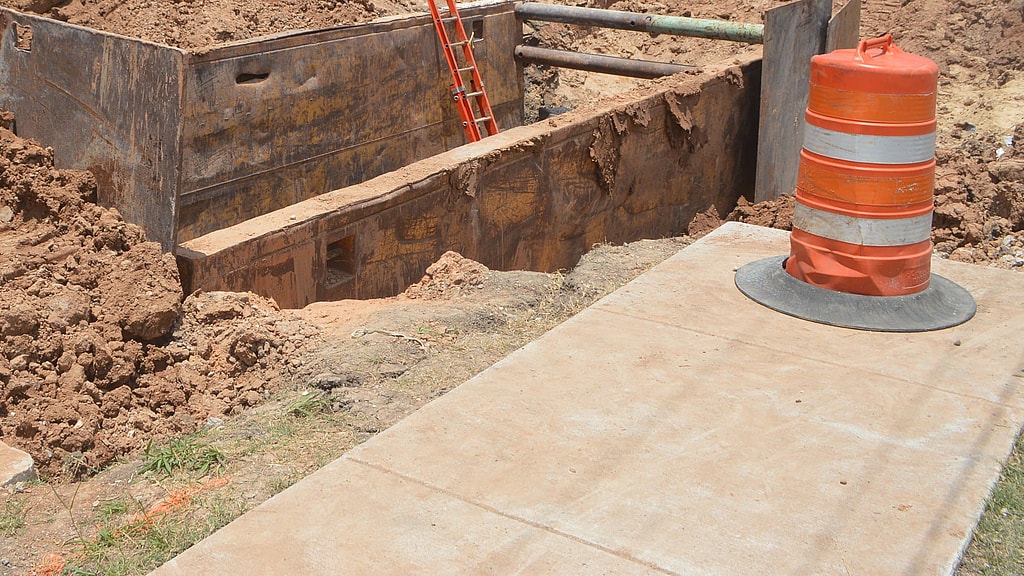
Native potential surveys record the structure-to-soil potential of a buried or submerged metal structure before any cathodic protection (CP) is applied. That native, or free-corrosion, potential is the baseline for the rest of the structure’s CP history. It lets the 100 mV polarization criterion in NACE SP0169 be used, and it gives the designer real data on the structure and its surroundings.
The survey can be run at test stations, at close intervals along a pipeline, or at several points around a tank, depending on how the data will be used. The right time is before a new CP system is energized, because a true native reading is hard to get once the structure has been polarized.
Request a free quote for a native potential survey on a new pipeline, tank or other structure. We typically respond within one business day.
Why the baseline matters
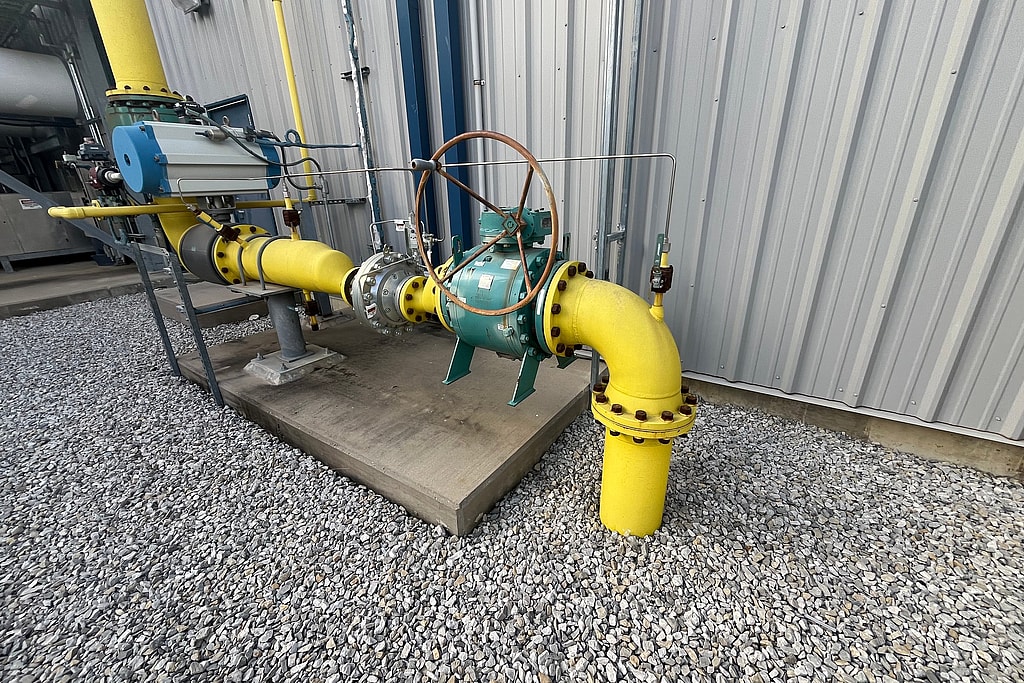
Under the 100 mV polarization criterion, a structure is protected when its polarized potential is at least 100 mV more negative than its native potential. In high-resistivity soil, on bare or poorly coated steel, or wherever reaching −850 mV would take far more current, that criterion can make protection much less expensive. It can only be applied with a reliable native value, or with a depolarization test on an existing system.
Native readings also feed the design. Large differences along a line or around a tank can point to dissimilar metals, old pipe connected to new, changes in soil or areas of active corrosion. During the survey we watch for readings that drift or swing, which can mean stray current from a foreign CP system or another DC source that has to be accounted for before the native values are trusted. See our interference testing page.
Once CP has been running, a true native reading needs the system off long enough for the structure to fully depolarize, which can take days or longer, so it is rarely practical. That’s why the survey should be done before the system is energized.
What you get
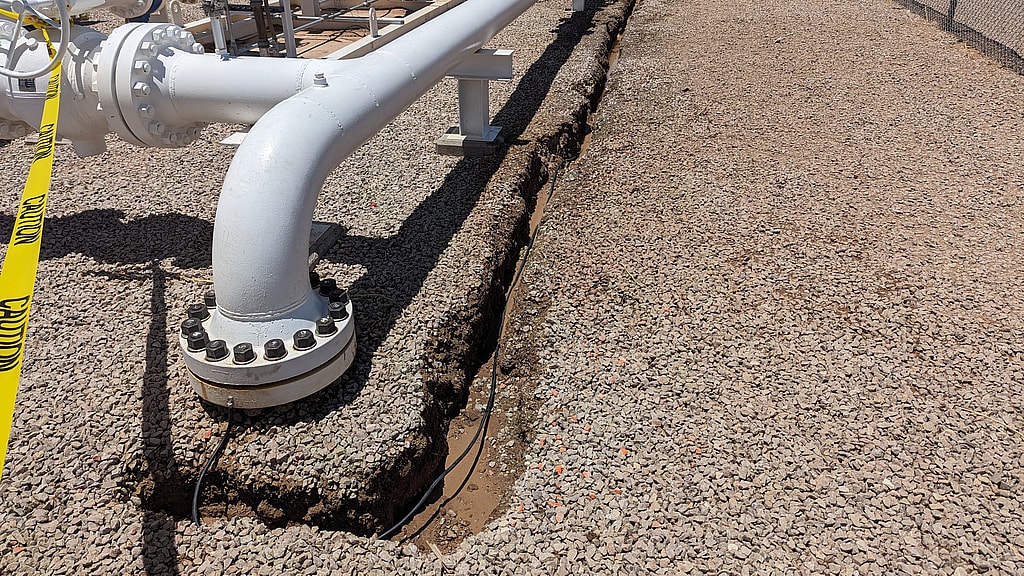
Our report gives the native potential at every location with its position, notes anomalies and possible interference, and explains how the values should be used: as the reference for the 100 mV criterion, as input to the CP design, and as the starting point for start-up and commissioning surveys once the system is energized. On new construction we can run the native survey, design and install the system, and commission it, so the data stays consistent from start to finish.
Our survey work is overseen by licensed Professional Engineers. Stepan V. Eero, M.S., P.E. is a NACE CP Specialist (CP4), and Brian J. Brackensick, M.S., P.E. is a NACE CP Technologist.
Our offices are in Coldspring, Texas and Westcliffe, Colorado. Our article on interpreting CP survey data explains how native, on and instant-off readings fit together.
Request a free quote for a native potential survey. We typically respond within one business day.
Frequently Asked Questions
What is a native potential?
The structure-to-soil potential of a metal structure with no cathodic protection applied, measured against a reference electrode such as copper/copper-sulfate. It is also called the free-corrosion or static potential.
When should a native potential survey be done?
Before a new cathodic protection system is energized: on new pipelines, tanks and other buried structures, and on existing structures that are getting CP for the first time. The data is most useful when it is collected at the same locations that later surveys will use.
Can native potentials be measured after CP is turned on?
Only after the system has been off long enough for the structure to depolarize, which can take days or longer. On a system that is already running, a depolarization test is the usual alternative: the instant-off potential is recorded when the current is switched off, and the decay is measured over time to show whether there is at least 100 mV of polarization.
Why does interference matter during a native survey?
Stray current from a nearby CP system, DC transit or another DC source can shift or swing the readings, so the “native” value would not be native at all. Suspect locations are monitored over time, and the source is identified before the data is used.
Related Services
Soil Corrosivity Analysis
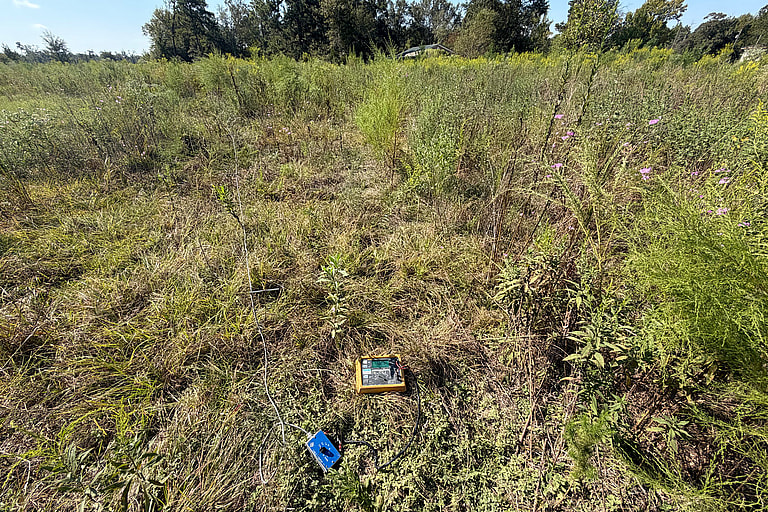
Field resistivity and laboratory pH, chloride, sulfate and bacteria testing of the soil around buried structures.
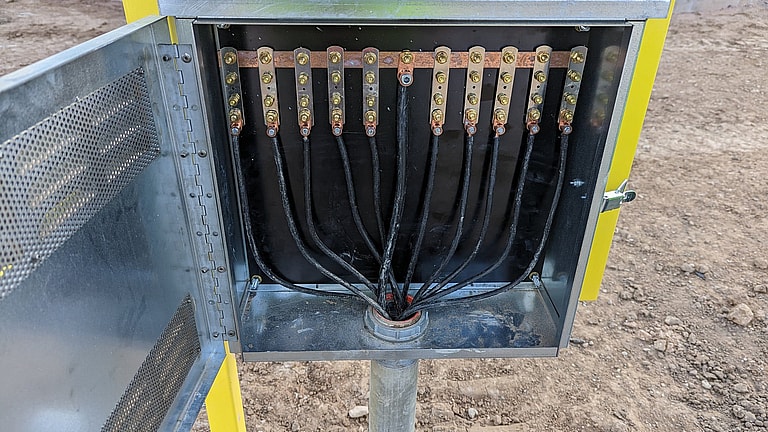
Corrosion Control Design
Design and installation of galvanic and impressed current cathodic protection systems.
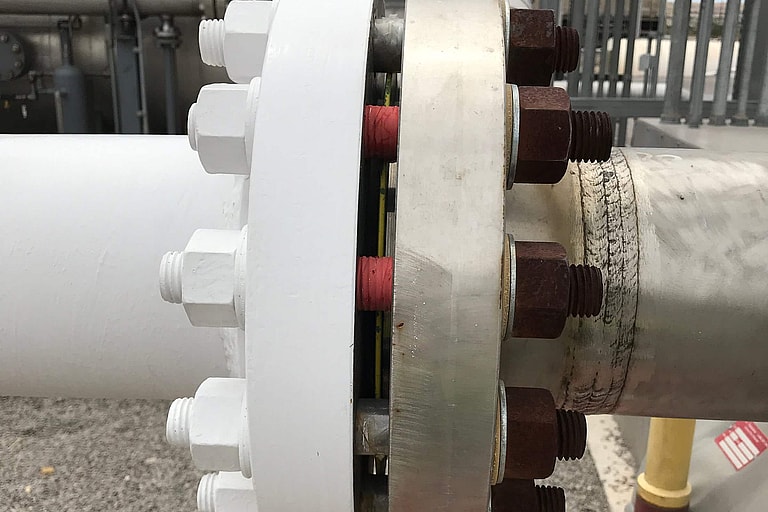
Interference Testing
Testing and mitigation of stray current and AC interference from foreign pipelines, DC transit and power lines.
Project experience
Related projects
Get your project started
We typically respond within one business day.