Consulting Areas
Electrical Injury Investigation
We typically respond within one business day.
Electrical Shock and Electrocution Investigation
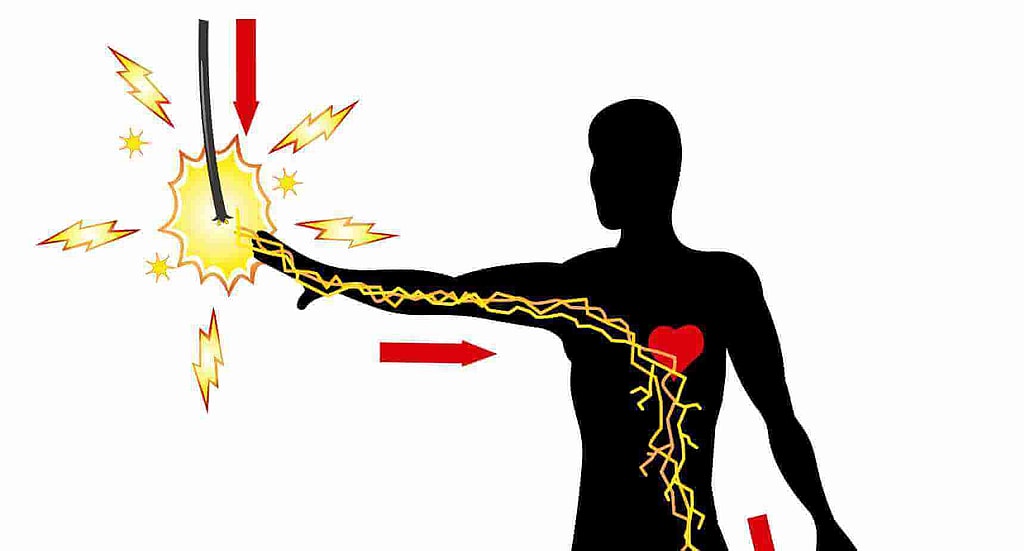
An electrical injury investigation determines where the electrical energy came from, how the injured person came into contact with it, and whether the safeguards that should have prevented the injury were in place and worked. The answer shows whether a product, an installation, a contractor, a property owner, an employer, a utility or the work being done at the time was responsible, and it supports claims, subrogation and litigation.
Our licensed Professional Engineers investigate electrical shocks, electrocutions and arc flash injuries at homes, commercial buildings, industrial plants and construction sites, and around power lines, for insurers, adjusters, attorneys, employers and owners. Our work covers the electrical side of the incident; medical questions are for physicians.
Submit an assignment or contact us for a free quote. We typically respond within one business day.
Get in Touch
Submit an assignment to get started.
Incidents we investigate
- Equipment, tools and appliances: shocks from damaged or defective equipment, power tools, appliances and light fixtures, such as a fault that energized a metal enclosure that wasn’t properly grounded. See appliance failure investigation.
- Cords, plugs and receptacles: damaged cords, missing ground pins, extension cords, and receptacles that were miswired, including reversed polarity or an open ground.
- Pools, spas and wet locations: shocks in and around pools, hot tubs, docks, bathrooms and outdoor areas, where grounding and bonding play a large part. Our article on pool grounding and bonding under NEC Article 680 explains the requirements.
- Overhead and underground lines: contact between ladders, cranes, booms, equipment or trees and overhead power lines, and excavation into underground cables, including the clearances the utility and the work crew had to maintain.
- Arc flash and arc blast: injuries from an arcing fault in switchgear, panelboards, motor control centers and other equipment, often during work on or near energized parts.
What We Examine After an Electrical Injury
We get to the site as soon as possible and document the equipment, the circuit and the conditions as found. The investigation then looks at:
- The source and the current path: which conductor or part was energized, at what voltage, how it became energized, and the path the current took through the points of contact to ground or to another conductor.
- Grounding and bonding: whether the equipment grounding conductor was connected and continuous, and whether metal parts that should have been bonded together were.
- GFCI protection: whether ground-fault circuit-interrupter protection was required at that location under the code in force when it was installed, whether it was there, and, when tested under an agreed protocol, whether it operated as designed.
- Equipment condition and listing: damage, wear, modifications and repairs, and whether the equipment was listed for the way and the place it was being used.
- Maintenance and lockout/tagout: the maintenance history, and whether the equipment was de-energized, locked out and verified before work began.
- Work practices and PPE: the task being done, the training and procedures behind it, and the personal protective equipment used, compared with NFPA 70E, Standard for Electrical Safety in the Workplace, and OSHA’s electrical safety requirements.
NFPA 70E is the consensus standard many employers use to build their electrical safety programs.
Preserving the Equipment and the Circuit
The physical evidence in an electrical injury is usually small and easy to lose: a cord, a plug, a receptacle, a GFCI, a breaker, a tool or a light fixture. It can be repaired, reset, thrown away or put back in service soon after the incident, and equipment that shocked someone often still works afterward, so it may not look damaged. After an incident:
- Make the area safe, but don’t repair, replace or reset anything beyond what safety requires. If something has to be de-energized or moved, photograph it first and record who did it and how.
- Keep the equipment, its cord and plug, and the receptacle, GFCI, breaker and other parts of the circuit that supplied it. Don’t let a repair company, the manufacturer or anyone else take them away or discard them.
- Keep the records: maintenance and repair records, lockout/tagout procedures and logs, energized work permits, training records, and any photos or video taken at the time.
- Notify the interested parties, such as the manufacturer, the installer or contractor, the property owner, the employer, the utility and other insurers, before anything is examined or moved, so they have the chance to attend.
Evidence is collected under a protocol agreed with the interested parties, kept in video-monitored storage and examined at our engineering lab in Coldspring, Texas. Non-destructive examination comes first; destructive steps wait until the interested parties have had the chance to attend, and joint lab examinations are arranged when other parties need to attend.
After the investigation
For employers and owners, the findings also show what has to change to keep it from happening again. We perform arc flash studies and offer training that covers NFPA 70E and IEEE 1584-2018.
For attorneys handling an electrical shock or electrocution case, our engineers write expert reports and testify in depositions and at trial.
When you contact us, you talk directly with an engineer who can discuss your case. Our offices are in Coldspring, Texas and Westcliffe, Colorado, and we work nationwide. Reports are PE-stamped where required, and we also accept consulting-only (non-testifying) retentions.
Submit an assignment or contact us for a free quote. We typically respond within one business day.
Frequently Asked Questions
What does an electrical injury investigation determine?
Where the electrical energy came from, how the injured person became part of the circuit, and whether the equipment, the installation, the safeguards and the work practices met the codes, standards and procedures that applied. That shows whether a product, an installer, a property owner, an employer, a utility or another party was responsible.
Do you give medical opinions?
No. Our engineers address the electrical side of the incident, such as the source, the voltage, the current path and the safeguards. Questions about the injuries themselves are for physicians and other medical experts, who often rely on the electrical findings.
What is the difference between arc flash and arc blast?
Both come from an arcing fault, where current flows through the air between conductors or from a conductor to ground. Arc flash is the intense heat and light the arc releases, which can cause burns at a distance. Arc blast is the pressure wave that can come with it, which can throw people, molten metal and pieces of the equipment. The investigation looks at what started the arc, the equipment and its protective devices, and the work being done at the time.
How do NFPA 70E and OSHA apply to an electrical injury?
OSHA rules set the legal requirements for electrical safety in most workplaces. NFPA 70E is a consensus standard rather than a regulation, but employers widely use it to meet those requirements, and it covers safe work practices, work on or near energized equipment, lockout and PPE. The investigation compares what was done with what those documents required at the time.
Related Services
Fire Investigation
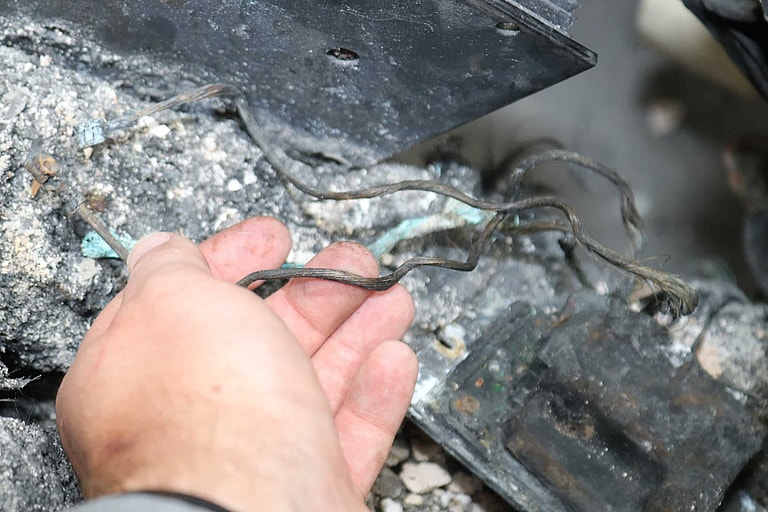
Origin and cause investigation of residential, commercial, industrial and vehicle fires.
Residential Electrical
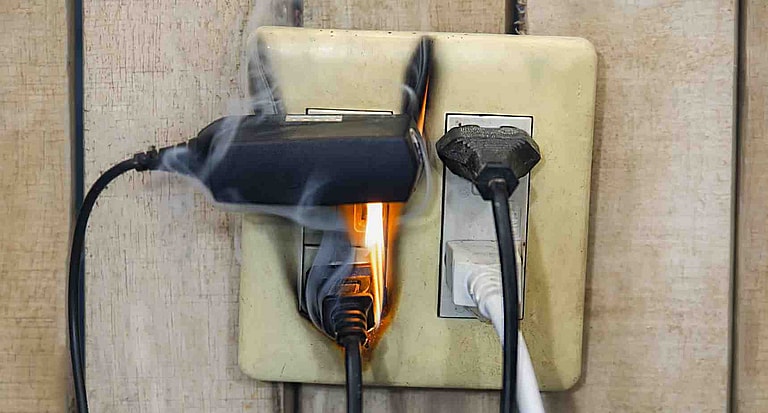
Investigation of house fires involving panels, wiring, receptacles and appliances.
Appliance Failure
Failure analysis of HVAC equipment, dryers, refrigerators, heaters, chargers and other appliances.
Project experience
Related projects
Have a loss to investigate?
We typically respond within one business day.