Corrosion and Cathodic Protection
Conducting a DCVG Survey: How the Process Works and What It Finds
How a DCVG survey is conducted: current interruption, paired half-cell readings over the pipe, coating holidays, and what the results can and cannot show.
Contents
Over 578 incidents related to oil and gas pipelines occurred in 2020. Everything from the quick release of liquids to fires and explosions led to costly injuries and loss of life. In many cases, these accidents were caused by human error, while others directly resulted from poor maintenance, leading to cracks in the pipes or delayed repairs on corrosion. Corrosion in particular is the kind of deterioration a Direct Current Voltage Gradient survey is designed to help catch early.
Any business owner, manufacturer, or production facility must pay close attention to properly maintaining infrastructure. One missed evaluation or assessment may be all it takes to turn the average working day into a national nightmare. Safety and the smooth functioning of operations rely on inspections, including the Direct Current Voltage Gradient (DCVG) survey. This provides you with a wealth of information to detect potential issues long before they become dangerous.
Need a survey on your pipeline? Our direct current voltage gradient survey services locate and grade coating defects, and a licensed Professional Engineer reviews the data.
What is the DCVG Survey?
The idea of a Direct Current Voltage Gradient survey is fairly straightforward. Experts or trained assessors are tasked with identifying the current conditions of pipelines (mostly buried) around your facility. These professionals use non-destructive techniques to avoid putting the coatings or pipeline integrity at risk.
Most DCVG surveys use direct current to measure the voltage gradients found in and around the soil where the pipeline is resting. The result is you get a much more detailed imprint of where there may be areas of improvement in your protective coatings, what sections might be experiencing corrosion, and where you should spend time and money conducting repairs.
As long as the survey is conducted well, you get insight that leads to direct maintenance action, lowering the risk of pipes bursting and causing expensive repairs or cleanup.
Why Is DCVG Important for Your Business?
Between 2019 and 2023, around 9.7 billion cubic feet of gas was released into the air. Small incidents like an Idaho farmer punching through a pipeline with their backhoe to larger events where entire oil production facilities are shut down due to corrosive elements plaguing the industry.
Any time these catastrophic events occur, it costs money. Stakeholders are tasked with forking over millions in repairs, regulatory compliance, fees for damages, lawsuits, and many other areas of need. Cleanup alone can run a high bill due to dealing with unique animal species at risk.
In addition to fines and repairs, you have the financial task of managing downtime. Workers cannot continue operating for a month or two, forcing them to look for a different job. Your business reputation will take a hit in the media, and getting government contracts will become slightly more challenging due to past issues.
While these are all “worst case” scenarios, using a DCVG survey to maintain your pipelines proactively is an effective strategy against the potential financial shortfall from an emergency. Not only that, but the survey helps minimize pipeline failure, ensuring your team is safe, down-channel customers are serviced, and you can maintain operations as long as possible.
With so many products, from gas to oil to water and more, a small investment in a DCVG survey now saves your business a fortune in repairs and lost productivity later.
How DCVG Surveys Help Manufacturers and Facility Operators
The primary goal of Direct Current Voltage Gradient surveys is to detect damage from poorly coated pipelines or corrosion areas. However, the same survey also provides owners and operations with actionable data.
Most businesses with long extensions of pipelines have a lot to consider. Directing resources to the entire run of pipes takes precision and reliable information. You don’t want to direct your maintenance crew to one area while another is more time sensitive.
For example, if you’re running a large chemical processing plant in Texas, a comprehensive DCVG survey will provide you with data on any concerns. Instead of shutting down the entire operation, you can strategically schedule repairs on specific sections. That gives you time to redirect assets and ensure partial production so operations suffer from fewer interruptions.
The Process of Conducting a DCVG Survey
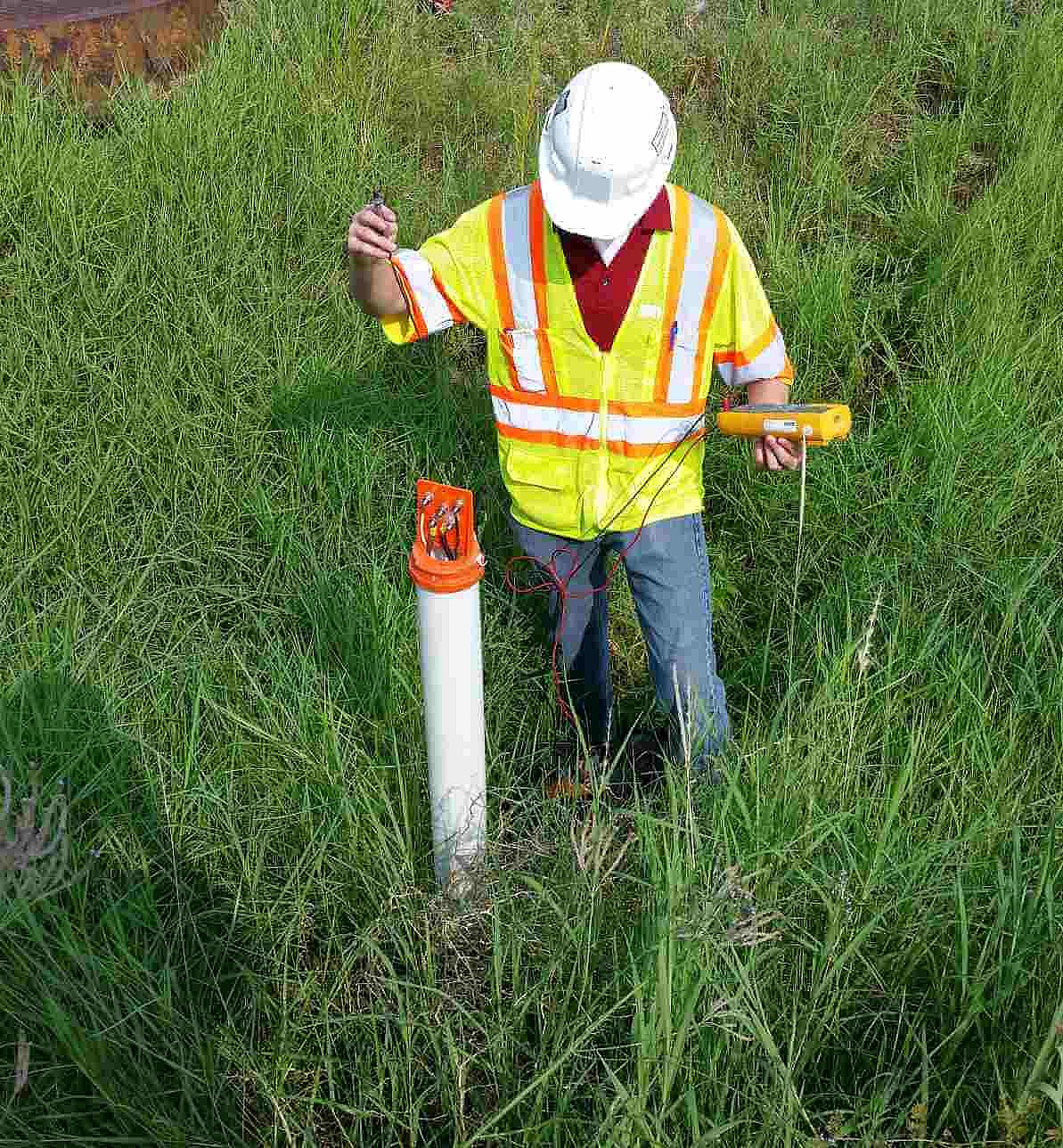
The DCVG survey process is simple enough but requires experience and the ability to read results using specialized equipment. In a DCVG survey the pipeline’s existing cathodic protection current is cyclically interrupted by a synchronized interrupter at the rectifier, and the surveyor measures the resulting voltage gradient in the soil above the pipe using two closely spaced copper/copper-sulfate half-cells. The results locate and size coating holidays and indicate whether each defect is receiving protective current; they do not by themselves quantify metal loss, which requires direct examination or in-line inspection. That voltage difference is measured in the soil around the current and pipes. These differences are what inform testers of any potential corrosion or danger.
Data from the survey is collected and analyzed to determine specific areas of concern and the severity of potential risk. Such information is passed onto your skilled repair team, which will use bespoke equipment to make the repairs you plan based on current scheduling availability and asset allocation.
What the Crew Looks For: Coating Holidays
A holiday is any discontinuity in the pipeline coating: a bare spot, pinhole, crack, thinned area or disbondment. It can occur in any coating system, including fusion-bonded epoxy, coal tar enamel, tape wrap and extruded polyolefin. At a holiday the steel is in direct contact with the soil, so it depends entirely on cathodic protection current to keep from corroding.
When the surveyor finds an indication, its location is recorded with a high-accuracy GPS receiver and marked with a stake so the excavation crew can find it later. Each indication is graded by the size of its voltage gradient, usually expressed as %IR, which helps decide which defects to excavate and repair first.
At the end of the survey, the engineer goes over the findings with you, explains how serious each indication is and helps you plan the repairs. For how this survey compares with its alternating current counterpart, see the difference between ACVG and DCVG surveys.
Key Benefits of Implementing Regular DCVG Surveys
Pipelines are essential to so many businesses and industries around the U.S. As Dreiym Engineering operates in Texas and surrounding states, we frequently work with industries ranging from energy to water treatment. All of these businesses benefit from a DCVG survey, including:
- Preventative Maintenance: A properly run survey provides enough data for you to schedule repairs and avoid dangerous leaks before they become emergencies, while also reducing downtime so your business maintains operational integrity.
- Prolonged Pipeline Lifespan: Pipelines are expensive to repair. You want to get the most ROI from your assets, and using a survey to detect potential corrosion helps extend that lifespan further.
- Safety & Environmental Compliance: Most industries using pipelines have oversight organizations. Without a survey, you run the risk of getting hit with numerous fees and fines that can undercut your annual profitability while also negatively impacting your eco-friendly or sustainable initiatives.
- Operational Efficiency: Finally, you want a DCVG survey to keep things running smoothly. That “heads up” that a section of a pipeline may be in danger ensures you have reduced downtime with a reliable service for any clients.
The precise and reliable results of a DCVG survey offer insight into sensitive pipeline areas so you can quickly identify minor and major defects. You get high-resolution coating defect results with accurate voltage gradient detection at the ground level, which is necessary to schedule repairs proactively.
Choosing the Right DCVG Service Provider
It’s important to remember that not all DCVG survey service providers are the same. While we are biased toward our in-house Dreiym Engineering team, we want to emphasize you should look for providers with experience, qualifications, and proper equipment. A good reputation for successful surveys with detailed results is important to you and your stakeholders.
Communication of these reports is also crucial. You want clear information that offers suggestions on maintenance and proactive repairs instead of guessing what one page means compared to another. It isn’t just about a quick fix. This survey report is necessary for ensuring long-lasting pipeline integrity.
With over 30 years of combined experience, our electrical and forensic engineering team has completed assessments, surveys, and reports for businesses all over the nation. We are a professional engineering firm offering everything from electrical engineering to arc flash studies and cathodic protection. The next time you’re looking for an in-depth and clear DCVG survey, schedule a call with Dreiym.
Final Thoughts
Pipeline integrity is now and will always be integral to the success of any business or manufacturing location. The Direct Current Voltage Gradient survey is a worthwhile tool for gaining insight into current pipelines and coating conditions, preventing expensive repairs and operational downtime.
A professionally run DCVG survey gives your operators data they can act on. Your maintenance scheduler and risk management leaders will thank you.