Consulting Areas
AC Interference and Mitigation
We typically respond within one business day.
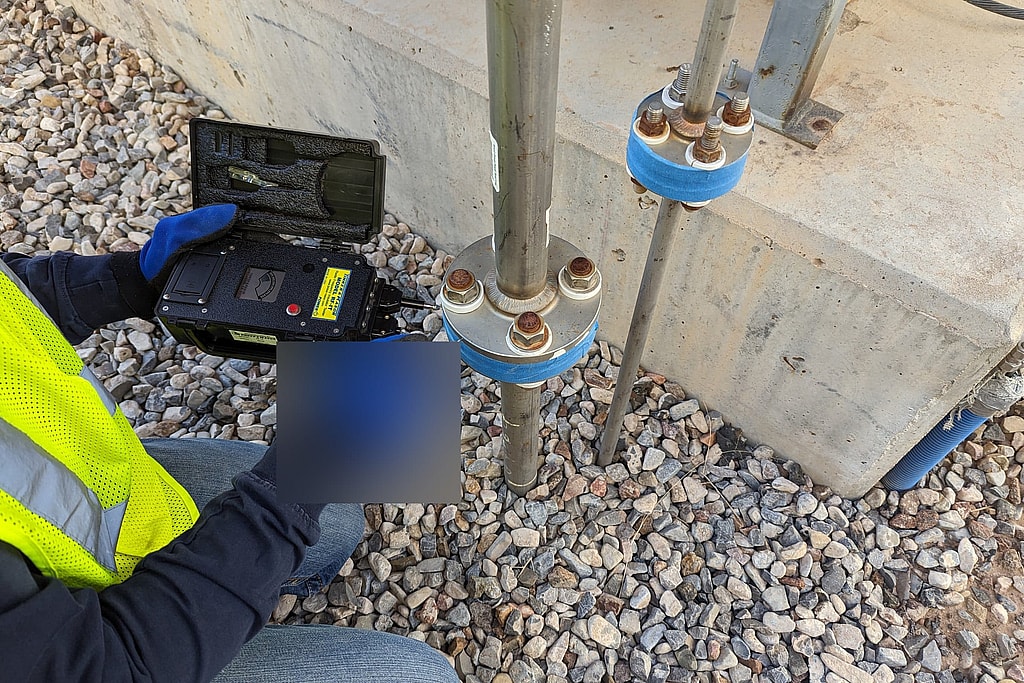
Pipelines That Share a Corridor With High-Voltage Power Lines
When a Pipeline Needs AC Mitigation Design
A buried pipeline that runs beside or crosses a high-voltage AC power line picks up induced voltage. Where that voltage is high enough, it creates a shock hazard at test stations, valves and risers, and it can drive AC corrosion at small coating holidays even when the cathodic protection readings look fine. AC mitigation design brings both under control: it works out how much voltage and current the pipeline sees, under normal load and during a fault on the power line, and specifies the grounding and devices that reduce them.
We do the whole sequence for pipeline and facility operators in any state: measure, model, design the mitigation and confirm that it works. Our licensed Professional Engineers and a NACE CP Specialist (CP4) lead the work, and designs are PE-stamped where required.
Contact us for a free quote. We typically respond within one business day.
Three risks to check
- Touch voltage: a person who touches an exposed part of the pipeline, such as a test station, valve or riser, while standing on the ground can receive a shock. NACE SP0177 treats a steady-state touch voltage of 15 volts AC or more as a hazard that needs mitigation.
- AC corrosion: at a small coating holiday, AC current density can corrode steel even when the CP potentials meet the usual criteria. The risk is judged from AC and DC current density measured on coupons, as described in NACE SP21424 and ISO 18086.
- Fault conditions: a fault on the power line raises the induced voltage for a short time, and current from a nearby tower footing can arc through the soil to the pipe, damaging the coating, the steel and insulating joints.
Interference is most likely where a pipeline runs parallel to a transmission line for a long distance, where the line or the pipe changes direction, near substations and tower footings, and where the coating is new and of high quality, since a good coating leaves fewer and smaller holidays for the current to concentrate in.
Testing and Modeling
Field work starts with AC and DC pipe-to-soil readings at test stations and appurtenances near the power lines. Induced voltage follows the load on the line through the day, so single readings are backed up by data loggers left in place. On one Texas project we logged eight locations for 48 hours and recorded spikes well above the averages.
Where coupons are installed, we measure AC and DC current density to judge the AC corrosion risk. Soil resistivity along the right-of-way decides how well mitigation grounding will work, so it is measured as part of a soil corrosivity analysis.
The model brings in the power line data: phase currents, fault currents, tower positions and the geometry of each parallel and crossing. It shows which sections drive the readings, the expected voltage under full load and during a fault, and how much each mitigation option helps.
Mitigation Design
- Gradient control: grounding mats or loops at test stations, valves and risers, so a person touching the pipe stands at nearly the same voltage.
- Mitigation grounding: zinc ribbon or other grounding conductors along the pipeline where it parallels the power line, connected through decouplers.
- Decouplers: solid-state devices that pass AC and fault current to ground while blocking the DC cathodic protection current, so the CP system is not drained.
- Insulating joint protection: keeping fault current from damaging insulating flanges and joints.
After installation, a follow-up survey checks touch voltages and current densities against the design, and the results go into the pipeline integrity records.
Related Interference Work
AC interference is one part of our cathodic protection interference testing work, which also covers DC stray current from foreign CP systems, transit lines and mining.
For pipelines in Colorado, see AC interference testing and mitigation in Colorado. The project write-up on AC interference data logging near Wink and Sarita, Texas shows what logged data looks like, including a failed insulating flange that kept the readings low.
Frequently Asked Questions
What is AC mitigation?
The grounding and devices that reduce AC voltage and current on a pipeline near power lines: gradient control mats at exposed parts, grounding conductors along the line, and decouplers that pass AC to ground without draining the cathodic protection current.
When is AC mitigation needed?
When measured or modeled touch voltages reach hazardous levels, when AC current density on coupons shows a corrosion risk, or when a fault on the power line could damage the pipeline or its insulating joints. A new pipeline in a power line corridor, or a new power line next to an existing pipeline, should be modeled before construction.
Can AC corrosion happen when the CP readings pass?
Yes. AC corrosion happens at small coating holidays and is not shown by the usual DC potential criteria. AC and DC current density measured on coupons give a better picture of the risk.
Will mitigation affect the cathodic protection system?
Not when it is designed with decouplers, which block DC while passing AC. Grounding tied straight to the pipe would drain CP current, so the CP readings are checked again after the mitigation is installed.
Do you work outside Texas and Colorado?
Yes. Our licensed Professional Engineers have active and past licensure in multiple states, and we work on pipelines across the country.
What do you need to scope the work?
Route maps or alignment sheets, the places where power lines run parallel to or cross the pipeline, existing CP survey data and any AC readings already taken. The power line owner usually has to supply the load and fault current data for the model.
Related Reading
- What Causes Cathodic Protection Interference?
Learn what causes cathodic protection interference, from stray current and nearby CP systems to power lines, and how testing keeps pipelines protected.
- Cathodic Protection in High-Resistivity Rocky Mountain Soils
CP in high-resistivity Rocky Mountain soil takes more voltage to push the same current, so we survey the whole route and size for the driest season.
- The Relationship Between Soil Resistivity and Corrosion
Soil resistivity and corrosion have an inverse relationship: the lower the resistivity, the more corrosive the soil. Learn what that means for your assets.
Related Services
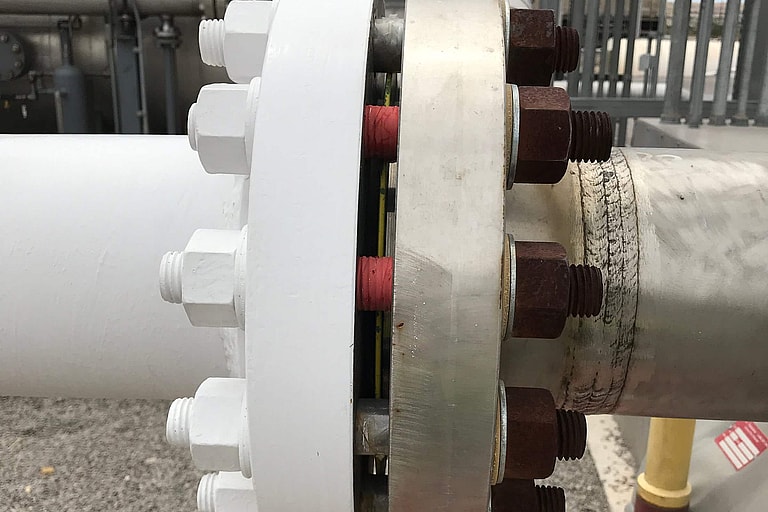
Interference Testing
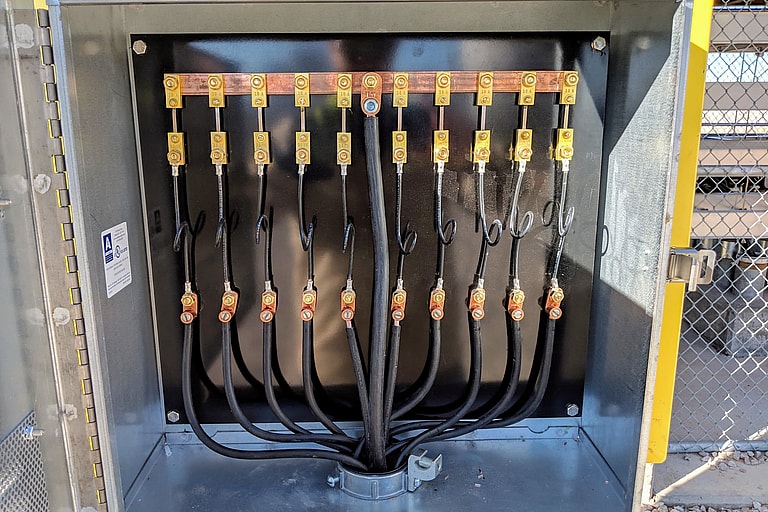
Cathodic Protection Design
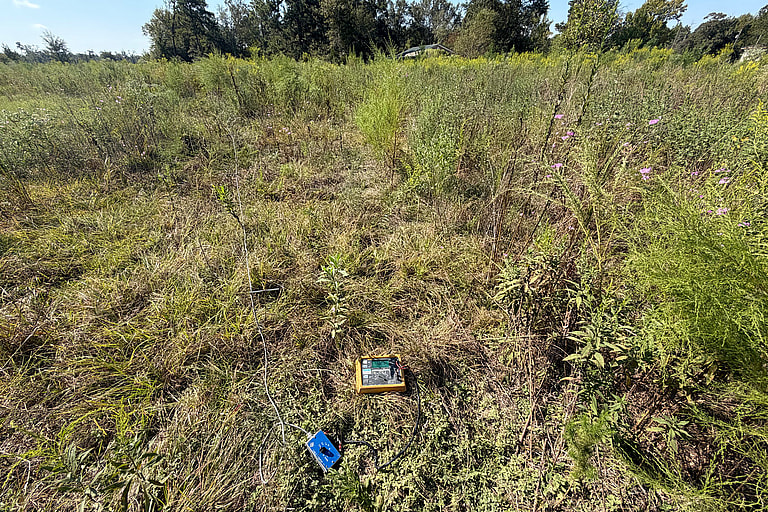
Soil Corrosivity Analysis
Project experience
Related projects
Get your project started
We typically respond within one business day.