Hidden Expenses from Poor Power Quality: Preventing Voltage Sags and Surges with Electrical Load Analysis
Voltage sags and surges quietly drain profits through equipment damage and downtime. Learn how electrical load analysis prevents power quality losses.

Contents
Anytime a business or industrial facility suffers from unwanted electrical sags and surges, it creates a financial ripple effect throughout the rest of operations. The cost per interrupted demand due to voltage sags with industrial consumers can be anywhere from US $3.34/kW to US $5.18/kW, and those numbers are from 2021.
A field example from our work: RV Park Service and Feeder Sizing in Dayton, Strawn and San Antonio
Considering the variable expense of electrical needs and the rising cost of supply, a business running on high-demand electricity needs to streamline operations as much as possible. That means reducing sags or surges for a more predictable supply that supports current budgets and decision-making.
What Are Voltage Sags and Surges?
Unfortunately, voltage sags and surges will happen to your business. Even with the most precise framework in place, you can expect the occasional mishap. The trick is to minimize these occurrences so they become extremely rare. The first step is understanding what they mean for your operations.
From our project files: EV Charging Build-Out Studies, Austin and San Marcos
- Per IEEE Std 1159-2019, a voltage sag is an rms reduction to between 0.1 and 0.9 per unit lasting from one half cycle to one minute; a reduction that persists beyond one minute is a sustained undervoltage, and a total loss of voltage is an interruption. The corresponding rms increase (1.1 to 1.8 per unit for one half cycle to one minute) is a swell, while lightning strikes and switching operations produce impulsive and oscillatory transients lasting microseconds to milliseconds. The distinction matters because sags are addressed by equipment ride-through and UPS, sustained undervoltage by regulation and feeder capacity, and transients by surge protective devices. While most sags are brief, the sudden dip disrupts productivity. When you couple that dip with sensitive machinery often used in part manufacturing, quality control, and production lines, the operational errors quickly begin to stack. Sags tend to occur around big weather events or faults in the expansive utility grid.
- Voltage Surge: A voltage surge is a bit different. In this case, you experience a sudden increase in voltage above normal ranges. Think of a lightning strike or faulty wiring hitting your building, causing a power system to switch. Surges can and will cause damage to equipment, especially electronics. That is why private consumers should have a surge protector in their homes for PCs when living in areas of extreme weather events.
The point is that you are vulnerable to sags and surges whenever you’re operating in an industry reliant on precise power draws that cannot be interrupted (manufacturing, healthcare, data centers, etc.). What may seem minor at first can quickly build steam over time, leading to a significant loss in operations and driving costs up.
The Hidden Costs of Poor Power Quality
Let’s discuss costs for a moment. The obvious concern is the cost of energy supply during a voltage sag or surge. Many clients seek electrical load analysis to protect themselves from such events, but that isn’t the only driving factor. There are many hidden costs to these events like:
Related article: NEC 220.87 Load Study: Using Measured Demand to Size an Existing Service
- Equipment Damage and Premature Failure: Programmable Logic Controls (PLCs), motors, and communication devices are all extremely vulnerable to power fluctuations. When they are exposed to sags and surges over time, internal components begin to degrade. That degradation will lead to a shorter lifespan and increased maintenance costs or, worse, complete replacement.
- Operational Downtime: In addition to worrying about your sensitive equipment, a sag or surge may stop operations for the time being. When the productivity of your operation is directly tied to profit margins, every second you’re not producing means lost revenue. Then, there are manual resets and troubleshooting, which all cause further delays.
- Increased Energy Consumption: An inconsistent power supply leads to fluctuations in mechanical performance. Consider a motor. These devices may draw on more power resources than needed if there are inconsistent voltage levels, meaning you’ll pay a much higher premium due to such inefficiencies. No one in business wants higher monthly expenses.
- Safety Compliance Risks: The final hidden costs are related to safety and security. An unwanted surge may overload protective devices from circuit breakers to access control systems. That increases not only the risk of fire but also the integrity of sensitive business assets, which only certain employees should have unmitigated access.
As you can see, the cost of sags and surges is hard to measure. Needless to say, hiring a team for electrical load analysis could save you money in power supply needs, as well as many other hidden factors you may not be able to measure until much later down the road.

Diagnosing Power Quality Issues
The good news about electrical sags and surges is you can address them. With the right team, a proactive approach, and a risk manager who prefers to keep their job, you can avoid or minimize experiencing such issues.
Everything starts by recognizing the signs. Frequent resets and dropouts in PLC and control-system power supplies, combined with motors running hot, point toward voltage sags, sustained undervoltage or voltage unbalance rather than surges: a motor at reduced or unbalanced terminal voltage draws higher current for the same load and runs hotter. NEMA MG 1 limits voltage unbalance at the motor terminals to 1% at rated load and provides a derating curve above that; as an approximation, the temperature rise of the hottest phase increases by roughly twice the square of the percent voltage unbalance (about 2% at 1% unbalance, 8% at 2%, 18% at 3%), because a 1% voltage unbalance produces on the order of 6 to 10% current unbalance. Surges and impulsive transients more typically show up as failed electronics, punctured insulation and damaged SPD indicators. Distinguishing the two requires a power-quality recorder logging rms voltage, unbalance, harmonics and transients over a representative period, classified per IEEE Std 1159, before any remedy is selected. Flickering lights, along with these symptoms, are a good indicator.
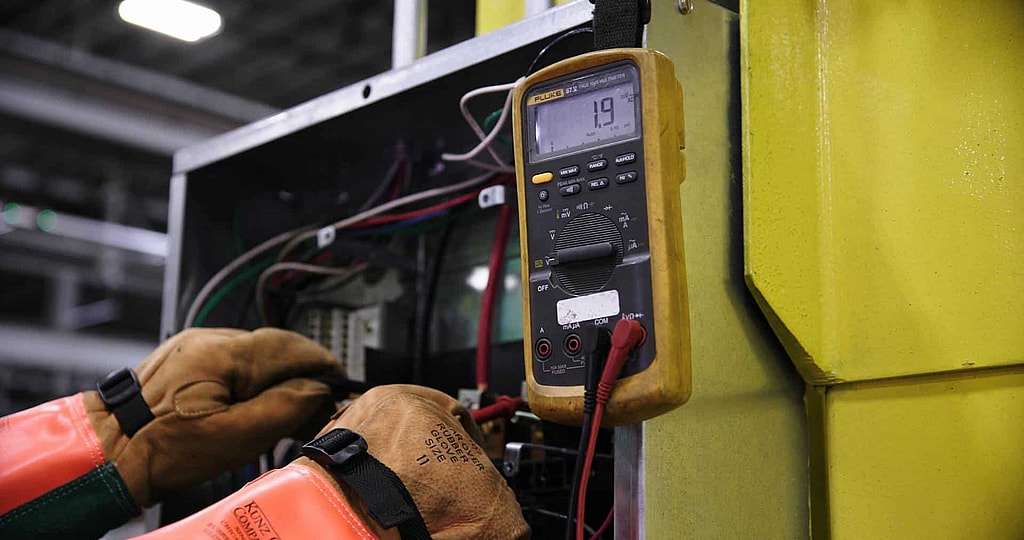
If you believe you’re experiencing such faults, it’s time to break out the monitoring equipment. Track and monitor voltage levels for frequency variations and harmonic distortions. Be sure to measure these in real-time so you can pinpoint the underlying causes and better focus your maintenance or repair efforts.
A recorder that captures sags, swells, transients and harmonics over time is the core of a power quality study.
It certainly helps to partner with expert electrical load analysis professionals like Dreiym Engineering. Having someone without any motive come in and offer experienced, precise, and evidence-based evaluations ensures nothing goes unnoticed or at least has an action plan if it occurs again in the future.
You don’t have to leave everything to experts. While we love working with clients from all fields of business, manufacturing, and industry, we also want to help owners improve their own operations.
Try a few of these recommendations to avoid costly disruptions and ensure optimal performance:
- Install SPDs (Surge Protection Devices) around any sensitive equipment to divert energy away and prevent damage or disruption.
- Invest in power conditioning equipment like uninterruptable power supplies (UPS) or voltage regulators. There are many eco-friendly options that may give you tax advantages as well.
- Prioritize the maintenance of your system and electrical infrastructure. Regularly inspect the wiring, replace worn components, and address grounding issues before they become much more complex.
- Hire an expert consultant to perform annual inspections or evaluate additions/removals from your regular operations before going into full production.
A tiny bit of preventive care can go a long way to lowering any hidden costs and protecting your organization from the massive expense of repair or replacement. With so many components having to work in unison, it only makes sense to have as much of a protective barrier around your system as you can. That will give you (and your investors) significant confidence so you can focus on more important factors.
Wrapping Up
Dealing with the repercussions of voltage sags and surges might seem like a minor worry at first, but when you take stock of the long-term damage they can put on your business, you want to get started as soon as you can. Integrating annual electrical load analysis helps prevent unwanted actions and protects your investments through operational efficiency.
Dreiym Engineering offers over 30 years of combined experience. We have the team training, professional insight, and technical know-how to properly balance your systems from the sequence of operation to generator-staged loading designs. Give us a call today and ensure your organization remains safe and running smoothly, no matter what is happening with the weather, time of the year, or surrounding grid conditions.