Selected Projects
Grounding Survey for Static-Related Surges at a Gas Turbine Unit, El Paso (2020)
We typically respond within one business day.
Project at a glanceDE-PRJ-8780
- Practice
- Electrical power
- Location
- El Paso, TX
- Service
- Grounding
- Client
- Confidential
Grounding Survey for Static-Related Surges at a Gas Turbine Unit, El Paso (2020)
In 2020 we ran a power station grounding survey around a gas turbine generating unit in El Paso, Texas, where sensitive electronics were being damaged by surges. Client details are confidential.
Surges from the oil
The owner had traced the surges to a new type of turbine oil. Passing through the oil filters, the new oil built up static charge, especially on a cold start. To relieve it, the owner installed grounding triads next to the units. At the unit under study the triads were connected so that they formed two independent, isolated grounding systems, and those systems were not tied to the station ground.
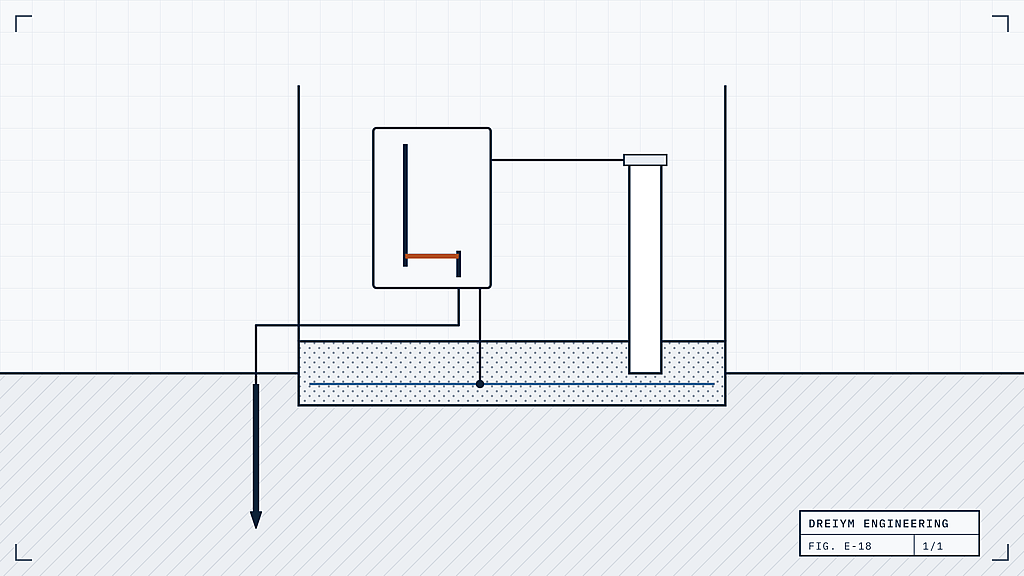
Separate grounds are a hazard
For safety, a facility should not have completely separate grounds. Every ground point needs a continuous path to every other one, so a fault has an effective path back to its source and touch voltages stay low. The earth itself is not an effective fault-current path. We measured 19.68 ohms between the isolated grounding system and the primary grounding system, which showed there was no direct connection between them. We recommended tying them together underground with a 2/0 conductor and bringing that resistance down, preferably under 2 ohms.
Dry, resistive ground
The soil at the station is highly resistive. Wenner four-pin measurements with a Fluke® 1625-2 could not produce usable data, because the dry, high-resistance soil interfered with the measurement, and drought conditions were a likely contributor. A sample tested in the laboratory came back at 6,400 ohm-cm, close to the roughly 6,850 ohm-cm assumed in an earlier grounding study. Rainwater dissipates quickly there, and dry ground makes rods perform poorly. Packing the rods at the edge of the grid and at the triads in conductive backfill keeps them from drying out and lowers their resistance to remote earth.
Bonding the filters
The structures around the oil filter assembly are mostly stainless steel, which tends to make poor electrical connections. We recommended a solid grounding lug on the foot of the filter assembly to lower the resistance of the canister to ground. That may not stop all charge from building in the fluid inside, depending on how the filter is built, but it keeps charge from accumulating on the structure. The recommendations were ordered so that each step could be checked before the next one was taken.
Grounding at generating stations
How ground systems are measured is described on our page for grounding system tests. The buried piping at power stations in the same city is the subject of our impressed current cathodic protection project.
Electrical power
More projects in this practice
Norman, OK
Airport Grounding Testing, Norman
Ground testing
Temple, Grand Prairie and Humble, TX
Arc Flash Studies at Manufacturing Plants in Temple, Grand Prairie and Humble
Arc flash, coordination
Hattiesburg, MS, plus AZ, WA and TX
Arc Flash Studies for Four Plants in Four States
Arc flash, labels
Get your project started
We typically respond within one business day.