Looking at the Root Cause of Electrical Appliance Fires Using Forensic X-Ray and Thermal Imaging
See how forensic X-ray and thermal imaging reveal the root cause of electrical appliance fires, without destroying evidence insurers and courts rely on.
Contents
Commercial electrical appliance fires get expensive quickly. The cost can easily run into the hundreds of thousands of dollars, especially when you add the downtime while the business waits on an insurance payout and any harm to its reputation. Once people start asking who’s liable, the first job is to establish the fire’s origin and cause.
Key takeaways
- Most appliance-related electrical fires come down to a handful of mechanisms, such as a wiring fault, an overload or a poor connection that overheats.
- X-ray imaging documents what is inside a burned appliance before anything is taken apart, so the evidence is recorded as found.
- Thermal imaging is used on equipment still in service and for controlled lab testing, and it measures surface temperature at the moment of the reading.
- No instrument determines a cause on its own; the engineer also weighs fire patterns, soot deposits and the other evidence.
See how this worked on a real job: Rooftop HVAC Circuit Review After a Roof Fire, North Texas
We do the examinations described below in our own lab, and there’s a separate post about the Dreiym Engineering lab space.
Computer fires are one of the most common cases we examine. We cover them in our full guide to PC and computer fires.
Our licensed electrical engineers are often called in to investigate these fires. We follow the systematic method laid out in NFPA® 921, Guide for Fire and Explosion Investigations. X-ray and thermal imaging let us document conditions that are otherwise hard to get at, from arcing damage to defective conductors and connections left behind by a recent repair job. When origin and cause are disputed, insurers, and in some cases the courts, need that kind of documented record.
Computer and laptop fires follow many of the same patterns, and our guide explains their warning signs and what to do.
What Causes Electrical Appliance Fires
Most appliance-related electrical fires come down to a handful of mechanisms. Even a well-designed, premium commercial refrigerator can develop a wiring fault, get loaded past its rating, or overheat at a poor connection. According to NFPA®, fires at industrial and manufacturing properties caused an average of 22 civilian deaths, 211 civilian injuries, and $1.5 billion in direct property damage each year from 2017 to 2021.
Appliance failure analysis uses structured methods such as fault tree analysis and FMEA to test each possible cause.
Many of the risks aren’t obvious from the outside:
- Damaged or degraded insulation inside industrial machinery, which can turn into an arcing fault
- Overloaded circuits in commercial spaces where the infrastructure is aging
- Thermal cutoffs that have been bypassed, jumpered, or swapped for the wrong rating in food service equipment, the kind used everywhere from food trucks to restaurants
- Counterfeit or obsolete electrical components, or poorly wired aftermarket parts
- Enclosures that were meant to stay sealed against the elements and no longer are
A storm can start a failure too. A lightning surge or a utility switching transient can puncture insulation and damage semiconductors, and water that gets inside can create tracking paths across a board or a terminal block. After the fire, what’s left is usually burned plastic and collapsed housings, along with metal that melted or was severed by arcing. Working back from that debris to the root cause takes someone who knows what these failures look like.
Using X-Ray to See Through the Fire Damage
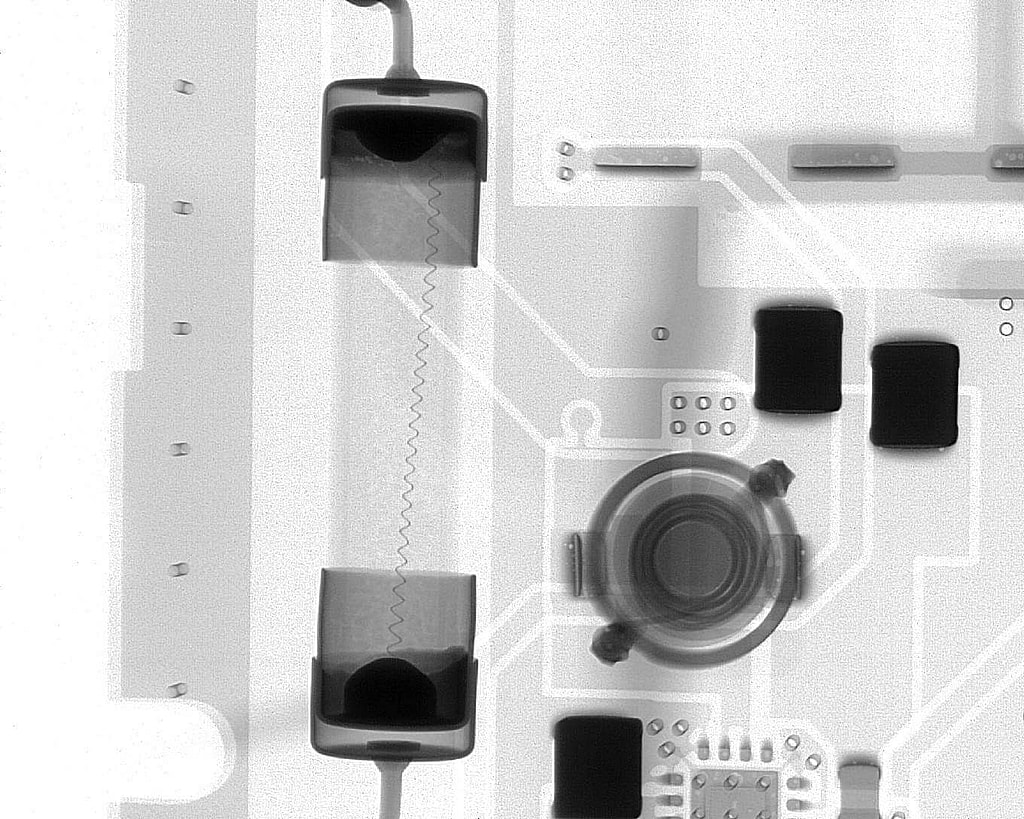
X-ray imaging is one of the most useful tools in a post-fire investigation. With radiography, a forensic engineer can document what’s inside a burned appliance and its electrical components before anything is taken apart. The artifact is recorded in its as-found condition, and it stays available for both sides to evaluate.
Our X-ray imaging tools produce high-resolution images of control boards, motors, wiring harnesses, battery cells, relays, and switches. Without that imaging, you’d usually have to cut into or take apart fragile evidence just to find out whether a conductor buried in melted insulation is severed, or whether the solder at a joint has been displaced or resolidified.
Take a hypothetical case. A fire is reported to have started in a brewery’s automated keg-washing machine, and by the time investigators arrive, the machine’s control box is unrecognizable. Radiography can show the internal condition of the thermal cutoff, the control board, and the conductors that serve them. It can show whether the cutoff element is open and whether solder at its terminals has been displaced, and the chain of custody for that fragile evidence stays intact throughout. What radiography can’t establish on its own is why the part failed. A defect opinion still calls for an examination of the component itself and, where it’s warranted, a comparison against exemplars. The competing explanations also have to be ruled out.
Where Thermal Imaging Fits in a Fire Investigation
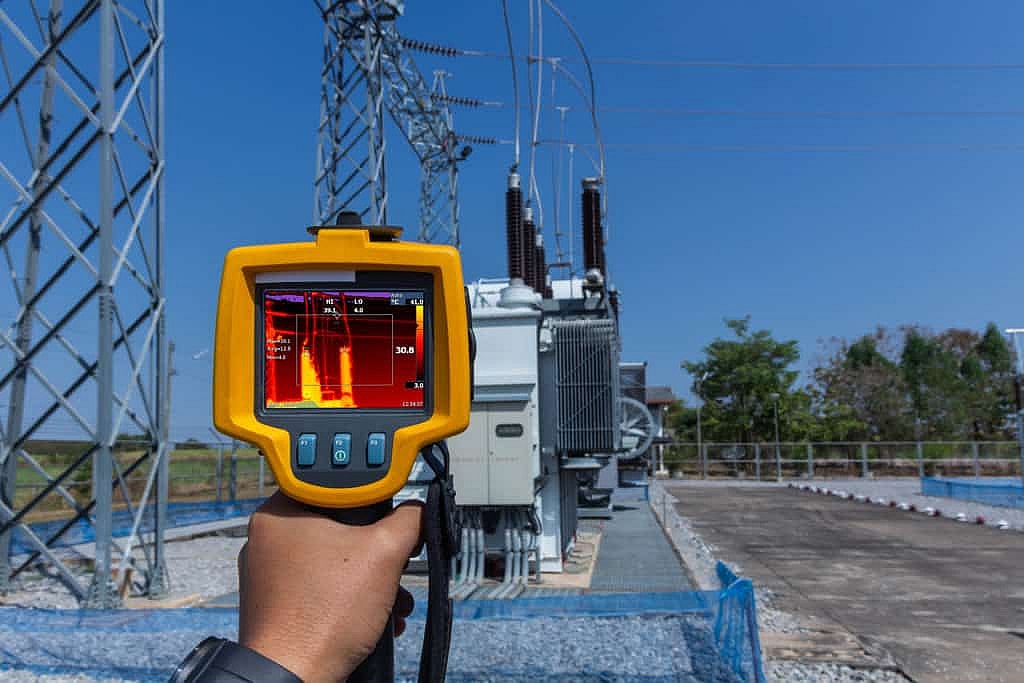
Thermal imaging does a different job. We use it on site to inspect equipment that’s still in service, and in the lab for controlled testing. An infrared camera measures surface temperature at the moment the reading is taken. On equipment that’s energized and under load, that makes it good at finding loose or high-resistance connections, overloaded conductors, and components running abnormally hot. It also lets us compare a suspect unit with a like unit that’s operating normally.
X-ray tells you about the physical condition inside a part. Thermal imaging shows how components behave while they’re energized and under load. In the brewery example, the thermographic comparison wouldn’t be run on the burned machine at all. A cold, de-energized assembly holds no thermal signature from an earlier event, because infrared thermography measures surface temperature as it is now and can’t read thermal history. The comparison is done instead on an exemplar of the same model, energized and loaded under controlled conditions, to show whether an abnormal localized temperature rise appears on the suspect design and is absent on a sound unit. On the burned artifact itself, the evidence of earlier overheating is physical. It shows up as heat tint and oxide patterns, discoloration, resolidified or wicked solder, annealed or embrittled conductors, and localized charring. All of that is documented by visual, radiographic, and metallurgical examination rather than by an IR camera.
With both X-ray and thermal imaging available, we can check the two lines of evidence against each other. Neither one replaces the analysis itself. What they give us are documented, repeatable observations that another engineer can review, and that legal experts, courts, insurance adjusters, and business owners can rely on.
How We Put the Evidence Together
Specialty imaging is valuable, but no instrument determines a cause on its own. Forensic engineering is systematic work, and it depends on an engineer who can put the findings in context and see how they relate. So alongside the imaging, we look at fire patterns and soot deposits, work through the schematics, examine the materials, interview witnesses, and review event logs.
Looking at all of it together is what makes an opinion defensible. We test each candidate hypothesis against the physical evidence and deal with the alternatives on the record instead of passing over them. If the evidence won’t support a single origin or cause, NFPA® 921 provides for classifying the cause as undetermined. We’d rather report it that way than offer an opinion the file can’t support.
A Hypothetical Electrical Fire on a Manufacturing Conveyor Line
This is a composite example of how the approach above works. It isn’t an account of any specific engagement, and no conclusion about an actual fire or product should be drawn from it. Suppose a packaging plant has a fire that shuts down operations. The reported area of origin is near the motor housing on an automated conveyor line, which the plant uses to move sealed boxes of product from manufacturing to shipping.
In a case like that, an adjuster’s first impression is often employee misuse or deferred maintenance. Those are legitimate hypotheses. So are circuit overload, an external heat source, an installation or wiring defect, and a component defect. Surface fire damage rarely distinguishes among them. Sorting them out is what an instrumented examination is for.
Radiographs of the control module and motor housing can document the internal condition of the assembly without anyone taking the charred remains apart. They can show whether the solder at a relay serving the variable frequency drive (VFD) has been displaced or resolidified, whether conductors are severed, and where the arcing damage is. There may also be physical signs that the heating developed over time, such as heat tint, oxide formation, and wicked solder. Those belong to the same family of warning signs that can precede an electrical fire.
Thermography has a role here too, but only on equipment that can be energized. If an identical conveyor drive is still in service, it can be run under a known load and surveyed to see whether the same localized temperature rise appears on units that never burned. A result like that speaks to whether the condition is systemic across the installation. It says nothing about the thermal history of the unit that burned.
An examination like this documents a mechanism, so the loss isn’t decided on a first impression. Assigning fault isn’t the engineer’s role, though. What we deliver is an origin and cause analysis supported by evidence, with the competing hypotheses tested and addressed in line with NFPA® 921. That analysis might feed into a subrogation claim against a manufacturer or installer, a coverage decision, or a defense against an allegation of misuse. What comes of it is up to the parties and the trier of fact.
How often lithium-ion batteries start fires, and why the published counts disagree, is set out on our lithium-ion battery fire statistics page.
When to Bring in a Forensic Electrical Engineering Firm
In many cases, a fire investigator from the town, city, or county can find the root cause. Commercial fires are a bit different. If the problem is misdiagnosed, the liability can bring heavy fines and recovery costs, and the business can lose market share.
With a commercial loss, it’s worth calling in a professional team like ours at Dreiym Engineering when you’re dealing with:
Related project: Chiller Drive Fire Analysis, Texas
- Any electrical fire involving commercial equipment, motors, generators, or VFDs
- A loss large enough that a subrogation or product claim is likely
- An insurance dispute over origin or liability
- Possible manufacturer defects or counterfeit parts
- Evidence that needs special handling and the expertise to preserve and document it properly
Our electrical engineers work regularly with insurance adjusters and attorneys, and with property owners too. We know how to capture and preserve the data that matters. That gives you a clearer picture of what happened, which failure mechanism explains it, and what it would take to prevent a recurrence.
If you need help with appliance failure analysis or an electrical fire in a commercial space, contact our appliance failure investigation team. We use documented, repeatable methods, so you get an answer about what happened and can decide how to move forward.