Consulting Areas
Power Quality and Harmonic Studies
We typically respond within one business day.
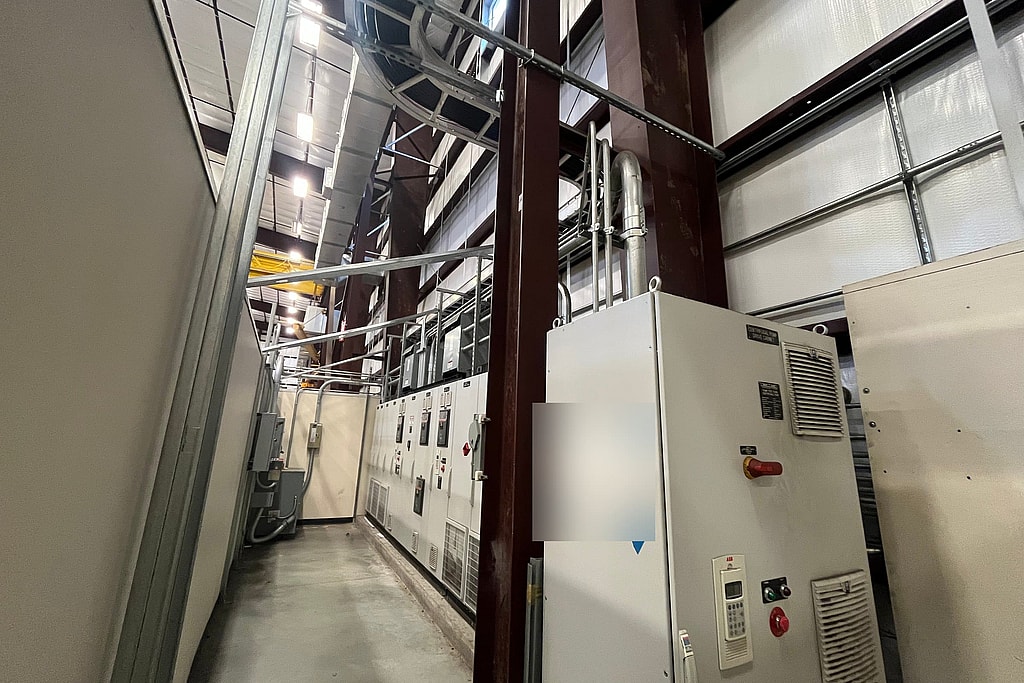
Finding Out What Is Really on Your Electrical System
What a Power Quality Study Answers
A power quality study measures the voltage and current on an electrical system over time and explains what the readings mean: sags, swells and interruptions, transients, unbalance, flicker and harmonic distortion. It answers practical questions. Why do drives, controls or electronics keep failing? Is the problem coming from the utility or from inside the facility? Is the plant sending too much harmonic current back to the utility? Will new equipment make things worse?
Our licensed Professional Engineers set up the monitoring, read the data and turn it into a report with findings and recommendations. Power quality work often goes together with grounding tests, load studies and arc flash studies, and the same site visit can cover more than one.
Contact us for a free quote. We typically respond within one business day.
Signs a facility needs a power quality study
- Variable frequency drives, UPS units or power supplies that fail or trip more often than they should.
- Nuisance tripping of breakers or ground fault relays with no fault found.
- Flickering lights, or motors and transformers running hotter than their load explains.
- Neutral conductors carrying more current than expected, or capacitor banks failing.
- A utility notice about harmonics or power factor, or a large new load such as drives, chargers or a UPS being added.
Some problems start outside the facility, such as utility switching, faults on nearby lines or a weak source at the end of a long feeder. Others start inside, from drives, rectifiers and other nonlinear loads, from large motors starting, or from loose connections and grounding faults. Monitoring at more than one point shows which side of the meter the problem is on.
How the Study Is Done
We install power quality analyzers at the service entrance and at the equipment of interest, such as a motor control center, a drive or a sensitive load. Recording runs long enough to capture normal operation and the events being chased, and the recordings follow the methods in IEEE 1159 for monitoring and classifying power quality events.
Harmonic distortion is compared with the limits in IEEE 519. Voltage limits apply where the facility connects to the utility, and current limits depend on how strong the utility source is compared with the facility load, so the utility short circuit data and the facility one-line diagram are part of the study.
Analyzers are connected with clamp-on current probes and voltage leads while the equipment runs, so a shutdown is rarely needed.
What the Report Covers
- The events recorded, with time stamps that can be matched to equipment trips and failures.
- Harmonic voltage and current at each monitored point, by individual harmonic order and as total distortion.
- A comparison with IEEE 519 limits where the study calls for it.
- Likely sources, such as drives, rectifiers, UPS units and LED lighting, and where the problem enters the system.
- Recommendations, such as filters, line reactors, grounding and bonding repairs, or changes to how equipment is connected, with a harmonic study model when a fix has to be sized.
Power Quality in Our Project Work
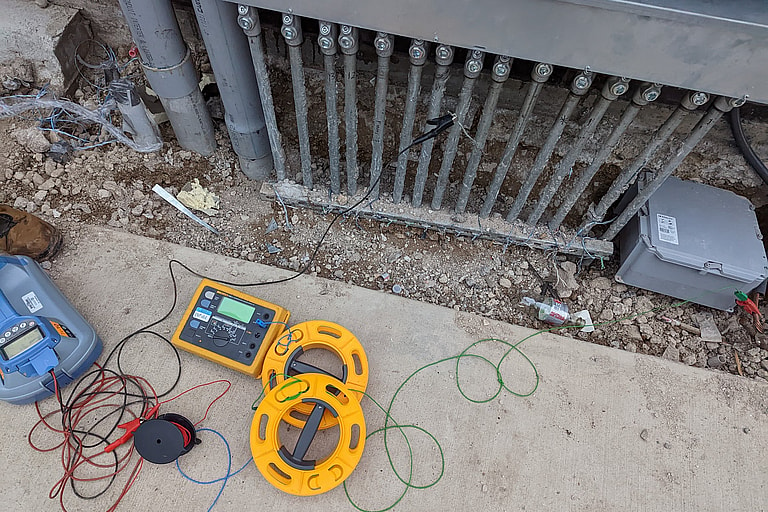
At a brewery in South Central Texas with repeated drive failures, we ran a grounding survey and a period of power quality monitoring. Harmonic distortion on the bottling plant feeders stayed under the usual guideline and no power quality events were recorded, so the fixes focused on grounding. The write-up on the brewery grounding survey and power quality monitoring has the details.
At a Houston area terminal, a harmonic study at both utility connection points came with the arc flash and motor starting studies for new motor control centers. See the terminal arc flash, harmonic and motor starting studies.
When equipment has already failed, our electrical failure analysis work examines the damaged parts, and the lab power quality analyzer and motor drive analyzer support the testing.
Frequently Asked Questions
What is the difference between a power quality study and a harmonic study?
A power quality study measures what is happening on the system: events, distortion, unbalance and trends over time. A harmonic study models the system, usually to size a filter or to check a planned change against IEEE 519. Many projects use both: measure first, then model the fix.
How long does power quality monitoring run?
Long enough to cover the normal operating cycle of the facility and the problem being chased. A plant that runs the same way every day needs less than one with weekly batches or seasonal loads, and the period is agreed before the meters go in.
Can poor power quality damage equipment?
Yes. Harmonics add heat in transformers, motors, neutral conductors and capacitor banks, and sags and transients can trip or damage drives and electronics. Even moderate harmonics add heat inside control cabinets that fans or air conditioning have to remove.
Is a power quality study the same as a load study?
No. A load study records demand to check capacity, for example under NEC® 220.87 before adding load. A power quality study looks at the quality of the voltage and current. One site visit can cover both.
What do you need before the site visit?
A one-line diagram if one exists, the size of the electrical service, a list of the equipment having problems and when the problems happen. If there is no current one-line diagram, a field walkdown can produce one.
Related Reading
- Hidden Expenses from Poor Power Quality: Preventing Voltage Sags and Surges with Electrical Load Analysis
Voltage sags and surges quietly drain profits through equipment damage and downtime. Learn how electrical load analysis prevents power quality losses.
- A Brief Look at the 3 Different Types of Electrical Load
Compare the three types of electrical load (resistive, inductive, and capacitive) and learn when a professional load analysis protects your system.
- When Does Your Business Need a Reliable Surge Protection Upgrade?
Spot the five signs your business needs a commercial surge protection upgrade, from aging SPDs to glitchy equipment, and what a layered system includes.
Project experience
Related projects
Get your project started
We typically respond within one business day.