Consulting Areas
On-Potential Cathodic Protection Surveys
We typically respond within one business day.
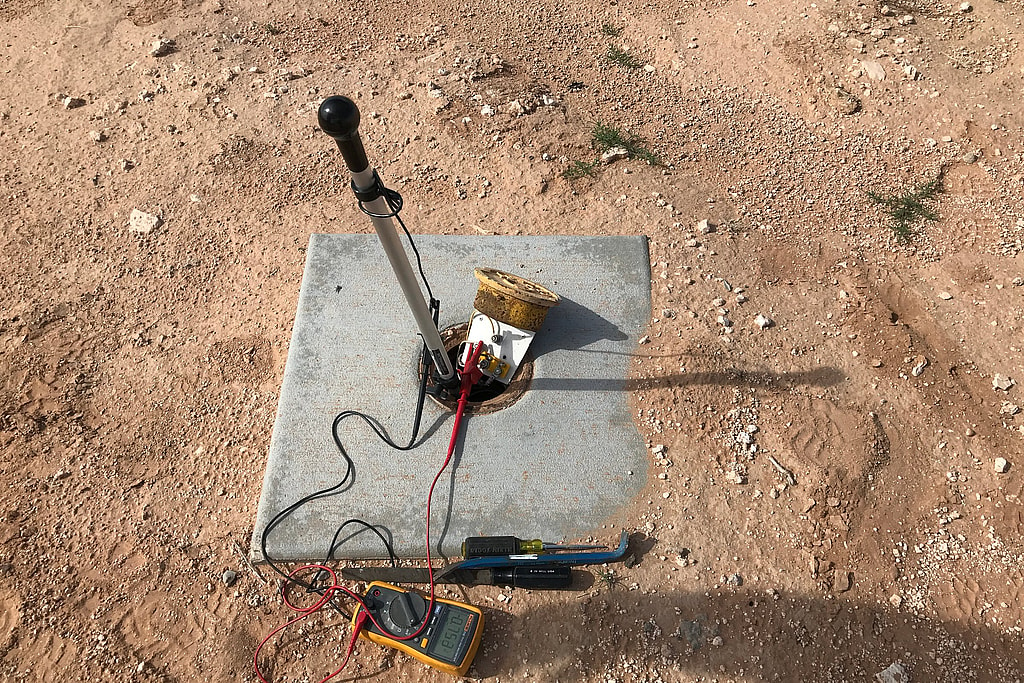
What Is an On-Potential Survey?
On-potential surveys measure the structure-to-soil potential of a pipeline, tank or other buried structure while its cathodic protection (CP) current is flowing. A technician connects a voltmeter to the structure, usually at a test station, and places a copper/copper-sulfate reference electrode on the soil above it. Nothing has to be switched off, so the survey is quick and inexpensive, and it is the reading most operators collect most often.
The limitation is the IR drop. With current flowing, the reading includes the voltage drop in the soil between the electrode and the structure, so it usually looks more protected than the structure really is. The NACE criteria allow an on reading to be used only when that voltage drop is considered, for example by comparing it with interrupted (instant-off) readings at the same locations. Our engineers set up on-potential surveys so the numbers mean something, and review them against the rest of your survey history.
Request a free quote for an on-potential survey or a review of your existing survey data. We typically respond within one business day.
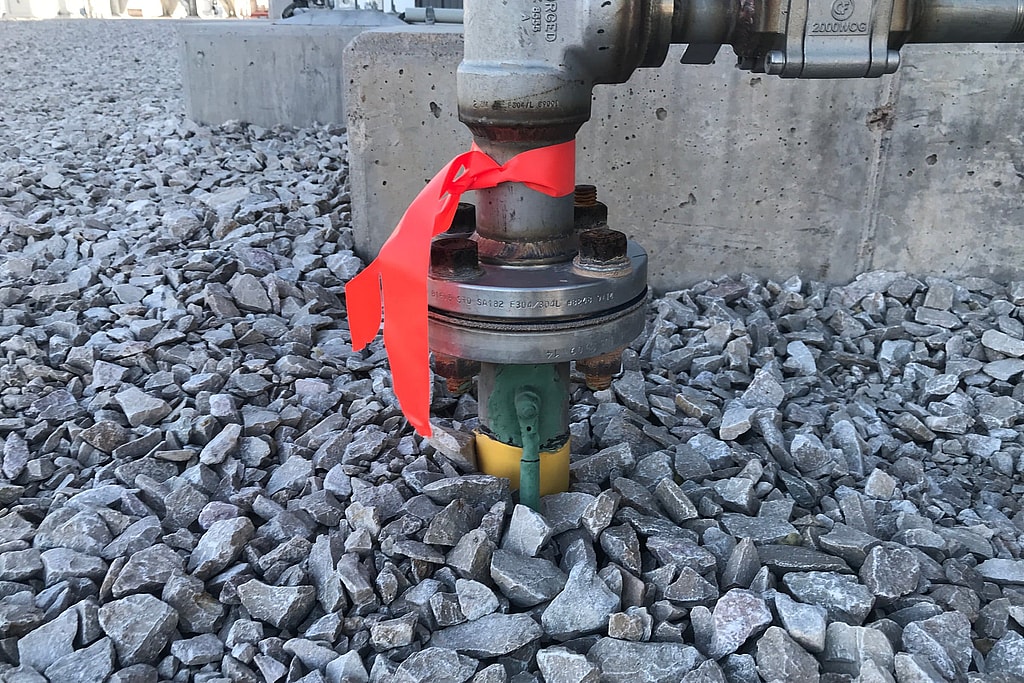
How an on-potential survey works
At each test station, the technician records the potential with the reference electrode placed directly over the structure, along with rectifier outputs and any bond or anode current readings on the route. Readings are logged with their location and compared with the previous survey, so a change stands out even when the value still looks acceptable.
On-potentials are the right tool for:
- Routine checks and trending between full surveys, including rectifier inspections.
- Galvanic anode systems where the anodes are connected directly to the structure and can’t be interrupted.
- Quick troubleshooting after a rectifier failure, new construction, a coating repair or other changes near the structure.
Once the IR drop has been measured with an interrupted survey, later on-readings at the same locations can be read against that baseline, as long as rectifier settings and conditions haven’t changed much.
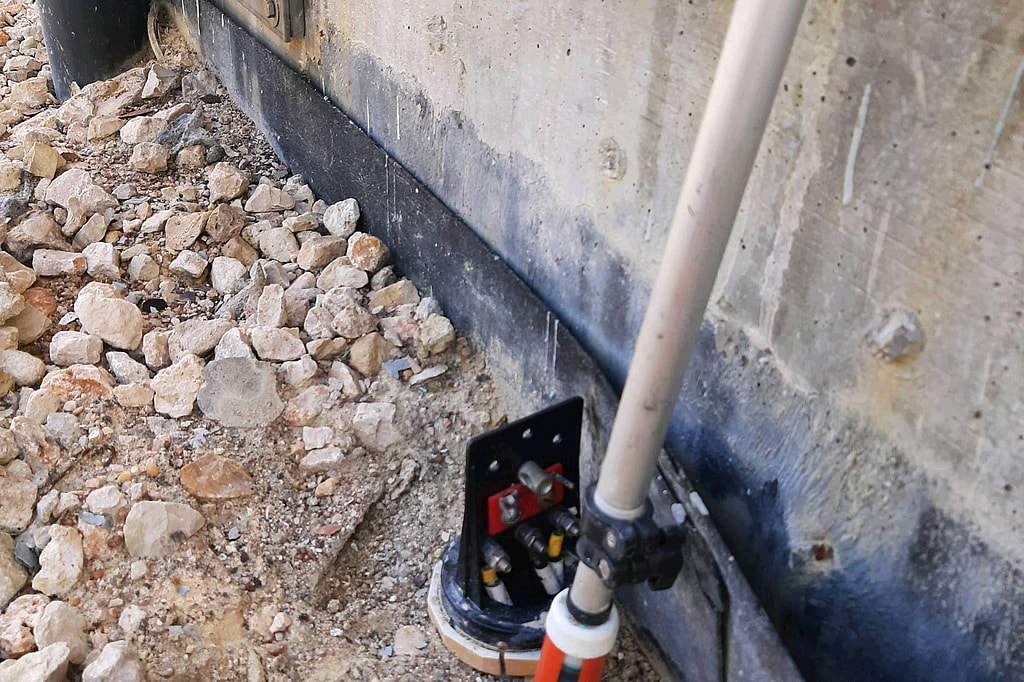
Why on-potentials alone can mislead
The IR drop grows with the current and the soil resistivity, so it is largest near rectifiers and anode beds, in dry or rocky soil, and where coating damage draws more current. A pipeline can read −1,100 mV with the current on at a test station and still be under-protected once the current is interrupted. The opposite mistake is also common: turning rectifiers up to chase on-readings, which wastes power and can damage coatings without fixing the real problem.
That’s why we treat on-potentials as one piece of the picture. When the readings or the trend look wrong, we recommend the next step: an interrupted potential survey to measure the polarized potential, a close interval survey to see what happens between test stations, or a DCVG survey to find coating damage. Our article on interpreting CP survey data explains the numbers in more detail.
Our survey work is overseen by licensed Professional Engineers. Stepan V. Eero, M.S., P.E. is a NACE CP Specialist (CP4), and Brian J. Brackensick, M.S., P.E. is a NACE CP Technologist.

What you get
Our report lists every reading by location next to the previous survey and the criterion you use, flags the locations that fall short or have changed, and explains what the readings can and can’t tell you. Rectifier outputs and bond currents are included, and each problem comes with a recommended fix, such as a rectifier adjustment, a bond or isolation repair, anode replacement or a follow-up survey.
Regulated pipelines have to be tested at least once each calendar year, at intervals not exceeding 15 months (49 CFR 192.465 and 195.573), and their rectifiers six times a year. On regulated work we format the report for your compliance records and make sure the method supports the criterion you use. See our cathodic protection surveys page for the full range of survey types.
Our offices are in Coldspring, Texas and Westcliffe, Colorado.
Request a free quote for an on-potential survey. We typically respond within one business day.
Frequently Asked Questions
What is the difference between an on-potential and an instant-off potential?
An on-potential is read while the CP current flows, so it includes the voltage (IR) drop in the soil. An instant-off potential is read a fraction of a second after the current is interrupted, before the structure starts to depolarize, so most of that drop is gone and the reading is close to the true polarized potential.
Can on-potentials be used to show compliance?
They can, but only when the IR drop has been considered, for example by comparison with interrupted readings, historical data or coupon test stations. A reading of −850 mV or more negative with the current on is not, by itself, proof that the structure is protected.
When is an on-potential survey the right choice?
For routine checks and trending between full surveys, on galvanic anode systems that can’t be interrupted, and for quick troubleshooting after a change. When a decision depends on whether the structure is really protected, interrupted readings are the better tool.
How often should potentials be measured?
Regulated pipelines at least once each calendar year, at intervals not exceeding 15 months, with rectifiers inspected six times a year. Underground storage tanks with cathodic protection are tested every 3 years. Your integrity program or permit may require more.
Related Services
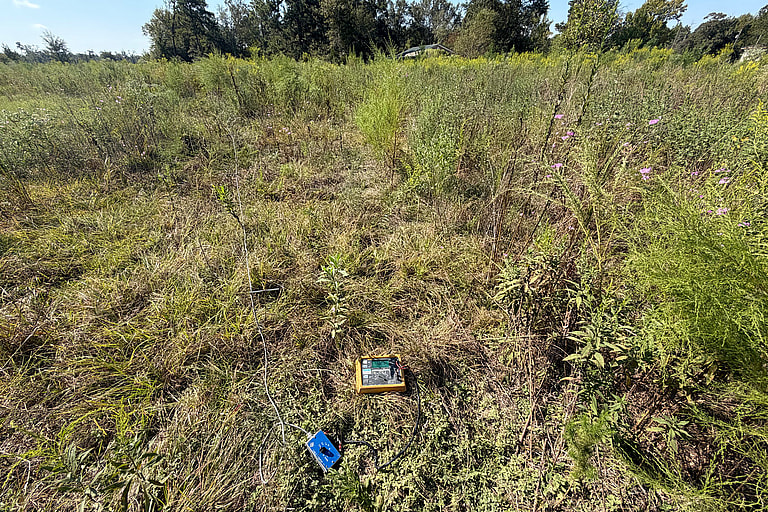
Soil Corrosivity Analysis
Field resistivity and laboratory pH, chloride, sulfate and bacteria testing of the soil around buried structures.
Corrosion Control Design
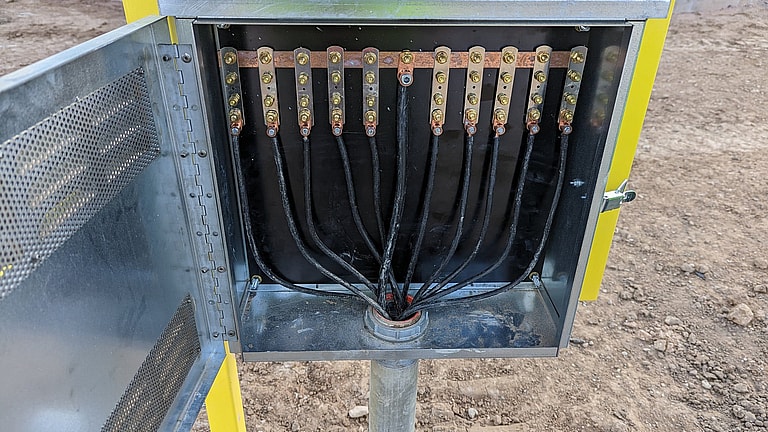
Design and installation of galvanic and impressed current cathodic protection systems.
Interference Testing
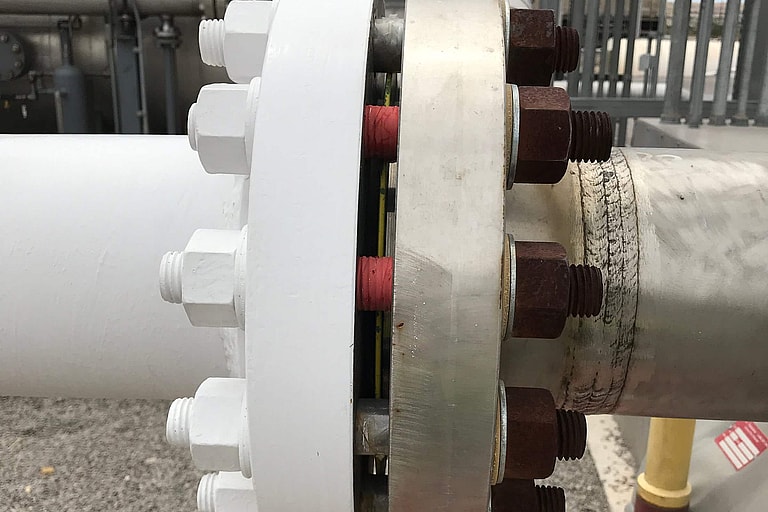
Testing and mitigation of stray current and AC interference from foreign pipelines, DC transit and power lines.
Get your project started
We typically respond within one business day.