The Hidden Dangers of Electric Heaters: Essential Safety Considerations
The dangers of electric heaters are fire, burns and malfunctions. Placement rules, the safety features to look for, and the carbon monoxide facts.
Contents
- Electric Space Heater Safety at Home and at Work
- How Electric Heaters Start Fires
- Why a 1,500 Watt Heater Can Overload a Household Circuit
- Burns from Hot Surfaces and Radiant Heat
- Heaters in Bedrooms and Around Children and Pets
- When the Heater Itself Fails
- Safety Features to Look For
- Do Electric Heaters Emit Carbon Monoxide?
- Space Heaters at Work
- Preserve the Evidence After a Heater Fire or Failure
- Frequently Asked Questions About Electric Heater Safety
- Avoiding the Dangers of Electric Heaters
Electric Space Heater Safety at Home and at Work
Electric heaters are a common source of extra heat in homes and offices, and in industrial buildings too. They’re easy to use and fairly cheap, and they put out heat the moment you switch them on. So every winter they come out wherever a room needs to warm up fast. Since they don’t burn anything, they avoid some of the hazards of fuel-burning heaters. They have risks of their own, though, and much of electrical heater safety comes down to where the heater sits and how it’s used. Below, we go through the main dangers of electric heaters and the safety devices commonly built into them. We also clear up a few misconceptions about how they work, especially the idea that they give off carbon monoxide.
How Electric Heaters Start Fires
Electric heaters are a leading cause of house fires in winter. The National Fire Protection Association (NFPA) estimates that from 2020 through 2024, fire departments responded to an average of 37,365 home fires a year involving heating equipment, about 11% of all reported home fires in that period. Space heaters and heating stoves accounted for nearly a third of those fires. They also accounted for roughly seven out of ten of the resulting deaths and injuries. Figures from the U.S. Fire Administration for 2017 through 2019 point the same way. Portable heaters played a part in only about 3% of home heating fires in those years. But they accounted for 41% of the fatal ones.
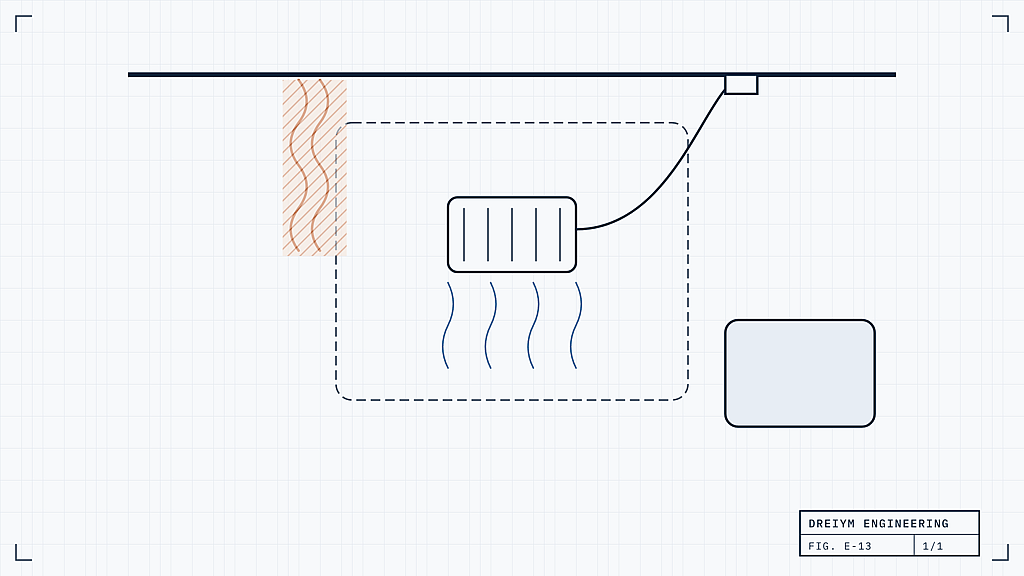
- One of the biggest fire risks is a heater placed too close to something that burns, such as curtains, bedding, furniture, or even paper. The heat coming off the coils and hot surfaces can ignite things nearby, sometimes within a few minutes.
- Heaters also draw a lot of current. Put one on a circuit that’s already heavily loaded, or run it from an extension cord, and the wiring can overheat and melt its insulation. That can even start electrical fires behind walls or under floors.
- Leaving a heater unattended, running it overnight, or using it somewhere unsafe, such as a damp bathroom, can make a fire much more likely. A heater that tips over or gets covered by accident can also trap heat until something catches fire.
How to Lower the Fire Risk
To lower the chance of a fire:
- Keep the heater at least three feet away from anything that can burn.
- Use one that shuts off automatically if it tips over or overheats.
- Plug it straight into a wall outlet, and never into an extension cord or power strip.
- Turn it off whenever you leave the room or go to sleep.
Why a 1,500 Watt Heater Can Overload a Household Circuit
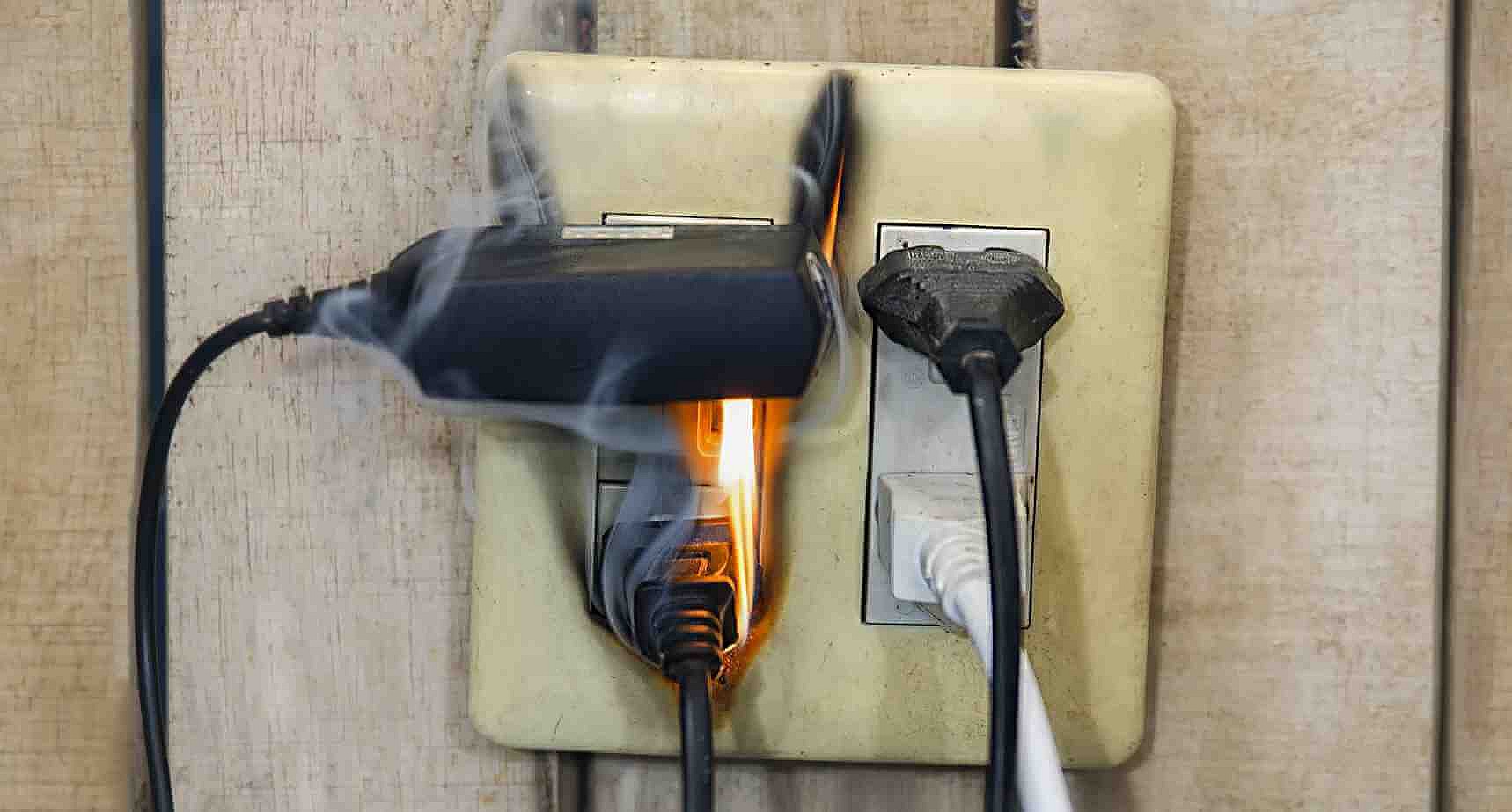
Most portable electric heaters sold in the United States draw 1,500 watts on their highest setting. On a 120 volt circuit, that’s about 12.5 amps, most of what a standard 15 amp branch circuit can carry. If a television, lamp, or phone charger shares the circuit, the total can get close to or past what the wiring and breaker were designed to carry for hours at a time. The National Electrical Code® (NFPA 70®) treats a load that runs for three hours or more as a continuous load. Circuits that serve continuous loads have to be sized with extra margin. A heater plugged into a general purpose receptacle was never part of that circuit’s design calculation.
With that much current flowing, a space heater’s plug and cord often feel warm while it runs. But some signs mean something’s wrong, and you should never ignore them: a plug that’s hot to the touch, a discolored or scorched receptacle, lights that flicker when the heater cycles, or a breaker that trips again and again. In our electrical failure analysis work, we regularly trace heater-related fire damage to something other than the heater itself. It might be the receptacle, an extension cord, or the building wiring that feeds it. If an outlet shows heat damage, stop using it and have a qualified electrician check it.
Burns from Hot Surfaces and Radiant Heat
An electric heater puts out intense heat in a small area. That same heat can burn people.
- Many electric heaters, particularly ones with exposed coils or metal grilles, can get hot enough on the surface to cause severe skin burns on contact. Children and pets are especially at risk, because they may not recognize the heater as a hazard.
- You don’t have to touch the heater to get burned, either. Its radiant heat can make nearby surfaces and objects hot enough to burn whoever touches them.
- Set a heater too close to flammable or heat-sensitive materials and it can start a fire. Even when it doesn’t, it can leave them dangerously hot to the touch.
Preventing burns takes a few precautions:
- Choose a heater with a protective grille and a safety certification.
- Set up a “kid-free zone” around the heater, ideally three feet or more.
- Make sure everyone in the household or facility knows not to touch a running heater or get too close to it.
Heaters in Bedrooms and Around Children and Pets
As the numbers above show, portable heaters cause a small share of home heating fires. Yet they cause a large share of the fatal ones. The losses concentrate where people sleep and where children and pets can reach a hot heater. For a family, that means giving the heater plenty of room and watching it while it runs. When nobody in the room is awake, it should be off. The table below puts this article’s placement rules in one place.
| Placement rule | What to do | Why |
|---|---|---|
| Clearance | Keep at least 3 feet (about 1 meter) of open space on all sides | Bedding, curtains, and paper can ignite in minutes |
| Children and pets | Keep children and pets 3 feet away, and watch the heater while it runs | Grilles and housings stay hot enough to burn skin on contact |
| Bedrooms | Turn the heater off before you go to sleep | Tip-over switches and overheat sensors are only a backup |
| Power | Plug directly into a wall outlet with nothing else on that outlet | A 1,500 watt heater draws about 12.5 amps; power strips and extension cords can overheat |
| Surface | Place on a level, hard floor, out of doorways and walking paths | Tip-overs and trapped heat are common ways these fires start |
| Alarms | Keep working smoke alarms on every level and in sleeping areas | Early warning gives sleeping occupants time to get out |
Suppose a heater has burned a child or pet, or scorched bedding, carpet, or an outlet. Treat that as a near miss. Take the heater out of service, and have the outlet and circuit inspected before you plug anything back in.
When the Heater Itself Fails
Like any electrical appliance, a heater can malfunction in ways that make it unsafe. Some of those failures call for a professional appliance failure analysis.
- Some heaters leave the factory with faulty wiring, poor assembly, or substandard components, any of which can make them short-circuit or overheat without warning.
- Older heaters wear out. Cords fray, switches fail, and internal parts break down over time. The result can be sparks, smoke, or a heater that stops working altogether.
- A repair done without the right knowledge, or with parts the manufacturer didn’t authorize, makes a malfunction more likely.
- Damp rooms are hard on heaters. Used in a bathroom, or anywhere else that’s humid or wet, a heater can corrode, and corrosion can cause dangerous electrical shorts.
A few habits keep a heater in good shape:
- Look it over regularly for visible damage. If the cord is worn or frayed, get it replaced right away.
- Unless you’re a qualified technician, don’t try to repair it yourself. Have a professional look at it, or replace the heater.
- Store it somewhere dry, and never use it where it could come in contact with water.
Safety Features to Look For
Modern electric heaters often have several safety devices built in to reduce the risk of fire, burns, or a malfunction.
- A tip-over switch shuts the heater off if it gets knocked over, which keeps it from starting a fire on the floor or carpet.
- Overheat protection uses sensors that watch the temperature inside the heater and turn it off if it gets dangerously hot.
- A thermal cutoff is a backup. If the main thermostat fails and the heater keeps heating past safe limits, the cutoff disconnects the power.
- Many newer models have a cool-touch housing, an insulated case that stays cooler, so an accidental touch is less likely to burn.
- Grilles and guards are physical barriers that help keep fingers and objects away from the hot elements inside.
When you buy an electric heater, look for a UL, ETL, or similar safety certification. In the United States, testing labs evaluate portable electric room heaters to UL 1278, the Standard for Movable and Wall- or Ceiling-Hung Electric Room Heaters. A listing mark from a recognized testing laboratory means a sample of that model passed the standard’s tests. Manufacturers have recalled heaters for fire and burn hazards in the past. Before you buy a used heater, or keep running an older one, search the CPSC recall database.
Do Electric Heaters Emit Carbon Monoxide?
You’ll still hear that electric space heaters give off carbon monoxide (CO), a dangerous and potentially fatal gas. A heater in good working order doesn’t.
- Carbon monoxide comes from the incomplete combustion of fuels such as gas, oil, wood, or coal. Appliances that burn fuel, like gas furnaces, kerosene heaters, and wood stoves, can give off CO if they malfunction or aren’t vented properly.
- An electric heater makes heat through electrical resistance and burns no fuel, so one that’s working properly produces no carbon monoxide. If it malfunctions and its own materials, or combustibles near it, start to pyrolyze or burn, it can produce CO, because any fire does. You still want working CO and smoke alarms anywhere a heating appliance of any kind is used.
- Electric heaters have other risks, but unless something is burning, CO poisoning isn’t one of them. If you smell burning or see smoke, that’s a sign of an electrical failure or a fire.
Space Heaters at Work
Space heaters turn up at work too. You’ll find them under office desks, in guard shacks, in warehouses, and on plant floors, often without facility management knowing. The Electrical Safety Foundation International (ESFI) recommends that employees get approval before using a space heater at work. The approval should come from a supervisor or facility manager. It also recommends turning every heater off and unplugging it at the end of the work day. The same applies whenever the employee leaves the room. Labs evaluate an ordinary portable heater for ordinary locations. It isn’t designed for areas where flammable vapors, gases, or combustible dust may be present. If your business has had a fire involving a heater, our commercial fire investigation team can determine the origin and cause and document it for insurers and counsel.
Preserve the Evidence After a Heater Fire or Failure
If a space heater is involved in a fire, a burn injury, or a near miss such as a melted plug or a scorched outlet, be careful what you do next. The heater, its cord and plug, the receptacle it was plugged into, and any extension cord or power strip on the circuit are all physical evidence. Don’t throw them away, take them apart, or return them to the store. Photograph everything where it is before anything gets moved, then store the damaged parts somewhere dry and secure.
Working out whether a fire started with a defective heater, a damaged cord, a failed receptacle, or the building wiring is exactly what a forensic electrical engineer does. The answer can decide an insurance claim, a subrogation action, or a product liability case, and once the evidence has been thrown away, there’s often no way to tell. We do fire and explosion investigations and residential electrical investigations nationwide. Our clients include homeowners as well as insurers and attorneys.
Frequently Asked Questions About Electric Heater Safety
Can an electric space heater give off carbon monoxide?
A properly working electric heater can’t give off carbon monoxide. CO comes from burning fuel, and an electric resistance heater doesn’t burn anything. If a carbon monoxide alarm sounds while an electric heater is running, look for another source, such as a gas furnace, a fuel-fired water heater, or a vehicle in an attached garage.
Are electric heaters bad for your health?
An electric heater burns no fuel, so it does not give off carbon monoxide or other combustion gases. The health effects are smaller. Heating lowers the relative humidity indoors, which can dry out eyes, skin and airways. Dust on the elements can burn off with an odor, especially at the start of the season. Hot surfaces can burn skin, which matters most for children, older adults and pets. The serious risks are fire and overloaded circuits, covered above.
Is it safe to leave an electric heater on overnight?
You shouldn’t leave one running overnight. NFPA, ESFI, and the U.S. Fire Administration all advise turning space heaters off when you leave the room or go to sleep. Tip-over switches and overheat sensors are backup protection. They can’t stand in for someone watching the heater, and on a worn or defective unit, they can fail.
Can I plug a space heater into a power strip or extension cord?
A power strip or extension cord is the wrong place for a space heater. A 1,500 watt heater draws about 12.5 amps, which is more current than many power strips and light duty extension cords are built to carry continuously. They can overheat and start a fire. Plug the heater straight into a wall outlet, and don’t plug anything else into that outlet.
How far should a space heater be from a bed, curtains, or furniture?
Keep at least three feet of clear space between the heater and anything that can burn, including bedding, curtains, papers, clothing, and rugs. Set it on a level, hard surface instead of carpet or furniture, and keep it out of doorways and walking paths.
Why does my space heater keep tripping the breaker?
Either the circuit is carrying more load than it can handle, or something on it is failing. A heater that shares a circuit with other loads can push the total past the breaker’s rating, and a failing heater, cord, or receptacle can trip it too. Treat repeated tripping as a warning, and don’t just keep resetting the breaker. Move the heater to a circuit with nothing else on it, and if the tripping continues, have a qualified electrician inspect the circuit.
Avoiding the Dangers of Electric Heaters
Used properly, an electric heater is a convenient and effective way to heat a space. But the risk of fire, burns, and electrical malfunctions is easy to underestimate, and that’s as true in an office or a plant as it is at home.
- Follow the manufacturer’s instructions and safety guidelines.
- Inspect and maintain the heater regularly, looking for wear or any sign of a malfunction.
- Never bypass a safety feature or use the heater for anything it wasn’t designed to do.
- Keep an eye on what’s near it. Children, pets, and anything combustible need to stay clear of it.
- An electric heater is safer than a fuel-burning one in some ways, but it still carries risk.
If you’re dealing with a fire or burn incident, contact Dreiym Engineering. Our licensed professional engineers handle forensic investigations related to fires and burns. We can determine what caused a fire or an electrical malfunction and provide an electrical engineering expert witness if you need one.