When Does Your Business Need a Reliable Surge Protection Upgrade?
Spot the five signs your business needs a commercial surge protection upgrade, from aging SPDs to glitchy equipment, and what a layered system includes.

Contents
In a fraction of a second, the voltage on a building’s electrical system can jump far above its normal operating range. Without adequate business surge protection, that transient can damage equipment a process can’t run without and take connected networks down with it. When that happens, the day’s production stops. Some transients come in from outside, when lightning strikes the utility line or a nearby structure, or when the utility switches equipment on its system. Others start inside the building, when its own large loads switch on and off.
Related project: Surge Damage to Rooftop Air Handlers, South Texas
A lot of the damage from transient overvoltages doesn’t happen all at once. Every time an inductive load such as an HVAC compressor, a motor, an elevator, or a copier switches on or off, it puts a low-energy transient on the premises wiring. Each piece of industrial equipment you add is one more source. One of these events on its own rarely breaks anything you’d notice. Over time, though, they wear down insulation and the semiconductor devices inside connected equipment, so when something finally fails, the failure doesn’t look connected to any one event.
Protection starts with a sound commercial electrical design. That means surge protection designed as a coordinated system, on top of adequate grounding and bonding, with each device picked for the actual conditions where it’s installed. Good design lowers the odds of surge damage and limits how bad it gets, but it can’t take the risk to zero. The rest of this post covers what a business should know before deciding whether an upgrade is worth doing.
What Is Surge Protection and Should You Care?
An electrical surge is any rise in voltage above a system’s normal operating range. Some variation is expected and harmless. Utility voltage moves around within a band near nominal, and ANSI C84.1 Range A allows a service voltage anywhere from 114 to 126 volts on a nominal 120-volt system. The surges that do damage are transients. They last microseconds to milliseconds and can reach hundreds or thousands of volts, which is enough to punch through insulation or destroy the semiconductor devices in connected equipment.
Surges have several root causes, and most are out of a business’s direct control. Grounding and bonding problems in the building don’t create surges, but they make the damage worse and can keep surge protective devices (SPDs) from working as intended, so they’re on this list too:
- Lightning, from a direct strike or from a nearby strike that induces transients on utility, communication, and interior conductors
- Utility switching, including capacitor banks, and power coming back on after an outage
- Large loads on site, such as motors, compressors, chillers, and elevators, switching on and off
- Wiring and terminations that are damaged, loose, or corroded
- Faults on the premises wiring, and the protective devices operating to clear them
- An undersized, corroded, or incomplete grounding electrode system, which leaves the SPDs with no low-impedance path to discharge into
- Poor bonding, which lets damaging potential differences develop between the power, communication, and piping systems
How much harm a surge does depends on what’s connected to the circuit. At home, one event often means nothing worse than a computer that has to restart, though surges from lightning do destroy household equipment and start fires. In a business, the same event can hit sensitive control systems, networked computer equipment, and automation hardware all at once. The downtime goes straight to lost revenue, and in a laboratory or a process environment you can also lose whatever was in process at the time.
5 Signs Your Business Needs a Surge Protection Upgrade
If nobody has ever evaluated your surge protection, start with the electrical system you already have. These are the most common signs that the protection, and the design behind it, need attention.
1. Relying Too Much on Basic Power Strips
An ordinary plug strip (properly called a relocatable power tap) gives no surge suppression at all unless it’s listed as a surge protective device. Under UL 1449, listed surge strips and similar point-of-utilization devices are Type 3 SPDs. They’re meant to be the last stage of a protection scheme, and they can’t stand in for the rest of it. The suppression components inside wear out as they absorb surge energy. Once they’re gone, the strip usually keeps powering whatever is plugged into it, so the person using it can’t tell the protection has stopped working.
If a big load like a server bank or a refrigeration system runs off plug strips, you have a circuit-capacity problem on top of the surge problem. A commercial electrical load analysis finds imbalance and overloaded circuits and works out what panels, branch circuits, and permanently connected protection that equipment needs.
2. Expanding with New Equipment
When you add production machinery, A/V systems, or upgraded HVAC equipment, more than the connected load changes. Every new inductive load is one more source of switching transients, and the protection you have may not be at the panels that serve the new equipment. If the service or a transformer gets upsized to carry the addition, the available fault current at the affected panels changes too. An SPD already installed there may no longer have the short-circuit current rating that point now requires.
Surge protection has to match the system voltage and configuration, the available fault current where it’s installed, and how sensitive the protected equipment is. A periodic protection and coordination review catches the gaps, including the ones new equipment opens up.
3. Frequent Equipment Resets and Glitches
Point of Sale (POS) terminals that reset at random during the day, or LED arrays in a display case that flicker for no clear reason, are worth looking into before everyone gets used to them.
Symptoms like these point to a power quality problem, but on their own they don’t prove it’s a surge. Voltage sags, loose neutral or grounding connections, shared-neutral circuits, harmonic distortion from electronic loads, and transients can all cause similar complaints. Sorting out which one you have takes measurement, with a recording power quality monitor at the affected panel left in place long enough to catch the events, and an inspection of the terminations, grounding, and bonding. The data tells you whether the fix is more surge protection, a wiring correction, or both.
4. Worn-Out Surge Protection
An SPD doesn’t have a set service life in years. Most use metal oxide varistors (MOVs), which degrade as they divert surges, so how long they last depends on how many surges they see and how big those surges are. A device in an exposed location can be close to used up within a few years, while the same kind of device somewhere sheltered may stay serviceable much longer. Age alone shouldn’t decide when to replace one. Go by the status indication on the device, any diagnostic or monitoring output, the manufacturer’s stated service conditions, and known events such as a nearby lightning strike.
SPDs usually fail without any obvious sign. A degraded unit normally keeps passing current to the load, so the equipment keeps running after the protection is gone. Panel-mounted devices with status indicators, remote alarm contacts, or monitoring tied into a building management system let you see when that has happened. An inspection will also turn up places with no protection at all, which is common at older service entrances and at panels added during earlier expansions.
5. You’ve Never Used Surge Protection Before
Surge protection can sound like a sales pitch, but forensic investigations of equipment losses and structure fires regularly find transient overvoltages and lightning damage among the contributing causes, alongside failures with entirely different origins.
If a licensed electrical engineer has never reviewed the protection systems, start there. Devices bought off the shelf are fine for what they’re listed to do. But a Type 3 device at a receptacle can’t do the job of protection at the service entrance and the distribution panels, and it won’t fix a grounding or bonding problem. A coordinated scheme has to be designed around the specific service, its available fault current, and the equipment it protects.
Related service
Studies modeled in ETAP® and SKM, field testing and electrical design by licensed PEs.
What a Modern Surge Protection System Should Include
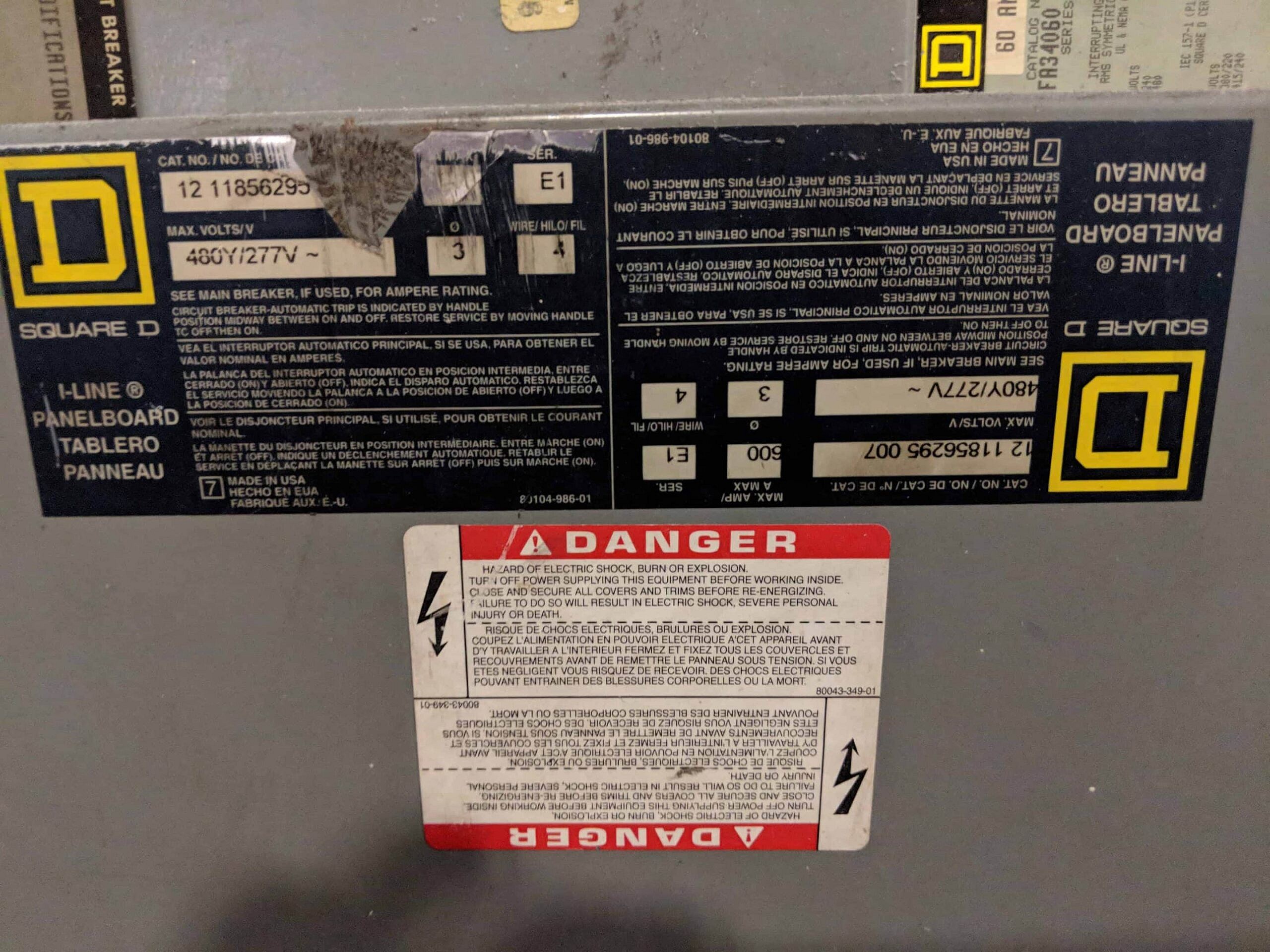
Commercial buildings keep adding equipment, electronics, and support devices to electrical systems that are often decades older than the loads they now carry. Protecting a building like that takes more than a single device. You need a coordinated, multi-stage scheme, sized for the building’s service and backed by verified grounding. It generally includes:
- Service entrance surge protection means a permanently connected SPD where utility power enters the building. On the line side of the service disconnect that’s a Type 1 device, and on the load side it can be Type 1 or Type 2. Its job is to limit the transients coming in from the utility, including the ones from lightning and switching. It doesn’t intercept lightning, though. That’s what a lightning protection system is for. The device has to suit the system voltage and configuration and carry a short-circuit current rating at least equal to the available fault current at that point. Pick one with an adequate nominal discharge current and a low voltage protection rating.
- Type 2 SPDs at the distribution and branch panels knock down whatever residual transient gets past the service-entrance device, and they limit the transients that loads inside the building generate. Keep the leads as short and straight as practical, because the impedance of those conductors adds to the voltage the protected equipment sees.
- At the point of use, sensitive electronics, servers, laboratory instruments, and production automation should get a Type 3 device at the receptacle or in the equipment cabinet as the final stage. Type 3 devices are designed to work behind upstream protection, and they’re subject to the conductor-distance requirement in the manufacturer’s instructions and the National Electrical Code®.
- Monitoring is what tells maintenance staff when a device has degraded or disconnected. That can be status indication, remote alarm contacts, or diagnostics reported to a building management or control system. Without it, a drop in protective capacity goes unseen until something downstream fails.
- All of this rests on proper grounding and bonding. An SPD limits the voltage between conductors and sends surge current into the grounding system, so it’s only as good as that system. A grounding electrode system in sound condition, with the power, communication, and piping systems bonded to it, keeps the potential differences between those systems down. If the grounding or bonding is deficient, the device can’t perform as rated, and surge current can find its way through equipment instead.
That’s several stages of protection, but the result doesn’t have to be complicated. An engineer who knows SPD selection, coordination, and grounding can specify a scheme your maintenance staff can inspect and keep up.
What This Could Look Like at a Medical Testing Lab
This example is an illustrative composite. It isn’t an actual project, and it doesn’t describe any client, site, or engagement. Say a diagnostic laboratory keeps having equipment failures. Blood analysis instruments reset or fault in the middle of runs, and the temperature-controlled sample storage alarms whenever the power is interrupted. A maintenance contractor looks at it first and blames the age of the building systems, but finds no specific cause.
For a facility with that history, an engineering assessment would look at a defined set of conditions:
- Whether there’s any surge protective device at the service entrance at all, and if there is, its type, ratings, and condition
- How old the panel-level SPDs are, what they’re rated for, and what their status indicators show, including any put in during earlier renovations
- The grounding electrode system, how the power, communication, and piping systems are bonded, and the terminations in the panels that serve the affected instruments
- How much the sensitive instruments rely on plug strips, and whether those strips are listed surge protective devices in the first place
Findings like these go into a written engineering report with a defined scope of corrective work. Here, that would be a coordinated multi-tier SPD scheme with service-entrance and panel-level devices selected for the system voltage and the available fault current, grounding and bonding that have been verified, and point-of-use protection at the instruments themselves. Power quality data recorded over a representative period shows whether transients are really present and whether the corrections took care of them. Whether an insurer helps with the cost depends entirely on the policy and the facts of that particular claim.
An assessment like this is worth doing at any facility that depends on sensitive instruments, older buildings included. It documents what shape the protection is in and turns up the problems that replacing devices one at a time tends to miss.
Surge Protection as Risk Management
Surge damage often goes unnoticed until equipment fails or there’s a loss, and the degradation that builds up beforehand leaves no visible trace. A coordinated protection scheme, correct grounding and bonding, and periodic inspection make that outcome less likely and less severe. They don’t remove the risk, and no engineer can responsibly promise you they will. Contact Dreiym Engineering and we’ll evaluate your existing protection against the building’s service, its available fault current, and the equipment it serves, and document the results in a form that supports insurance and code compliance review.