Investigating Electrical Failures After Flooding or Water Intrusion
Electrical failures after flooding often surface when power returns. The warning signs, and how forensic engineers investigate flooded systems.

Contents
- Why Flooding Causes Long-Term Electrical System Damage
- Electrical Equipment Most Vulnerable to Flood Damage
- Warning Signs of Electrical Failure After Flood Exposure
- The Forensic Engineering Investigation Process
- What Businesses Should Do After Flooding
- Why Professional Investigation Protects Your Facility
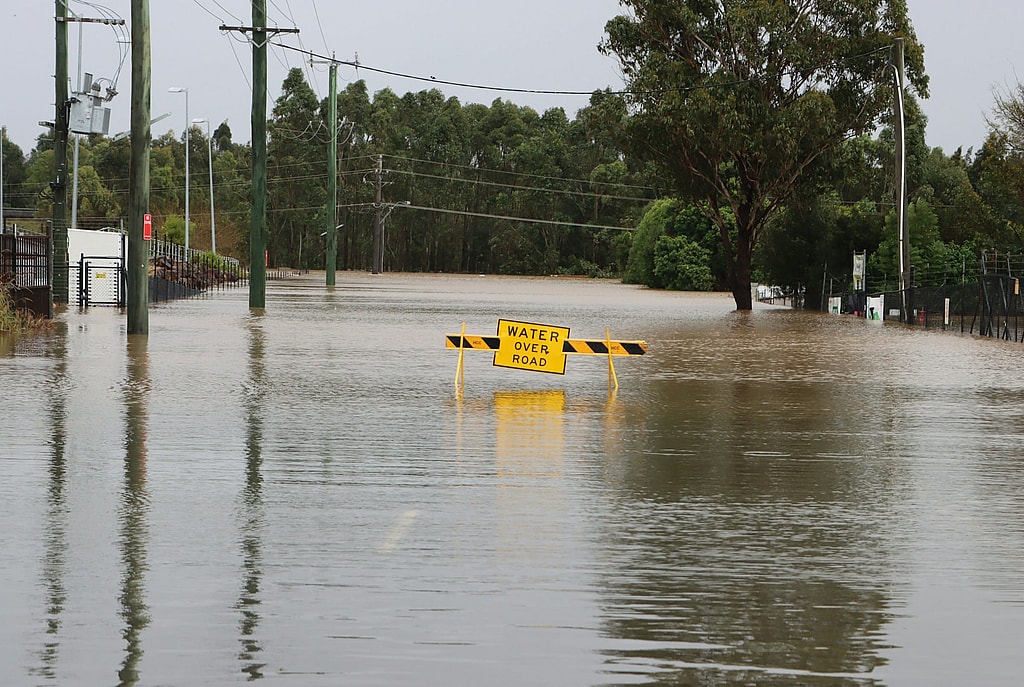
Nearly 730,000 retail, office and multi-unit residential properties in the United States are at risk of flood damage, according to a 2021 First Street Foundation study. When you consider spaces in areas of heavy rain, hurricane lanes, or storm exposure, that number increases significantly. Even minor electrical failures after flooding can cost you thousands in repairs.
Key takeaways
- Flooding damages electrical systems in ways that can surface long after the water is gone.
- Electrical equipment in industrial, mechanical and commercial buildings is particularly sensitive to water intrusion.
- Warning signs after flood exposure include intermittent power interruptions.
- A visual inspection is likely not enough; a forensic investigation tests breakers, panels, transformers, wiring and control equipment.
Energized gear that survived the event needs its own screening; see our post on PD detection in high-voltage gear after fire exposure.
The problem is that flooding doesn’t just get into the file room or damage that couch you carefully sourced from a vintage shop downtown. It also impacts your electrical systems. When moisture gets into sealed panels or sits around wire insulation, it creates hidden electrical hazards that will escalate when power is restored or restarted.
Many facility owners work hard to clean up after a flood. They hire teams to remove heavy debris, repair walls, and dry out the floors while checking for mold. They also need to hire forensic engineers to ensure water damage to electrical systems is kept to a minimum.
Why Flooding Causes Long-Term Electrical System Damage
In July of 2025, the Guadalupe River flood killed anywhere from 138 to 141 people. While smaller in scope, the Tennessee flood caused millions in damage to local businesses unlikely to ever reopen.
Floodwater isn’t clean. When that moisture gets into a building, it carries dirt, chemicals, oils, and other contaminants that will harm your electrical system. The conductive contamination mixes water with dissolved minerals, creating unintended pathways between conductors. That will lead to short circuits and electrical faults.
Flooding also accelerates corrosion. The metal conductors on your terminals and connectors form corrosive layers, weakening electrical systems. It will spread, increasing resistance and heat buildup that can ignite nearby materials. Insulation can also degrade, and all those conductors you rely on become exposed, leading to possible arcing. Water damage to electrical systems is not a temporary inconvenience after a flood or storm. It is a serious concern.
Electrical Equipment Most Vulnerable to Flood Damage
Industrial, mechanical, and commercial buildings exposed to flooding often have electrical equipment particularly sensitive to water intrusion. That risk can be challenging to detect during a basic walkthrough and requires more detailed investigation by forensic engineers. Those materials might include:
- Electrical Panels & Switchgear: Water gets into panel enclosures, damaging breakers, corroding busbars, and contaminating protective materials.
- Transformers: Water will degrade insulation or mix with internal fluids that regulate temperature and electrical isolation. Those will then fail under load, disrupting power to your entire site.
- Industrial Motors & Rotating Equipment: Floodwater damages internal windings, weakens insulation, and does some serious damage to your bearings. While not immediately apparent, the risk often emerges just before you return to full operation.
- Automation & Control Systems: Moisture intrusion will damage programmable logic controllers, sensors, and communication modules. That makes it difficult to continue automated processes or communicate between certain industrial-grade equipment. Wet or corroded terminals in field wiring can also make a 4-20 mA signal drift without raising a failure alarm.
Such sensitive systems need careful examination and restoration. Otherwise, you’ll likely have a single water intrusion event trigger a ripple of damage and financial costs that can only escalate once power is restored.
Warning Signs of Electrical Failure After Flood Exposure
The good news is that most electrical systems exposed to water damage from flooding, rain, or storms often signal some early warning signs, but you have to be aware of them to notice them. You might experience intermittent power interruptions. That is a clear sign that you have damaged components that struggle to maintain a stable power supply. It also happens when your circuit breakers trip, even without a visible cause.
Burning odors are another clear sign. If you walk past your electrical panels and smell rubber on fire or the sharp hint of heated metal like a s’more skewer left in the fire too long, you have an issue. Corroded terminals and high-resistance points generate a lot of heat, which can lead to electrical fires if left unattended.
Be on the lookout for flickering lights, unstable voltage levels, or equipment overheating after a restart. The signs might appear gradually at first, but will only escalate during regular operations, so be sure to carefully monitor your systems at all times after a flood-related incident.
The Forensic Engineering Investigation Process

The truth of the matter is that a visual inspection or smelling something out of the ordinary is likely not enough. Flooding can cause all kinds of hidden issues. Determining the root cause of your system requires a deeper electrical failure analysis. For that, you need to call in a team of forensic engineers, like ours, to follow an evidence-based process.
- Step 1: First, the team should conduct a detailed site assessment, evaluating how high the floodwater reached, which areas of your site were exposed, and how that might impact your system.
- Step 2: Next, the team will assess your facility’s electrical infrastructure, including distribution systems, equipment layers, and electrical pathways that were exposed to water and moisture, including performing testing on insulation where appropriate.
- Step 3: Component testing will likely follow. That is where closer analysis happens for breakers, panels, transformers, wiring, and control equipment. Everything is tested to ensure failure points or compromised materials can be insulated, protected, replaced, or repaired.
- Step 4: Evidence is documented from mechanical damage to corroded panels. Photos, videos, measurements, and laboratory testing (when necessary) are collected and compiled into a report. That documentation is crucial for insurance, client knowledge, and legal proceedings.
The final step is figuring out who or what was at fault. Determining whether the electrical failure was caused by high floodwaters, equipment defects, or environmental conditions is a big part of what forensic engineers do.
What Businesses Should Do After Flooding
A flood is a massive disruption to your business. It will lead to downtime and a reevaluation of how you proceed going forward. Flooded electrical equipment poses risks, so you should shut down affected circuits as soon as possible. Avoid reenergizing anything that you suspect was exposed to moisture or water until an electrical engineer has inspected the equipment. Scope of replacement should be established by equipment type and flood exposure, not negotiated. NEMA® GD 1, Evaluating Water-Damaged Electrical Equipment, together with the manufacturers’ instructions that NEC® 110.3(B) makes enforceable, calls for outright replacement of water-exposed molded-case and miniature circuit breakers, electronic trip units, protective relays and meters, fuses and other fusible units, GFCI and AFCI devices, surge-protective devices, and receptacles and other wiring devices, because contaminated water attacks insulation, lubricants and calibrated trip mechanisms in ways inspection cannot rule out and there is no field method of demonstrating that a life-safety device will still operate as intended. Other equipment (low-voltage power and medium-voltage circuit breakers, switchgear and switchboard assemblies, panelboard enclosures and bus, busway, motors and dry-type transformers) may be candidates for cleaning, drying, testing and reconditioning, but only in consultation with the manufacturer, and GD 1’s reconditioning guidance assumes the water was not heavily contaminated with chemicals or oils. An engineer’s role is to document the water line, classify each component against that guidance, and support the retained-versus-replaced scope with test data.
Document everything you can, including which electrical systems were submerged, and arrange for a professional evaluation of any panels, transformers, wiring, or other equipment. If you can replace components with clear signs of corrosion or insulation damage, your insurance provider will be very happy. You should also verify that grounding systems and protective devices are fully functional before power restarts.
Why Professional Investigation Protects Your Facility
Flooding and high moisture damage present complex electrical risks. You want to detect moisture buildup, corrosion, and contamination as soon as possible to ensure the safety of your building, inventory, and personnel.
At Dreiym Engineering, we have over 30 years of combined experience working with clients ranging from oil refineries in Texas to manufacturing facilities along the East Coast. Our team of forensic engineers knows how to determine the source of the damage, document everything you need to know, and provide helpful steps to get you back online.
Contact us today and schedule an appointment before hidden electrical damage from flooding causes an insurmountable challenge.