Corrosion and Cathodic Protection
Cathodic Protection Compliance for Colorado Pipelines and Flowlines
Cathodic protection compliance on a Colorado pipeline depends on the type of line: 192.465 for gas, 195.573 for hazardous liquids, ECMC rules for flowlines.

Contents
Cathodic protection compliance on a Colorado pipeline depends on what the line carries and who regulates it. The Colorado PUC enforces 49 CFR 192 on intrastate gas lines. Interstate gas lines answer to PHMSA directly. So do the state’s hazardous liquid pipelines, under 49 CFR 195. The ECMC regulates oil and gas flowlines under its own flowline rules. Miss an interval under any of them and the next inspector can find the gap in your records.
Key takeaways
- Cathodic protection compliance on a Colorado pipeline depends on what the line carries and who regulates it.
- The Colorado PUC enforces 49 CFR 192 on intrastate gas lines, while interstate gas lines and hazardous liquid lines answer to PHMSA directly.
- Under 49 CFR 192.465, a gas line needs a CP survey every calendar year, no more than 15 months apart, and each rectifier needs six inspections a year.
- Since 2022, each remotely monitored rectifier still needs a physical inspection once a year, within 15 months.
- Flowlines fall under the ECMC 1100 Series rules, and Rule 1102 requires CP systems to meet the criteria in NACE SP0169-2007.
Related project: AC Interference Data Logging on Texas Pipelines
Survey and rectifier intervals under 192.465 and 195.573
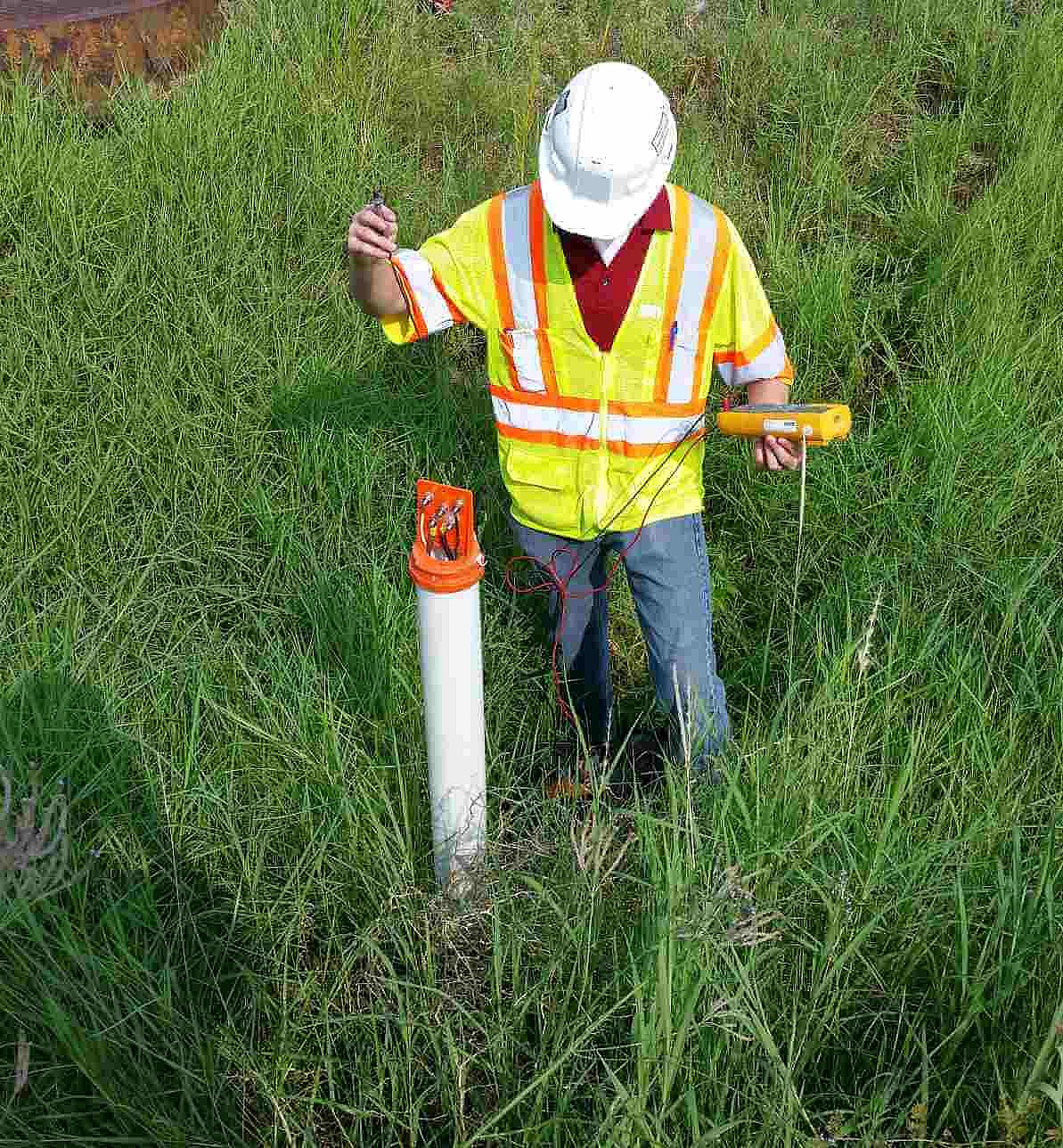
On a gas line under cathodic protection, 49 CFR 192.465 calls for a survey every calendar year. No more than 15 months can pass between surveys. Each rectifier is due for an inspection six times a year, no more than 2.5 months apart. Reverse current switches, diodes, and any interference bond whose failure would jeopardize protection go on that same schedule. All other interference bonds need a check once a year, again within 15 months. Unprotected pipe has its own cycle, a re-evaluation at least every three years and never more than 39 months apart. Wherever that turns up active corrosion, the operator has to add protection.
Remote monitoring can cover the six rectifier inspections each year. Since 2022, though, someone still has to physically inspect each remotely monitored rectifier once a year, within 15 months.
See how this worked on a real job: Chemical Plant Gas Piping CP Surveys, La Porte
For more on what the yearly survey requires and what to expect, see our article on the annual cathodic protection survey under 49 CFR 192.465.
Hazardous liquid lines under 49 CFR 195.573 run on nearly the same calendar. Both 192.491 and 195.589 require keeping the annual survey records for as long as the pipeline is in service. Most other corrosion test records have a five-year minimum.
For work in this area, see Pipeline Coating and CP Surveys in the Permian Basin
Cathodic protection and integrity rules for Colorado flowlines
Flowlines and crude oil transfer lines fall under the ECMC’s 1100 Series flowline rules in 2 CCR 404-1. Where a line has cathodic protection, Rule 1102 requires the system to meet the criteria in NACE SP0169-2007. The rule names the 2007 edition and excludes later editions.
Rule 1104 covers integrity, and the requirements depend on where the line runs and what it carries. Most below-ground on-location flowlines have four options: a pressure test or smart pigging every three years, continuous pressure monitoring, or annual instrument monitoring. Off-location flowlines and crude oil transfer lines get the same choices, but the pressure test option is annual. Off-location produced water flowlines have their own list, which leaves out instrument monitoring.
Rule 1102 also requires keeping the corrosion control, test, inspection, and repair records until the operator reports the line abandoned. When a line changes operators, the records go with it.
What test station readings miss in the DJ Basin
An annual survey usually reads the pipe only at its test stations. On paper, a Colorado pipeline can show full cathodic protection compliance and still be quietly underprotected between them.
When a test station does read low on an onshore gas transmission line, 192.465(f) now spells out the next step. The operator has to find out how far the problem extends. If the cause is systemic, the rule calls for a close-interval survey in both directions from the station. Crews take readings about every 5 feet and interrupt the protective current where that is practical.
In the DJ Basin, a lot can change between two test stations. A gathering line or flowline can run through irrigated cropland and dry ground on the same route. Soil resistivity can differ sharply between the two, and protective current does not spread evenly across that kind of boundary. Many of the same lines cross power line corridors too, so AC interference belongs in the survey plan.
For an example from our project work, see the statewide Colorado pipeline surveys.
How we keep cathodic protection compliance from lapsing
A CP survey program that stays compliant is usually a boring one. The annual survey and all six rectifier rounds go on the calendar a year ahead. Each cycle ends with a PE-reviewed report. Our Colorado team works out of the Westcliffe office. AMPP® (NACE)-certified cathodic protection staff do the field work, and licensed Professional Engineers stamp the repair designs when readings fail.
If your records would not hold up to an inspection today, that is where we would start.