Selected Projects
Two Electrical Losses at a Vacant Commercial Building, North Texas (2021)
We typically respond within one business day.
Project at a glanceDE-PRJ-8854
- Practice
- Forensic
- Location
- North Texas
- Service
- Electrical loss analysis
- Client
- Confidential
Two Electrical Losses at a Vacant Commercial Building, North Texas (2021)
In 2021 an insurance adjuster asked us to review two electrical losses that struck the same vacant commercial building in North Texas a few weeks apart. Names and the address are withheld.
The first loss
The building is an insulated metal structure on a concrete slab. According to the new tenant, the outgoing tenant removed the fire alarm panel and some equipment wiring on the way out and had the utility disconnect power to the building. With the panel gone, the permits needed to restore power were held up.
The second loss
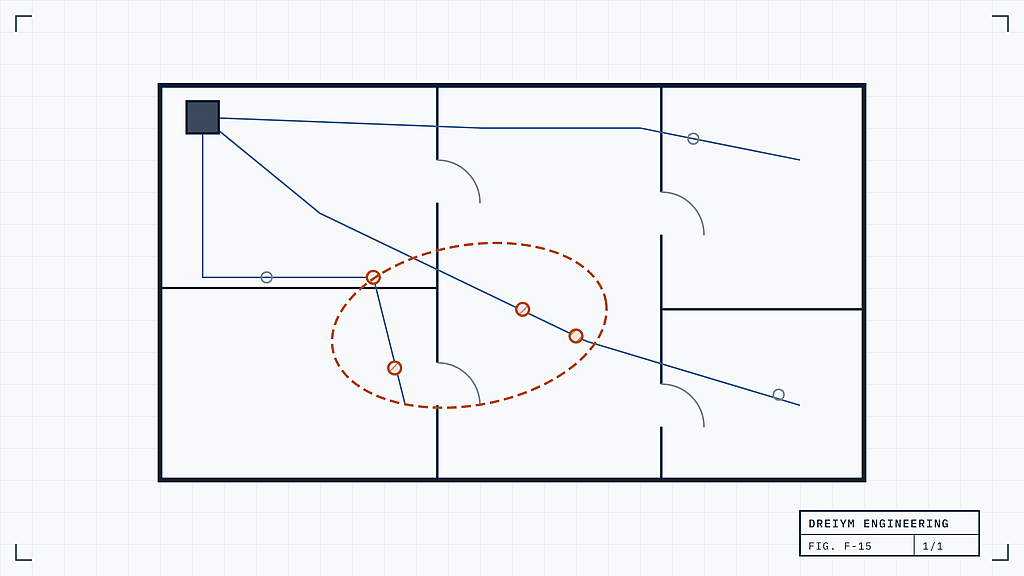
A few weeks later, someone pulled about 525 feet of 500 kcmil insulated cable, roughly 800 pounds, out of an underground conduit, along with the service conductors from the outdoor meter to the indoor panels. Most of the remaining building wiring was left in place, but its ends had been cut inside panels and disconnect switches. Pulling that much cable from conduit takes equipment and planning, and service conductors are rarely taken in a theft because the utility has to be disconnected first. Cutting wire and then leaving it behind is more unusual still, and it pointed to an intent to damage the building rather than to profit from it.
How someone got in
We found no broken locks or windows on the building. The chain on the main gate had been found cut after the second loss. At the rear, one roll-up door had no windows installed, so a person could reach in and raise it without damaging anything.
Repairs and code upgrades
We reviewed the repair scopes the adjuster provided and found no work counted twice between the two losses. Two items were code required upgrades rather than repairs: a service disconnecting means in a readily accessible location, under NEC® 230.70, and ground fault protection of equipment, which NEC 230.95 requires on 480 volt services rated over 1000 amps. Otherwise, the electrical system had been properly designed and built and could return to service once repaired.
Why the building was exposed
With its power off and its fire alarm panel gone, the building had no monitoring, no cameras, no climate control and nothing energized at the main meter to discourage a break-in. In our opinion, the second loss would probably not have been this extensive had the service stayed energized. Keeping fire protection, security and minimum HVAC powered is a central concern for any vacant commercial building. Questions like these fall under forensic electrical engineering.
How a loss review of this kind works
An electrical loss review for an insurer typically has three parts. The site examination records what is missing, what is damaged and what is intact, without opening energized equipment. The repair scope review checks each line of the estimate against that record and against any other loss at the same building, so nothing is counted twice. The code review separates repairs from upgrades, because the edition of the NEC adopted locally can require work that the original installation did not have.
What the adjuster receives
The report typically sets out the observations with photographs, an opinion on how each loss happened as far as the evidence allows, the repair items that are reasonable and necessary, and the items that are code upgrades. The adjuster can then apply the policy to each group.
Standards that apply
- NFPA 70®, the National Electrical Code®, sets the requirements a repaired service has to meet, including NEC 230.70 and 230.95 cited above.
- NFPA 72 covers fire alarm and signaling systems, including the testing that follows repairs.
How we support insurers and adjusters is described on our page for insurers and adjusters. The risks of leaving a building without power are covered in our article on vacant buildings.
Forensic
More projects in this practice
Get your project started
We typically respond within one business day.