Consulting Areas
Oxygen Corrosion in Water Lines, Vessels and Boilers
We typically respond within one business day.
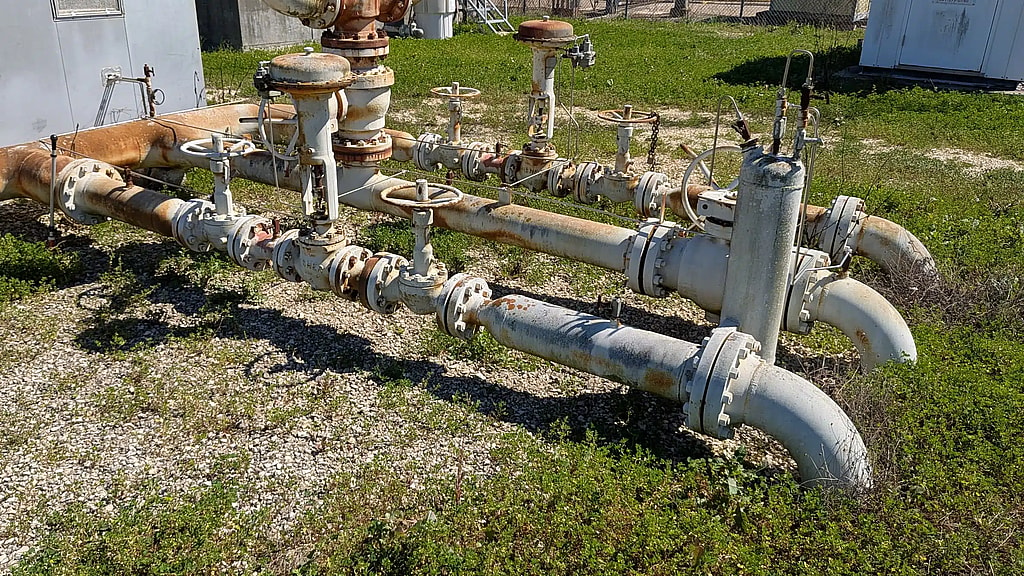
Oxygen corrosion is the attack on steel by oxygen dissolved in water. It is the same reaction that rusts steel left out in the weather, but inside a line, vessel or boiler it is hidden, it concentrates in pits and it can move quickly. Our internal corrosion overview introduces it alongside CO2, H2S and bacteria. This page covers why small amounts of oxygen matter, where oxygen gets into systems that are meant to be free of it, and how oxygen damage is told apart from other internal corrosion.
How dissolved oxygen attacks steel
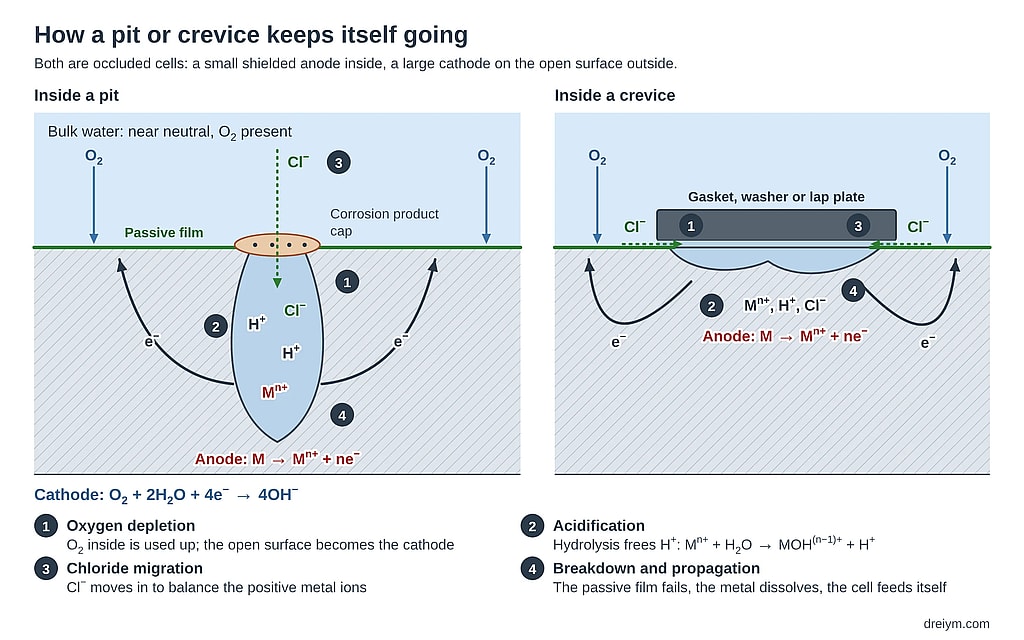
At the steel surface, dissolved oxygen is reduced while iron is oxidized, and the iron ends up as a range of oxides and hydroxides, the familiar rust. Research at Ohio University’s Institute for Corrosion and Multiphase Technology summarizes the main points: the corrosion rate of iron generally increases as the dissolved oxygen concentration increases, localized corrosion develops where mass transport is poor under deposits and in crevices, and the typical corrosion product forms tubercles, small rounded hollow mounds on the steel. Water velocity, temperature, pH and dissolved minerals all affect the rate.
Flow matters because oxygen has to reach the metal. For an active steel such as carbon steel, the same research notes that the corrosion rate rises with solution velocity and then levels off, and attributes the increase to faster transport of oxygen to the surface. That is why water moving past steel keeps oxygen corrosion going, and why it matters so much that oxygen is kept out in the first place.
Why a little oxygen does a lot of damage
Systems that handle water are usually designed to remove oxygen, not just reduce it, and the limits are tight:
- Boilers. The Department of Defense water treatment manual (UFM 3-230-13) notes that an efficient mechanical deaerator can take feedwater oxygen from saturation down to a fraction of a ppm, but that even a trace of oxygen can cause pitting in the boiler, so complete removal requires a chemical oxygen scavenger. Its feedwater table for industrial water tube boilers up to 300 psig lists dissolved oxygen below 0.007 ppm before scavenger addition.
- Water injection. Seawater for injection is typically deaerated in a column and then treated with oxygen scavenging chemicals. Work at Cal Poly found that carbon steel corrosion rates rose as dissolved oxygen went from 0 to 62 to 620 ppb, with localized corrosion near crevices.
- Oxygen with CO2 or H2S. Oxygen also makes the other internal corrosion mechanisms worse. In ICMT tests, oxygen let into a CO2 environment attacked the protective iron carbonate layer, and localized corrosion features as deep as 80 micrometers developed at the same time.
Where oxygen gets in
- Water injection, disposal and other water handling systems where deaeration or scavenging falls short
- Drilling fluids and other water-based fluids that are open to air
- Chemical injection: methanol injection is a known source of oxygen in gas lines
- Lines that cool down or sit idle. The UFM describes intermittently used condensate lines that draw air in through valve seals or condensate sumps as they cool, and oxygen that passes with the steam into condensate lines and is consumed in pitting attack.
Finding pits and tubercles in a water line, vessel or boiler? Request a free quote. We typically respond within one business day.
How oxygen corrosion is controlled
The controls fall into three groups. Keep oxygen out with mechanical deaeration, chemical scavengers and tight systems. Keep surfaces clean so deposits cannot shelter pits: PHMSA notes that pipeline operators routinely run cleaning pigs to remove accumulations that can lead to internal corrosion. And confirm the program works with coupons, probes and inspection, which the federal rules require on regulated lines that carry corrosive gas or rely on inhibitors (49 CFR 192.477 and 195.579). Our article on corrosion control methods compares these methods with coatings and cathodic protection.
How we evaluate oxygen corrosion
Cathodic protection protects only the outside of buried and submerged steel; our cathodic protection pages explain what it can and cannot do. We evaluate internal corrosion from oxygen, CO2, H2S and bacteria as its own question, usually in these steps:
- The system and its history. We review what the line or vessel carries and how it operates: water sources, deaeration and scavenger records, dissolved oxygen readings, chemical injection, idle periods and leak history.
- The signature of the damage. Oxygen attack usually shows as general rusting, pits and tubercles, with iron oxide as the corrosion product. Iron carbonate points instead to CO2 and iron sulfide to H2S or bacteria. The pitting corrosion and crevice corrosion articles describe these forms in more detail.
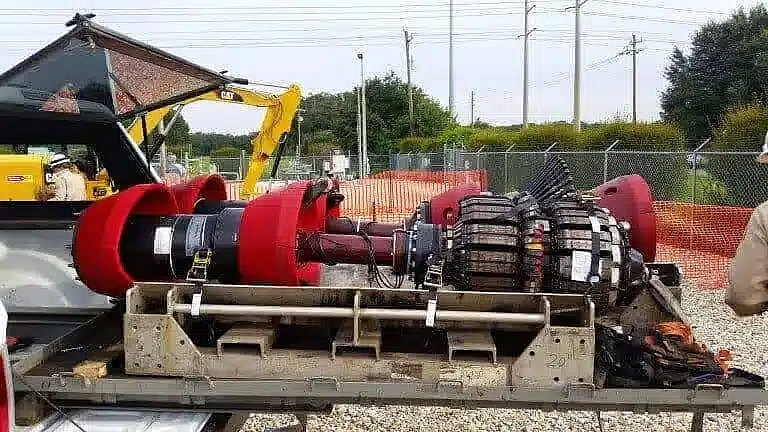
- Wall loss in the field. Ultrasonic thickness readings at chosen locations and in-line inspection data, where the line can be inspected, show how much wall is left.
- Failed parts in the lab. A leaking section can be examined at our engineering lab, with the corrosion products and deposits documented before any cleaning, because they are part of the evidence.
- Strength and next steps. We calculate the remaining strength of corroded pipe and recommend changes to oxygen control, cleaning and monitoring.
What you receive
- A written report, PE-stamped where required, identifying the corrosion mechanism and where the oxygen is coming from
- An assessment of the remaining wall and strength at the locations examined
- Recommendations on oxygen exclusion, cleaning and monitoring locations
- For a failure, the cause, the contributing factors and the basis for each opinion
When to call us
- Pitting or tubercles show up in water handling, injection or condensate piping
- Corrosion rates jump after a change in water source, chemicals or operation
- A line that carries CO2 or H2S is corroding faster than its chemistry predicts
- A leak needs a cause before a claim or repair decision; see our forensic corrosion engineering
Frequently asked questions
How does oxygen cause corrosion in pipes?
Oxygen dissolved in water is reduced at the steel surface while iron is oxidized to rust. The more dissolved oxygen, and the faster water carries it to the wall, the faster the steel corrodes, and under deposits the attack concentrates in pits.
What is oxygen pitting?
Localized pits caused by dissolved oxygen, usually covered by tubercles of iron oxide. They are a well-known problem in boilers and condensate lines, where even trace oxygen can cause them.
How is dissolved oxygen removed from water?
Usually in two stages: mechanical deaeration with a deaerator or column, then a chemical oxygen scavenger such as sodium sulfite to remove what is left.
Does oxygen make CO2 and H2S corrosion worse?
Yes. Oxygen speeds up both, and in CO2 service it can break down the protective iron carbonate layer and start localized corrosion.
Talk to an engineer
Tell us where the water comes from and what you are finding. Request a free quote. We typically respond within one business day.
Get your project started
We typically respond within one business day.