Consulting Areas
Microbiologically Influenced Corrosion (MIC) Investigation
We typically respond within one business day.
Microbiologically influenced corrosion (MIC) is corrosion that microorganisms start or speed up. The organisms do not eat the steel. Their metabolism changes the chemistry at the metal surface: sulfate-reducing bacteria produce hydrogen sulfide, other groups produce organic acids, and the slime and deposits they build shelter pits underneath. MIC turns up inside pipelines, tank bottoms, vessels, cooling water systems, and on the outside of buried steel. Our article on the common causes of microbiologically influenced corrosion describes the organisms involved. This page is about the engineering question that follows: is MIC actually what happened here, and what should be done about it?
Where MIC happens
A UK Health and Safety Executive failure investigation lists the usual places: heat exchangers, the bottoms of storage tanks, stagnant or low-flow pipework and pipework in contact with soil. The Department of Defense water treatment manual (UFM 3-230-13) adds a practical warning sign for water systems: anaerobic bacteria thrive beneath slime and other deposits, and sulfate-reducing bacteria should be suspected when the underside of a slime layer is black or there is a smell of rotten eggs.
- Inside lines and vessels: dead legs, low points, idle lines and tank floors, where water and sediment sit still. Federal internal corrosion direct assessment rules (49 CFR 192.927) name microorganisms among the causes of internal corrosion to be assessed.
- On the soil side: buried pipe and tanks in wet, poorly aerated soil, and water trapped under disbonded coating.

Why MIC is hard to prove
Bacteria are almost everywhere water is, so finding them proves little on its own. AMPP® (NACE) TM0194, the standard for field monitoring of bacterial growth in oilfield systems, says plainly that the presence of bacteria does not necessarily mean they are causing a problem, and that populations causing trouble in one system may be harmless in another. The HSE investigators make the same point: the mere presence of sulfate-reducing bacteria does not confirm MIC, and other conditions, such as low, intermittent or stagnant flow, need to be met.
AMPP® (NACE) TM0212 covers detection, testing and evaluation of MIC on the internal surfaces of pipelines, a term it uses for any pipe, tank, vessel or other pipeline component. It does not prescribe a single method; it describes how to choose and apply the right tools for the system. The conclusion comes from putting several lines of evidence together:
| Line of evidence | What it adds | Caution |
|---|---|---|
| Operating conditions | Water, nutrients and low or stagnant flow that let organisms settle and grow | Necessary, but not proof |
| Microbiological testing | Culture tests, ATP, microscopy and DNA methods such as qPCR show which organisms are present and in what numbers | Samples change in transport, and qPCR can also count dormant and some dead cells |
| Corrosion products and deposits | High sulfur content and black iron sulfide deposits are consistent with sulfate-reducing bacteria | H2S in the product stream leaves iron sulfide too |
| Pit shape and location | Deep, flask-shaped pits under deposits, at the bottom of the line or in dead legs | Shape alone does not identify the mechanism |
| Wall loss and coupons | Ultrasonic or radiographic wall measurements, and coupons examined for biofilm, metal loss and pitting | Show the damage and its rate, not its cause |
The HSE paper describes a pipeline failure in which MIC was concluded to be a contributing factor after optical microscopy, laser scanning of wall loss, materials and deposit analysis and qPCR results were weighed together. It recommends that MIC be identified from that kind of integrated analysis rather than from detecting a species.
Found black deposits and pits in a line, tank or vessel and need to know whether it is MIC? Request a free quote. We typically respond within one business day.
How we investigate suspected MIC
MIC is one of the mechanisms our forensic corrosion engineering team identifies when pipe, tanks and equipment fail. A typical investigation follows these steps:
- Intake. You send what failed, where and when, with the records you have: operating and flow history, idle periods, water and treatment records, inspection and cathodic protection reports. We confirm the questions to answer and send a free quote.
- Preserve the evidence. Keep the failed section as found and do not clean, blast or cut it. Corrosion products and deposits stay in place until they are documented, because cleaning can remove the evidence of the cause. If microbiological testing is wanted, plan it early: TM0194 warns that transporting samples can significantly change bacterial viability, so analysis should start in the field whenever practical.
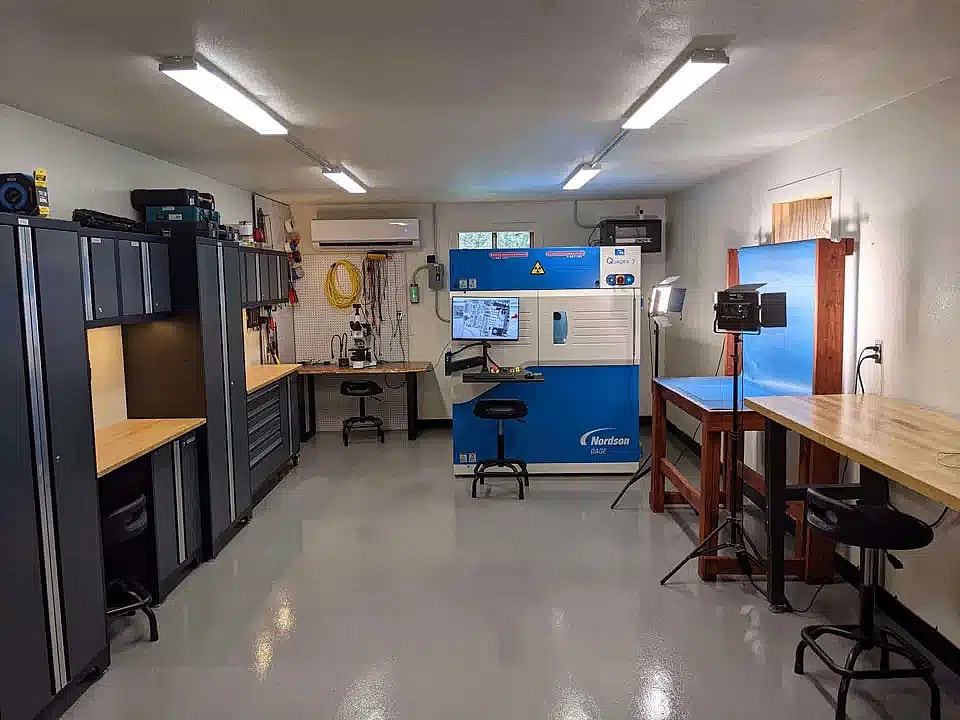
- Lab examination. Failed pipe sections are received at our engineering lab in Coldspring, Texas, and kept in video-monitored storage with chain of custody records. Photography, microscope examination and real-time X-ray come first. Cleaning, sectioning and other steps that alter the evidence follow a protocol agreed with the interested parties, consistent with ASTM® E860 and E1188, and pits are examined and evaluated using ASTM® G46.
- Field work. On buried structures we measure structure-to-soil potentials, check the cathodic protection system and test for stray current when the evidence points that way. Soil resistivity is measured on site, and soil samples can be tested for pH, chloride, sulfate and bacteria through our soil corrosivity analysis.
- Analysis and report. We test each possible cause, including MIC, CO2, H2S, oxygen and stray current, against what the evidence shows. A licensed PE sets out the cause, the contributing factors and the basis for each opinion, PE-stamped where required, and can explain it at deposition and trial.
MIC on the outside of buried steel
MIC is not only an internal problem. Our soil corrosivity testing includes laboratory tests for bacteria that can accelerate corrosion, such as sulfate-reducing bacteria, along with resistivity, pH, moisture, chlorides and sulfates. At external corrosion direct assessment digs, the soil around the pipe and any liquid trapped under disbonded coating are sampled and tested for pH, resistivity and bacteria, and corrosion products are collected for analysis. Those results feed cathodic protection design, because the protection a structure needs depends on the soil it sits in.
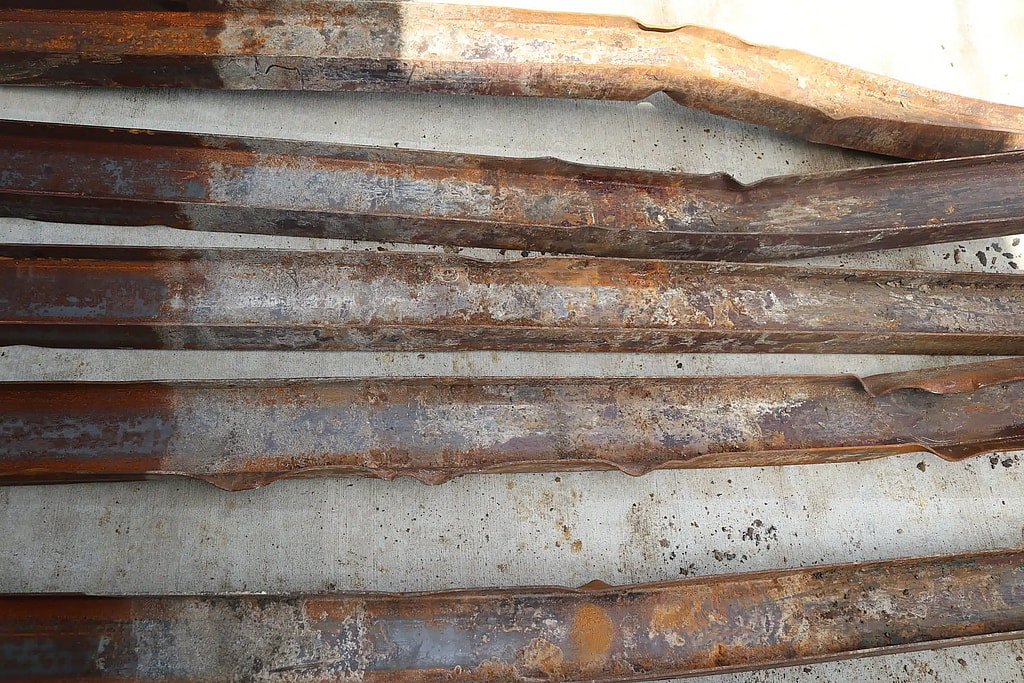
When measured rates are needed rather than estimates, our engineers have planned and run field corrosion rate testing with bare steel test piles and electrical resistance probes, as on a solar farm site in Central Texas.
What you receive
- A written report, PE-stamped where required, that states whether the evidence supports MIC as the cause or a contributing factor, and why
- Photographic and examination records of the failed component and its deposits
- Where metal loss has been measured, the remaining strength of the corroded pipe
- Recommendations to keep it from happening again, such as removing dead legs and stagnant water, cleaning, monitoring and cathodic protection changes
When to call us
- A line, tank floor or vessel has leaked with pits under black or slimy deposits
- A bacteria test came back positive and you need to know whether it matters
- Corrosion rates rose after a line was idled, its flow dropped or its water source changed
- A loss is headed for a claim and you need an independent cause; you can submit an assignment directly
Frequently asked questions
How do you know if corrosion is MIC?
By combining several lines of evidence: operating conditions that allow growth, microbiological test results, corrosion product chemistry, pit shape and location, and measured wall loss. No single test confirms MIC on its own.
What bacteria cause MIC?
The groups most often involved include sulfate-reducing bacteria, acid-producing bacteria, sulfur-oxidizing bacteria, iron-related bacteria and slime formers, often living together in one biofilm. Our MIC causes article goes through them.
Is a positive bacteria test proof of MIC?
No. Bacteria can be present without causing harm, and a population that is a problem in one system may be harmless in another. The test result has to be read alongside corrosion data.
How do you prevent MIC in pipelines?
Keep water from sitting still: remove dead legs, avoid long idle periods and keep lines clean with pigging so deposits cannot build up. Where treatment is used, routine sampling and inspection show whether it is working.
Talk to an engineer
Tell us what failed and what you found on it. Request a free quote. We typically respond within one business day.
Get your project started
We typically respond within one business day.