Why Grounding and Bonding Are Crucial for Pool Safety
Learn why pool grounding and bonding are essential for swimmer safety, how each process works, and when to schedule a professional pool inspection.
Reach out to Dreiym Engineering for any Corrosion, Electrical or Forensic Questions.
Contents
If you’re thinking about adding a brand-new pool to your yard, there’s a lot you need to consider before starting the project. You will have to settle the type of pool, its size and where it goes. One thing many people leave out is pool grounding and bonding, and no pool is safe without both.
Both of them ensure that your pool is free from electrical hazards so you can swim freely without fear of nasty shocks or electrocution. If you want your pool to be a safe place in which to splash around, these are two processes you don’t want to ignore.
This overview explains what grounding and bonding are, what each one does for pool safety, and how to check that your new pool is built to the proper standard.
Why Do Pools Need Grounding and Bonding?
Pools use a variety of electrical components, like pumps and motors, to function. But we all know that electricity and water don’t mix. Grounding and bonding are what keep these components from energizing the pool water and creating a shock hazard. Grounding and bonding are crucial parts of every new pool construction. Without them, you risk an unpleasant zap whenever you step or dive into your pool.
Usually, electrical current flows from an energized wire (also known as a hot wire) through your pool equipment and back to the source along a neutral one. This completes the circuit. But if one of the wires connected to your pool equipment is broken or frayed, an electrical current may stray from its intended path and flow through whatever conductive paths of lesser resistance it can find.
When this happens, electricity can flow toward various components in your pool, like the handrails or a slide. Metal components are especially susceptible because metal conducts electricity readily, and even damp wooden components can carry current. If someone is touching these components when the current reaches them, they’ll receive an unexpected shock. Equipment grounding and equipotential bonding do not send stray current into the earth.
Why water conducts electricity, and which liquids do not is explained in our guide to how liquids carry current.
How the Grounding Conductor Clears a Fault
The equipment grounding conductor gives a ground fault a low-impedance path back to its source so the overcurrent device opens, and NEC® 250.4(A)(5) is explicit that the earth shall not be considered an effective ground-fault current path. The equipotential bonding grid required by NEC 680.26 does something different: it ties the pool shell, the perimeter surface, handrails, ladders, and equipment together so that every conductive surface a swimmer can touch sits at the same potential and no dangerous voltage difference can develop across the body.
So, for the sake of you, your family, your guests, your pets, and whoever else might be interested in swimming in your pool, it’s critical to hire an experienced electrical engineer or electrician to ground and bond your pool. A lack of grounding and bonding can lead to shocks, electrocution, and even death, so this is a step you don’t want to accidentally let slip.
The figure below shows what equipotential bonding does for a person in and around the pool when something goes wrong.
Climbing out, the feet are in water raised by the fault and the hands are on a rail that is not bonded to it. The difference drives current through the body.
Where the person is
Equipotential bonding
Voltage between hand and feet, each case
| Where the person is | Bonding off | Bonding on |
|---|---|---|
| On the deck, hand on the rail | 0.3 V | 0.1 V |
| Climbing out on the ladder | 8.0 V | 0.2 V |
| In the water, hand on the edge | 6.5 V | 0.2 V |
| Swimming away from the wall | 0.6 V | 0.1 V |
Now that you understand why grounding and bonding are crucial to pool safety, let’s take a look at what these two processes entail.
What’s Bonding?
Pool bonding, also known as equipotential bonding, is a crucial process that involves connecting a pool’s metal components (ladders, handrails, pumps, motors) together with a wire, usually one made from copper. This puts them all in the same ground bonding grid. Placing these components in the same grounding network provides them with a path back to the power source. This prevents electrical currents from taking alternate routes through any metal pool components, greatly reducing the risk of shocks and electrocution.
What’s Grounding?
After a pool is bonded, it needs to be grounded. Grounding is the process of connecting a pool’s electrical system to the electrical panel, and then to the earth through its equipment grounding conductors and grounding electrode system. With this ground path for the electricity in place, fault current has a low-impedance route back to its source instead of attempting to use the people in the pool as conductors during a short or fault.
A ground-fault circuit interrupter (GFCI) breaker adds a further layer of protection: when it detects current leaking to ground, it interrupts the circuit, cutting power to the component that’s malfunctioning. This protects everyone in the pool from shocks.
Aren’t Grounding and Bonding the Same Thing?
Many people assume grounding and bonding are the same thing. But despite sharing similar purposes and working in tandem to keep your pool safe, these two processes are far from identical.
The easiest way to think about grounding and bonding are as a two-step process. Bonding is the first step. It sets up a pool’s components so an engineer can easily ground them.
Grounding does not connect pool components to a breaker in the ground. The pool’s equipment grounding conductors run with the branch-circuit conductors back to the panelboard so that a ground fault is cleared by the overcurrent device, and the GFCI protection required by NEC 680.21, 680.22, and 680.23 opens the circuit on a current imbalance of roughly 4 to 6 mA, well below the level that would be lethal.
The equipotential bonding required by NEC 680.26 is a separate function that equalizes potential among the conductive surfaces around the pool; grounding and bonding serve different purposes, and neither substitutes for the other.
Your pool needs bonding and grounding if you want it to be safe. If you miss one or the other, the process is incomplete, and your pool remains an electrocution hazard.
Not Sure if Your Pool Is Safe?
If you want to ensure your existing pool is safe or see if an in-progress pool is properly grounded and bonded before you continue any construction, you’ll need to hire an electrical engineer or electrician to perform a thorough pool inspection. Looking for residential electrical engineers in your area? Dreiym Engineering is a company that serves Texas, Louisiana, Oklahoma, New Mexico, Colorado, and Florida.
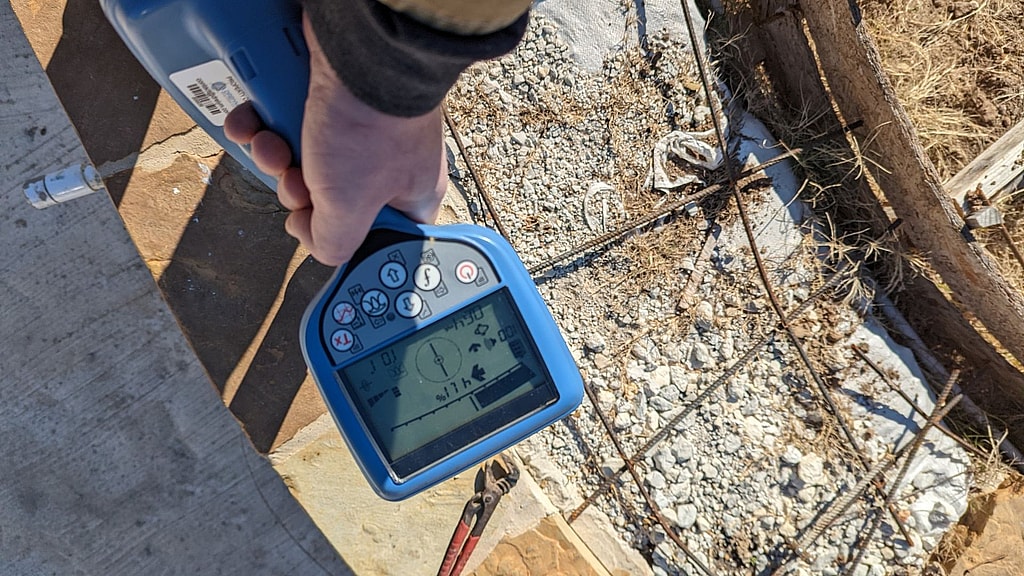
Our experienced engineers can check your pool for proper bonding and grounding. While it’s easiest to perform inspections on in-progress pools, we have remote detection tools that allow us to detect proper grounding in both finished and unfinished pools.
Don’t live in fear of your pool. If you’re worried about safety, an in-depth pool inspection can ease your fears and ensure your poolside experience remains safe and enjoyable. Contact us today to learn more about our residential pool inspection services and to schedule a consultation. We work fast and finalize our reports quickly post-inspection, so you can get back to having fun with family and friends as soon as possible.
