About
Engineering for Residential and Commercial Property Owners
We typically respond within one business day.
An engineer for the building you own
Most owners call an engineer when something has gone wrong or when someone, such as a building official, an insurer or a lender, asks for an engineer’s opinion. Dreiym Engineering works for homeowners and for owners of commercial and industrial buildings, with licensed Professional Engineers and reports PE-stamped where required. When you call, you talk with an engineer.
Homeowners
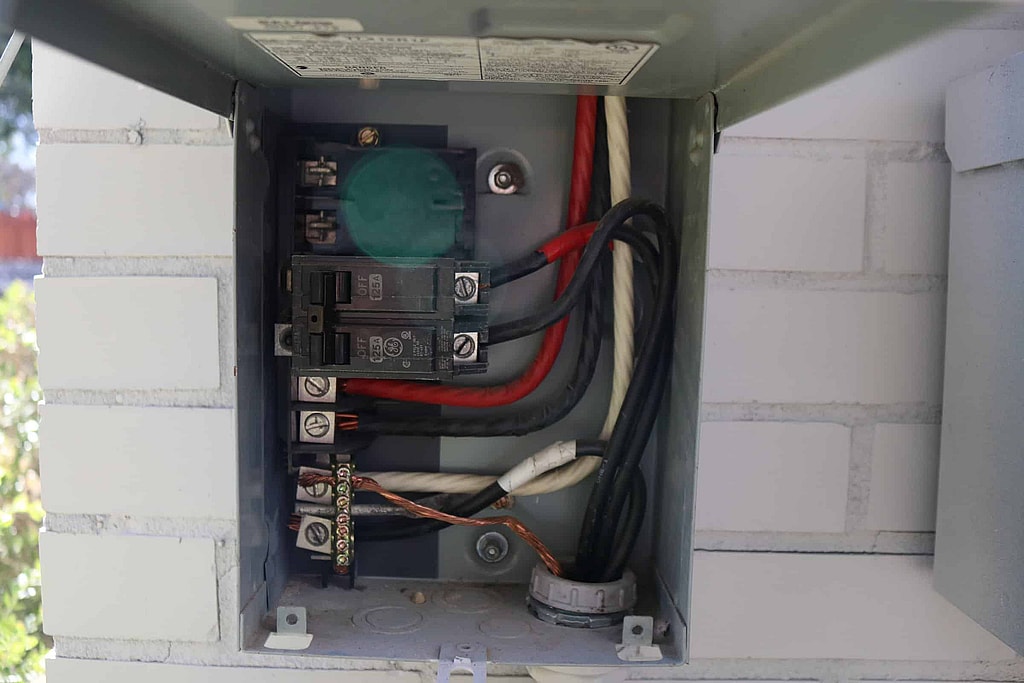
Our residential electrical inspections are engineering assessments of panels, wiring, appliances, ground rods, Ufer (concrete-encased) grounding connections and pool bonding, and rough-in inspections for the code your jurisdiction enforces. We also investigate problems that call for an engineer: nuisance tripping, flickering or dimming lights, shocks from fixtures or water, grounding and bonding defects, and stray current that may be corroding buried metal on your property. Our article on pool grounding and bonding under NEC® Article 680 explains one of the most common requests. We do not provide inspections for buying or selling real estate.
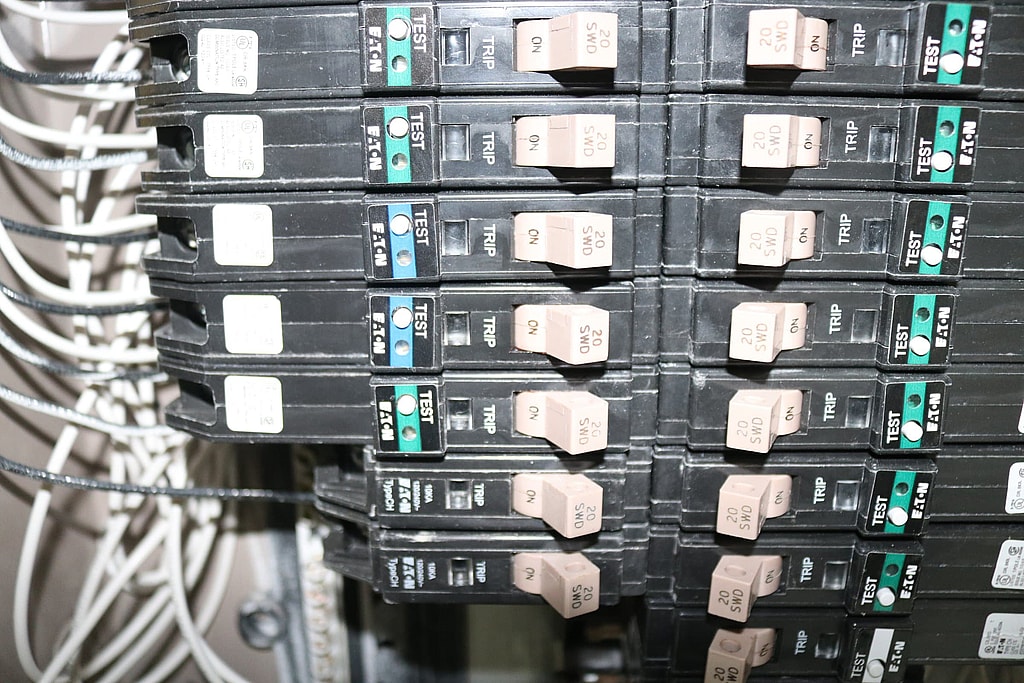
Related projects
- Electrical Inspections of Renovated and Existing Homes
- Pool and Splash Pad Bonding Inspections, Austin
- Austin Residential Grounding Program
Engineer or electrician?
An electrician installs and repairs wiring. An engineer assesses, tests and puts findings in writing. You need an engineer when the question is why something is happening, whether an installation meets the code, or when someone, such as a building official, an insurer or a lender, wants an engineer’s opinion in a report. Some inspections should not be done by whoever did the work: a Ufer ground, for example, has to be inspected before the concrete is poured, and not by the electrician who installed it. Some jurisdictions also accept an engineer’s inspection for certain work; our article on alternate methods of compliance explains when that applies in Austin, Dallas and Houston.
Commercial and industrial owners
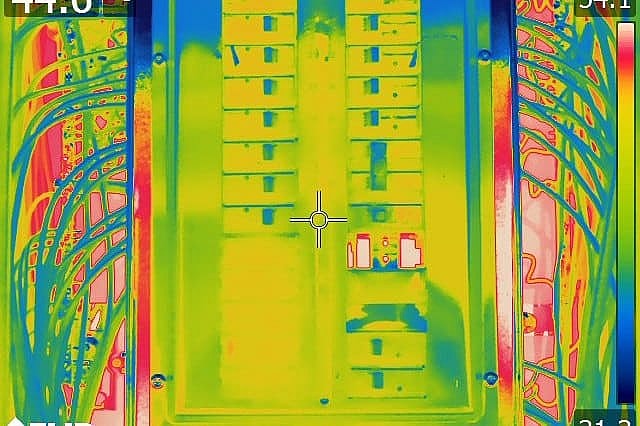
- Infrared inspections. NFPA® 70B calls for an infrared scan at least every 12 months, and every 6 months for equipment in poor condition.
- Load studies. Measured demand to show whether an existing service can take a new tenant, EV chargers or equipment.
- Grounding tests, power quality, and arc flash studies. For safety programs, insurance inspections and troubleshooting.
- Cathodic protection. For buried fire water and gas piping, water lines and tanks on the property.
What a site visit looks like
Most visits follow the same pattern. We start with what you have seen and when: trips, flicker, shocks, heat, smells or a failure. On site, the engineer looks at the service, the panels and the wiring involved, takes measurements, such as voltage, current, grounding and bonding readings or an infrared scan, and photographs what is found. Where a problem comes and goes, a recorder can be left in place to catch it, as in a power quality study. Nothing is opened or taken apart that does not need to be.
Have a question about your building’s electrical system? Request a free quote. We typically respond within one business day.
After a loss
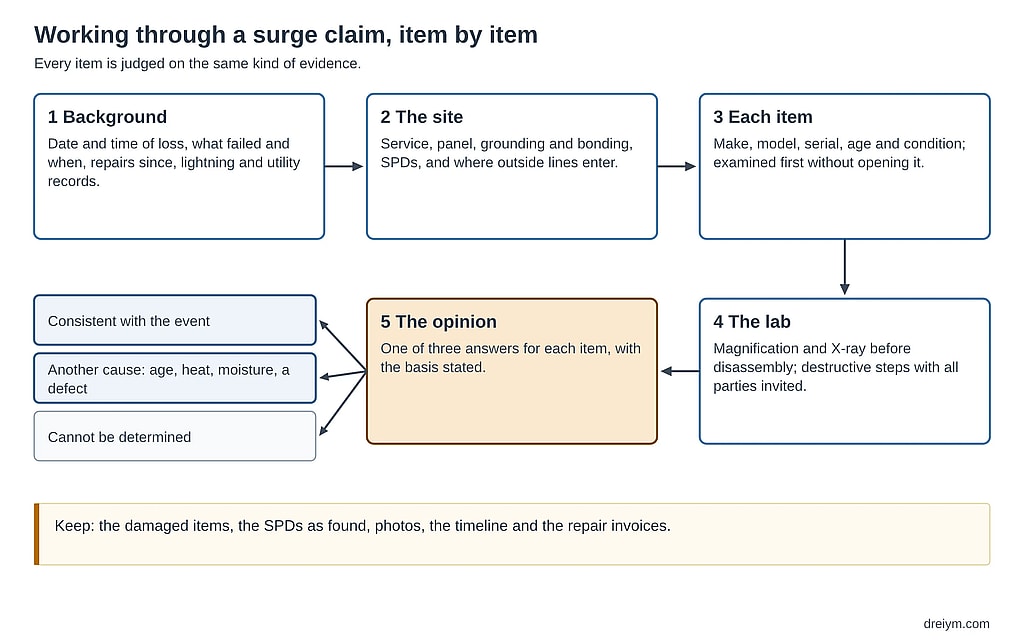
NFPA® lists electrical distribution and lighting equipment among the leading causes of home fires. After a fire, a lightning strike, a surge or water intrusion, our forensic engineers determine what happened and whether the damage claimed came from that event. Preserve the scene and the failed equipment, and tell your insurer before anything is repaired or thrown away. Buildings that sit vacant for a long time bring their own problems; see our write-up on wiring loss at a vacant commercial building.
What you receive
- A written report of what was found, with photographs and the readings taken
- The cause where it can be determined, what is safe to put back in service and what to fix, in plain language
- Code references where the question is compliance
- A report PE-stamped where a building official, insurer or lender requires it
Owners with buried metal on the property, such as fire water lines, gas piping or tanks, may also need cathodic protection. Owners adding EV chargers, a tenant or new equipment can start with an electrical load analysis. After lightning or a surge, see our lightning damage investigations, and for a grounding question, our ground testing.
Frequently asked questions
When should I hire an electrical engineer for my house?
When the question is why something is happening, such as nuisance tripping, flickering lights or shocks from fixtures or water; when you need a code assessment of panels, wiring, grounding or pool bonding; or when an official, insurer or lender asks for an engineer’s report. We do not provide inspections for buying or selling real estate.
Can an engineer inspect my pool bonding?
Yes. Pool and splash pad bonding inspections are among the most common requests we get from homeowners, where a jurisdiction accepts or requires an engineer’s report. NEC® Article 680 sets the requirements.
How often should commercial electrical equipment get an infrared scan?
NFPA® 70B calls for an infrared scan at least every 12 months, and every 6 months for equipment in poor condition.
What should I do after an electrical fire?
Make sure the site is safe, preserve the scene and the failed equipment, and tell your insurer before anything is repaired or thrown away. An engineer can then determine what happened and whether the damage came from that event.
Can an engineer find out why my lights flicker or dim?
Yes; flickering and dimming are among the problems we investigate. One cause to rule out first is an open neutral: lights getting brighter in some rooms and dimmer in others, especially when a large appliance switches on or off. If you see that, call your electric utility first and then a licensed electrician, and do not open the meter base or panel.
What does an engineer check in a residential electrical inspection?
Our residential electrical inspections are engineering assessments of panels, wiring, appliances, ground rods, Ufer grounding connections and pool bonding, plus rough-in inspections for the code your jurisdiction enforces.
Do you inspect homes for buyers or sellers?
No. We do not provide inspections for buying or selling real estate. Our residential work is the engineering assessment of a specific problem or code question, where a jurisdiction, an insurer or a lender accepts or requires an engineer’s report.
Talk to an engineer
Have a question about your building’s electrical system? Request a free quote. We typically respond within one business day.
Get your project started
We typically respond within one business day.