Consulting Areas
Electric Vehicle Fire Investigation Services
We typically respond within one business day.
Investigating Electric Vehicle Fires
An electric vehicle fire investigation determines where the fire started and what caused it: a failure in the high-voltage battery pack or its related systems, a fault in the charging equipment or the building circuit that supplied it, a failure elsewhere in the vehicle, or a source that had nothing to do with the vehicle. An EV has many of the same potential ignition sources as any other vehicle, such as its 12-volt electrical system, wiring and aftermarket equipment, plus a high-voltage battery pack that stores a large amount of energy, so the investigation has to cover both.
That answer decides whether the loss can be recovered from the vehicle manufacturer, a component supplier, the maker or installer of the charging equipment, a repair shop or another party. We investigate fires in battery electric vehicles, plug-in hybrids and hybrids for insurers, adjusters, subrogation counsel, attorneys, fleet owners and property owners, including fires that spread from a vehicle to a garage or home.
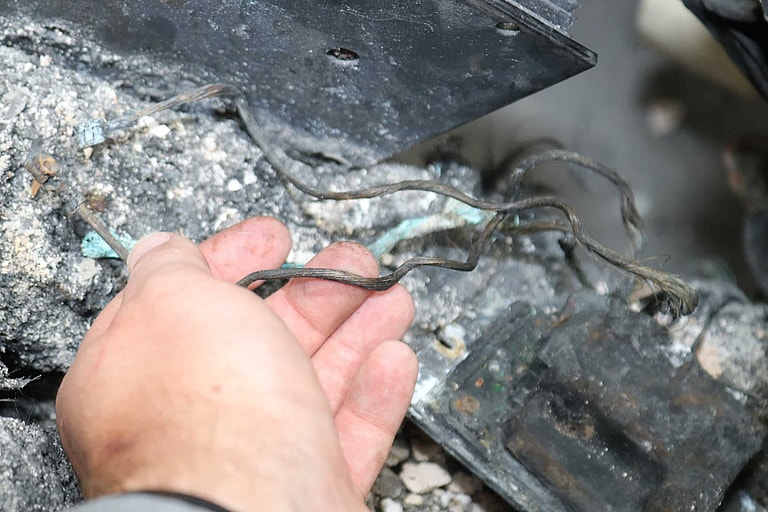
Vehicle fire investigations from our casework:
Submit an assignment or contact us for a free quote. We typically respond within one business day.
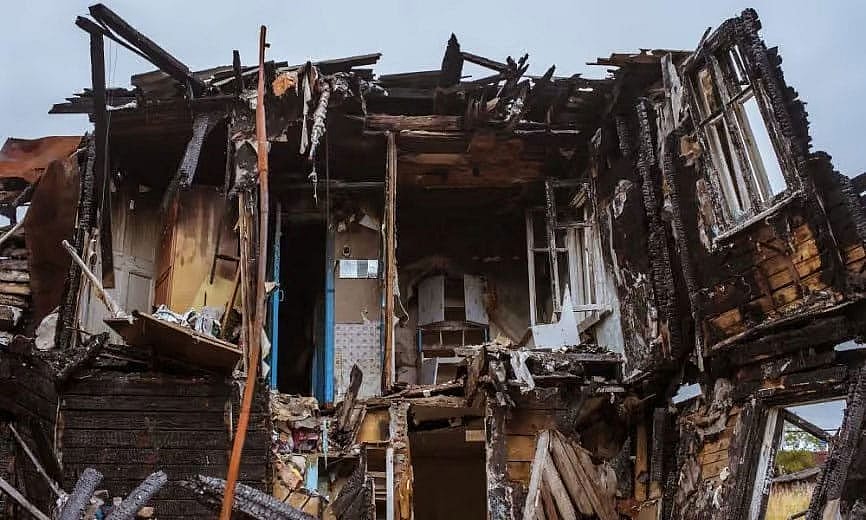
How We Investigate an EV Fire
Our fire investigations are led by licensed Professional Engineers with active and past licensure in multiple states. Brian J. Brackensick, M.S., P.E. and Stepan V. Eero, M.S., P.E. are NAFI Certified Fire and Explosion Investigators (CFEI) and Certified Vehicle Fire Investigators (CVFI).
We get to the vehicle as soon as possible and document it as found, along with the garage, parking area or charging location where it burned. Burn patterns on the vehicle and the structure around it lead back to an area of origin, and each potential ignition source in that area is tested against the physical evidence, following a method consistent with NFPA 921. Because a damaged battery pack can still hold stored energy and can reignite, the examination is planned around that hazard.
The vehicle manufacturer is usually an interested party. We work with the manufacturer’s representatives and the other interested parties on joint examinations, and components that need a closer look are removed under an agreed protocol, kept in video-monitored storage and examined at our engineering lab in Coldspring, Texas. Non-destructive examination comes first; the battery pack isn’t opened and other destructive steps aren’t taken until the interested parties have had the chance to attend.
What We Look At in an EV Fire
Any component in the area of origin is a potential ignition source until the evidence rules it out. In an EV fire, that includes:
- The high-voltage battery pack: its cells, modules and connections, and evidence of an internal failure or of physical damage, such as an earlier collision, a road debris strike or water intrusion.
- Battery management and cooling systems: the systems that monitor cell voltages and temperatures and keep the battery within its operating limits.
- Charging equipment: the charging cord and connector, the charging station, and the vehicle’s charge port and onboard charger.
- The building’s charging circuit: the receptacle or charging station connection, the branch-circuit wiring and the breaker, including whether they were rated for a charging load that can run for hours and were installed correctly.
- The 12-volt system and other vehicle sources: wiring, connectors, aftermarket equipment and recent repairs, the same as in any vehicle fire.
- Sources outside the vehicle: other vehicles, equipment and contents nearby, since an EV can be damaged by a fire that started somewhere else.
Thermal runaway is a self-heating reaction in a lithium-ion cell: once a cell overheats past a certain point, it heats itself faster than it can shed the heat, releases flammable gases, and can spread the heat to the cells around it. It can be started by an internal defect, physical damage, an electrical fault or heat from a fire outside the battery, so a battery that went into thermal runaway didn’t necessarily start the fire.
What to do first after an EV fire
A damaged EV battery can reignite hours, days or even weeks after the fire appears to be out, and it still holds stored energy. Tell the tow and storage yard that the vehicle is an EV with a damaged battery, and ask them to store it outdoors, away from buildings and other vehicles, and to hold it rather than crush, dismantle or sell it. Don’t try to charge, start or drive it, and leave the battery and high-voltage components to people trained to work on high-voltage systems.
If the vehicle was charging or plugged in, leave the charging station, the cord and the breaker for the charging circuit as they were found, and don’t reset the breaker. Before anyone examines or moves evidence, notify the other interested parties, such as the vehicle manufacturer, the maker and installer of the charging equipment, the dealer or shop that last worked on the vehicle, and other insurers, so they have the chance to attend. Keep the keys, the VIN, charging and service records, and any photos or video.
Recalls and the vehicle manufacturer
We check whether the vehicle was subject to a safety recall related to its battery, charging or electrical system, and whether the remedy was performed. A recall shows that a defect was identified in a group of vehicles; it doesn’t establish the cause of a particular fire. That still depends on the area of origin and the physical evidence. Some vehicles also record battery and charging data that can help show what happened before the fire, though whether it can be recovered depends on the vehicle and the damage.
Not every EV fire leads back to the manufacturer. An early, well-documented examination, with the manufacturer and the other parties invited, is what lets an insurer or attorney decide whether a subrogation or product claim is worth pursuing. Our engineers write expert reports and testify in depositions and at trial.
When you contact us, you talk directly with an engineer who can discuss your loss. Our offices are in Coldspring, Texas and Westcliffe, Colorado, and we work nationwide. Reports are PE-stamped where required, and we also accept consulting-only (non-testifying) retentions.
Submit an assignment or contact us for a free quote. We typically respond within one business day.
Frequently Asked Questions
Can an electric vehicle fire reignite?
Yes. A damaged lithium-ion battery pack can reignite hours, days or even weeks after the fire appears to be out, and it still holds stored energy. A burned EV should be stored outdoors, away from buildings and other vehicles, and handled only by people trained to work on high-voltage systems.
If the fire started while the car was charging, was charging the cause?
Not necessarily. A fire during or after charging can start in the vehicle’s battery, onboard charger or charge port, in the charging cord or station, in the building’s receptacle, wiring or breaker, or somewhere else entirely. We examine both the vehicle side and the building side of the charging connection.
Does a battery recall mean the manufacturer is responsible?
Not on its own. A recall shows that a defect was identified in a group of vehicles; whether it caused this fire depends on the area of origin and the physical evidence. We check recall status, and whether the remedy was performed, as part of the investigation.
Do you investigate hybrid and plug-in hybrid vehicle fires?
Yes. Full hybrids and plug-in hybrids have a high-voltage battery as well as an engine and fuel system, so the investigation covers the battery and charging systems and the fuel, exhaust and engine compartment sources found in any vehicle fire.
Related Reading
- Understanding the Causes and Prevention of Common Car Fires
Learn the most common causes of car fires, from electrical faults to fuel leaks, and the prevention steps forensic fire investigators recommend.
- What You Need To Know About the Fire Investigation Process
The fire investigation process step by step: scene preservation, evidence collection, and how certified fire investigators find origin and cause.
- Fire Scene Evidence Preservation: A Checklist for Insurers and Attorneys
Fire scene evidence preservation after a loss: notice to interested parties, joint scene exams, labeling, chain of custody and lab exams.
Related Services
Lightning / Surge Damage
Evaluation of lightning and power surge claims for damage to wiring and equipment.
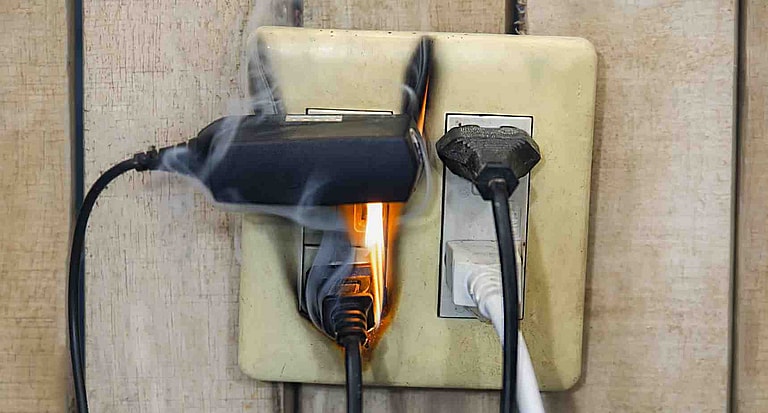
Residential Electrical
Investigation of house fires involving panels, wiring, receptacles and appliances.
Fire Investigation
Origin and cause investigation of residential, commercial, industrial and vehicle fires.
Have a loss to investigate?
We typically respond within one business day.