About
Engineering Support for Electrical Contractors
We typically respond within one business day.
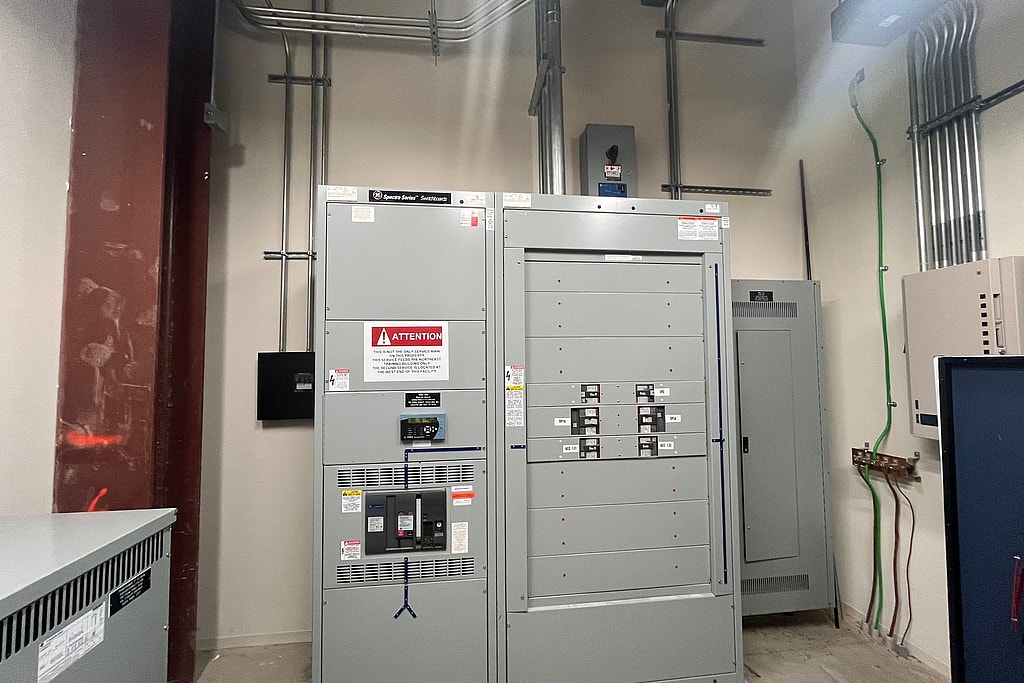
When a job needs an engineer
Plenty of electrical work never needs an engineer. Some does: a permit that calls for stamped drawings, a service that has to be shown to have room for new load, an owner’s specification that calls for an arc flash study, or an inspector who will accept an engineer’s report. Dreiym Engineering works with electrical contractors on those pieces, with licensed Professional Engineers and work PE-stamped where required. When you call, you talk with an engineer.
How a job runs with us
Engineering requests on a construction job usually come with a date attached, such as a permit hold, an inspection or a submittal. Getting the right information to the engineer at the start does the most to keep the work moving.
- Tell us what the job needs. The permit comment, the specification section or the inspector’s request, and the schedule you are working to.
- Send what you have. Plans, one-lines, panel schedules, photos of nameplates and the utility’s fault current letter if you have one.
- Scope and proposal. An engineer reviews it and sends a scoped proposal before work begins.
- Field work where needed. A walkdown, demand recording, a ground test or an inspection, scheduled with your site lead.
- Deliverables. Drawings, calculations, a study or a report, PE-stamped where required, in a form the plans examiner or inspector can review.
Electrical design
Our electrical design services produce the drawings, specifications and calculations that permitting, bidding and construction need, from a new feeder in an existing plant to a new facility: single-line diagrams, panel schedules, layouts and installation details.
Load studies for existing services
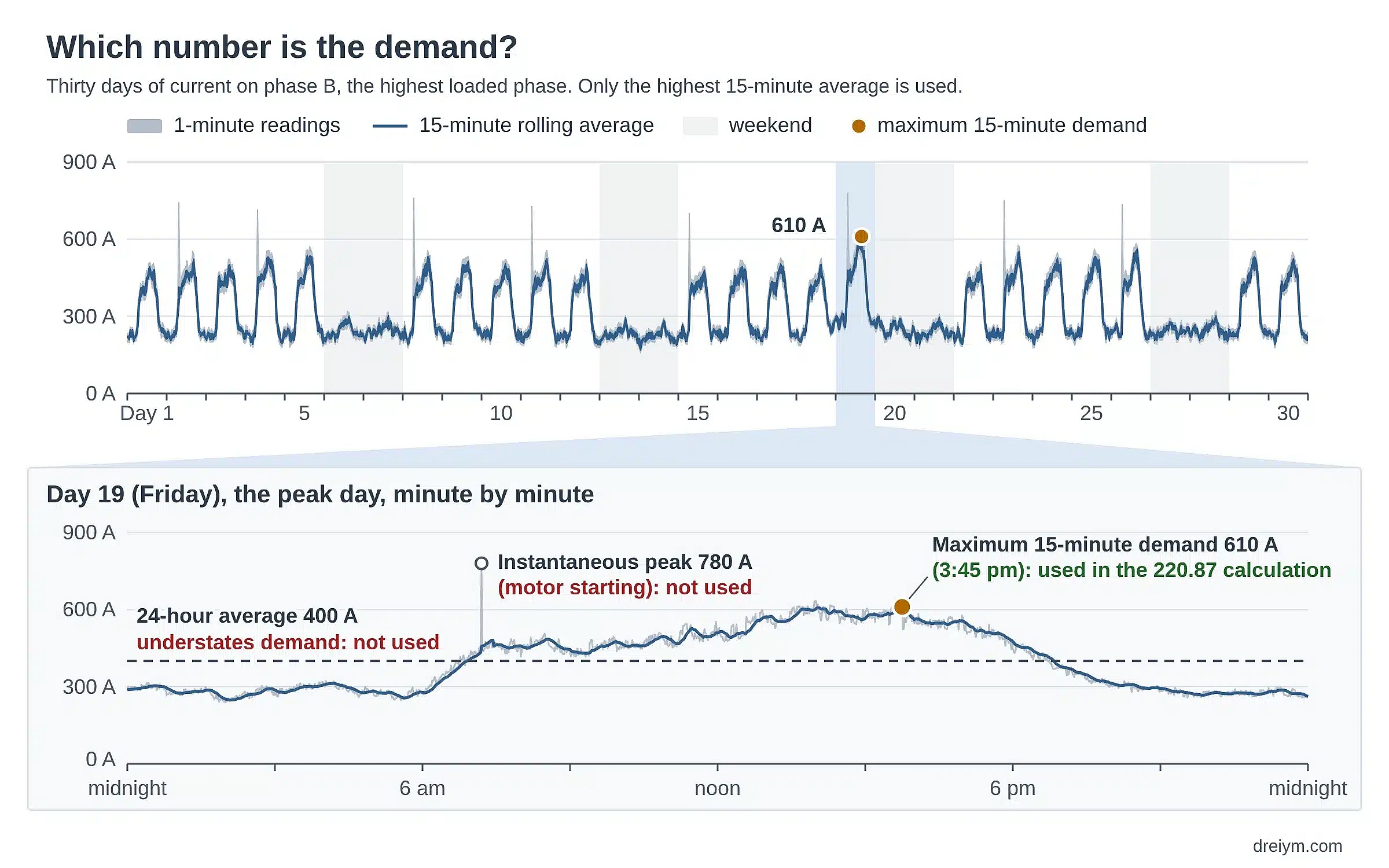
NEC® 220.87 lets the load on an existing service or feeder be set from measured demand. Where a year of maximum demand data is available it is used; where it is not, a continuous 30-day recording of the highest loaded phase, as 15-minute average demand, can take its place. The maximum demand is multiplied by 125 percent and the new load is added to it. Our article on the NEC® 220.87 load study walks through the method. We can record the demand and prepare the calculation, PE-stamped where required.
Have a job that needs a stamp, a study or a test? Request a free quote. We typically respond within one business day.
Arc flash studies and labels
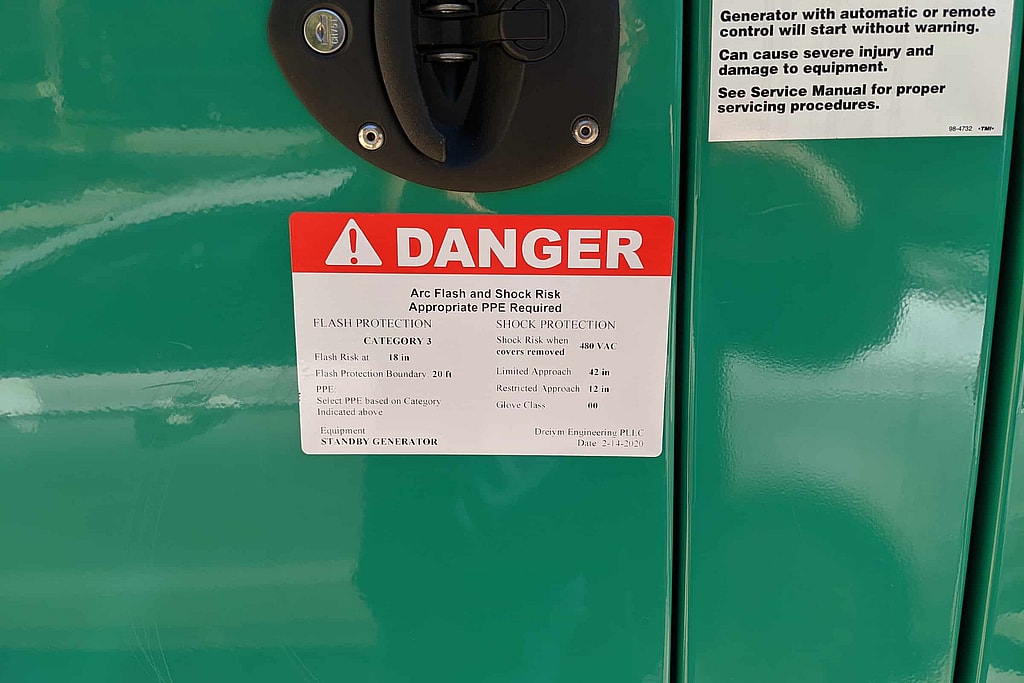
NEC® 110.16 requires equipment likely to be worked on while energized to be field marked with an arc flash warning, and from the 2017 edition, service equipment rated 1,200 A or more needs a label with the nominal voltage, the available fault current, the clearing time of the service overcurrent devices and the date the label was applied, unless an arc flash label to industry practice is applied instead. Our arc flash studies often start from one-lines and walkdown data that the contractor on site supplies, and we print and install the labels, or ship them to you.
Coordination studies for the AHJ
Some systems must be selectively coordinated, so that a fault is cleared by the protective device nearest to it without opening the devices upstream. The 2023 NEC® requires it for emergency systems (700.32), legally required standby systems (701.32), critical operations power systems (708.54), and elevators where more than one driving machine disconnecting means is supplied by the same source (620.62). The AHJ will want to see the study, with the responsible engineer’s signature and a PE stamp where the AHJ or the owner requires one. Our protective device coordination studies cover this work, and our article on selective coordination explains what the AHJ needs to see.
Grounding, Ufer and pool bonding inspections
We inspect and test Ufer (concrete-encased) grounding connections in new homes and commercial foundations, pool and splash pad bonding, and rough-in wiring, where a jurisdiction accepts or requires an engineer’s report. Our article on alternate methods of compliance explains when an engineer’s inspection can be used in Austin, Dallas and Houston.
Related projects
- Ufer Ground Inspections for New Homes Around Austin
- Ufer Tests on Commercial and Multifamily Foundations
- Rough-In Wiring Reviews After Drywall, Austin
- Pool and Splash Pad Bonding Inspections, Austin
What you receive
- Sealed drawings and specifications for permit and construction, where the job calls for design
- NEC® 220.87 load calculations, with the recorded demand data behind them
- Arc flash and coordination study reports, and labels printed and installed or shipped to you
- Short circuit analysis where equipment ratings or available fault current have to be shown
- Inspection and test reports with photographs, for Ufer, pool bonding and rough-in inspections
Homes in Austin, Dallas and Houston are covered by our residential inspections; on larger sites, our ground testing checks grounding systems after installation, and our electrical load analysis covers services and feeders beyond a single 220.87 calculation.
Frequently asked questions
When does an electrical job need a PE stamp?
When the permit office, the owner’s specification or the inspector requires one. Typical cases are design drawings for permit, a calculation showing that an existing service can take new load, an arc flash or coordination study, and an inspection where the jurisdiction accepts an engineer’s report.
Can you record demand for an NEC® 220.87 load study?
Yes. Where a year of maximum demand data is not available, NEC® 220.87 allows a continuous 30-day recording of the highest loaded phase, as 15-minute average demand. We can record the demand and prepare the calculation, PE-stamped where required.
Do you print and install arc flash labels?
Yes. Labels from our arc flash studies are printed and installed by our team, or shipped to you to apply.
Can an engineer inspect a Ufer ground before the pour?
Yes, and that is when it has to happen. The electrode has to be inspected before the concrete is poured, and not by the electrician who installed it. Our report documents it for the inspector where the jurisdiction accepts an engineer’s report.
What information do you need for an arc flash study?
One-line diagrams, the utility’s available fault current, nameplate data for transformers and large motors, cable sizes and lengths, and the type, rating and settings of each protective device. Many studies start from one-lines and walkdown data that the contractor on site supplies, and a walkdown fills in the rest.
Talk to an engineer
Have a job that needs a stamp, a study or a test? Request a free quote. We typically respond within one business day.
Get your project started
We typically respond within one business day.