Protecting Your Home: The Importance of Electrical Grounding and Bonding
Grounding and bonding are your home's core electrical safeguards. Learn how they stop surges, shocks, and fires, and how professionals test them.
Contents
Lights often flicker during a hard thunderstorm or when lightning strikes near a home or outbuilding. Devices may power on and off quickly for a second, then just as fast, everything returns to normal. While you may think the danger is over, you should also wonder what caused the problem to begin with. Often the answer comes down to grounding and bonding.
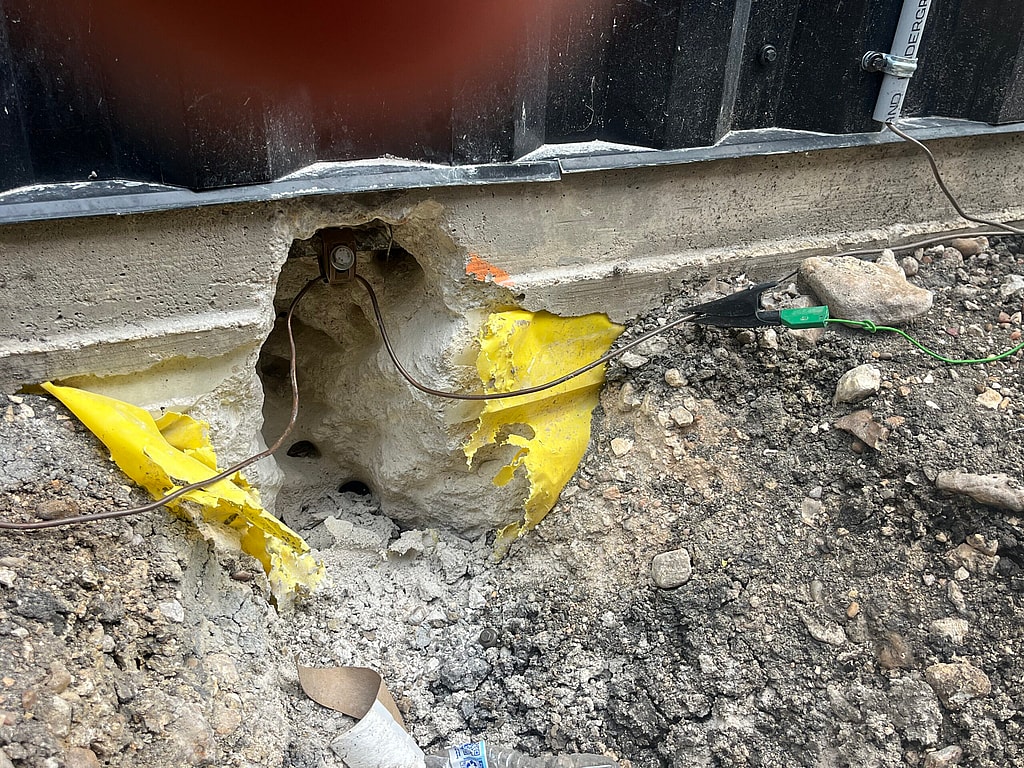
A field example from our work: Electrical Inspections of Renovated and Existing Homes
Any electrical system requires two important safeguards: grounding and bonding. These protections ensure your home will not catch fire or lose crucial electrical systems due to a surge or related issue. Any homeowner must understand what grounding and bonding mean and why they are so important to your home’s electrical systems and personal safety.
What Is Grounding and Bonding?
Before going too far into detail, it helps to have a basic understanding of the two protection methods and how they are different.
- Grounding connects the electrical system and equipment to earth. Under NEC® 250.4(A)(1) that connection limits the voltage imposed on the system by lightning, line surges, and unintentional contact with higher-voltage lines, and it establishes the system’s voltage reference to earth. It does not carry fault current away into the soil (NEC 250.4(A)(5) states that the earth shall not be considered as an effective ground-fault current path), and it does not regulate service voltage. Fault current returns to the source through the bonded equipment grounding conductor path, and that low-impedance path is what makes a breaker open quickly enough to limit shock and fire risk. Protection of appliances against power surges is a separate function performed by a listed surge-protective device under NEC Article 242, and the 2020 and later editions of the NEC require an SPD at dwelling unit services in 230.67. appliances.
- Bonding: This protection connects all the metal parts of your current electrical system. The goal is to maintain the same level of voltage on bonded parts, so that no step or touch potentials can cause harm.
When used together, grounding and bonding offer a comprehensive protection strategy that prevents electricity from flowing and stopping in your home. They also provide a safe baseline, so if one component quits, you’re covered.
System grounding and equipment grounding are the two types of grounding behind these protections, and our separate guide compares them.
What Is Electrical Bonding?
Electrical bonding means connecting metal parts together with conductors so they stay at the same voltage. In a home that includes the metal water piping, gas piping, service equipment, metal boxes and appliance frames. Around a pool it includes the reinforcing steel, ladders, handrails and the pump motor. Bonding keeps a touch between two metal objects from becoming a shock, and when it is tied into the equipment grounding path, it lets fault current flow back to the source so the breaker trips.
Why Are Grounding and Bonding So Important in a Home?
The average home has around 24 electrical products in operation. Everything from chargers for iPads to smart refrigerators requires around-the-clock electrical service. However, all those products only utilize about 12% of home energy use. The modern home is incredibly complex, requiring a bit more protective awareness to ensure your family and guests are safe.
When you think about it, a typical home has all kinds of appliances, fixtures, and outlets. You want grounding and bonding on items like:
- Kitchen Appliances
- Electrical Outlets
- Electrical Panels/Subpanels
- Laundry Devices
- HVAC Systems
- Hot Water Heaters
- Pool Pumps and Lighting
- Metal Plumbing Pipes
- Outdoor Outlets and Fixtures
- EV Charging Stations
Any of these systems can experience a fault. Without proper protection, you run the risk of severe electrical shock that can put someone in the hospital or start an electrical fire.
Related project: Shock Complaints at Drive-Through ATMs, Florida
Top 4 Reasons Grounding and Bonding Protect Your Home
1. Overload & Fault Protection
Appliances can short-circuit. A lightning strike can occur. Grounding takes these surges and allows them to “exit” your system safely, while bonding creates an environment that stops electricity where it is safe.
2. Voltage Stabilization
Electricity is not docile. It fluctuates, surges, spikes, and dips. A grounded system helps stabilize volatility so your voltage is even and properly managed. Otherwise, appliances and devices will wear out or fail much faster than expected.
Grounding steadies the system’s voltage to earth, but the neutral is what holds each 120 V circuit near 120 V. If the service neutral fails, lights can brighten in some rooms while they dim in others, and several appliances can fail at once. Our guide to open neutral symptoms explains those warning signs, how the neutral differs from ground, and what to do.
3. Arc Flash & Fire Protection
Electrical arcing is not only in a business or commercial electrical system. Whenever there is a break in the circuit or improper current flow, you risk an arc “event” that can do a lot of physical harm to a person.
4. Code Compliance & Insurance Safety
Any residential property that is not properly grounded or bonded according to local regulations is likely to fail inspection. That will also often lead to a void homeowners insurance policy. If you have a fire with a void policy, you will not be able to recoup financial losses as easily.
Related service
Ground Testing and Commissioning
Fall of potential, clamp-on, soil resistivity, bonding
How to Ensure Your Home’s Electrical System Is Properly Grounded and Bonded
Most of the grounding and bonding systems you’ll find in a home are invisible to the eye. It is buried in walls and ceilings that were installed during the initial construction or if there is a home renovation project.
You use residential testing by a qualified team of electrical experts like us at Dreiym Engineering to detect your protective systems. Some licensed electricians can do this after the fact, but having a fully qualified team is crucial.
Diagnostic tools will be used to test grounding rods, bonding conductors, and breaker panel connections. In some cases, local code compliance may require residential testing. These include:
- The home you’re buying was built prior to 1980.
- You or previous owners have detected multiple electrical issues.
- You’re doing a remodel or adding a new appliance (or a pool).
- Family members report frequent power outages or flickers during a storm.
- Previous residential work was performed by someone unlicensed.
In any of these cases, a licensed professional will conduct ground resistance testing to measure how well your system conducts electricity into the earth. They may also use bonding continuity testing to check whether all metal components are correctly connected.
However, you can do some visual inspections on your own. Look for any corrosion around metal pipes, disconnected or fraying wires, and outdated materials like cloth-insulated or knob-and-tube wiring. A little proactive checking goes a long way to ensuring you’re safe and protected.
FAQs
How does my electrical grounding system protect my home?
It does two jobs. The grounding electrode system connects your service to the earth, which limits the voltage that lightning, utility surges or accidental contact with a higher voltage line can put on your wiring. The equipment grounding conductors and the bond at the main panel give fault current a low-resistance path back to the source, so a breaker trips quickly when a hot wire touches a metal box, appliance case or pipe, instead of leaving that metal energized where someone could touch it.
What is the difference between grounding and a ground fault?
Grounding makes sure the system discharges electricity safely. A ground fault is a malfunction where electricity takes a “bad” (unintended) path to other metal, water, or a person.
Will my surge protector be good enough if my home isn’t grounded?
No. Surge protectors may work out for a single appliance or PC, but it all comes down to your grounded system. Not every protector can handle something like a lightning strike.
Will bonding impact my water pipes?
Yes. Most bonding connects all metal in your home, including the plumbing. That prevents shocks from straying into water or other objects.
How do I know if my home is grounded properly?
You need to hire a certified electrician or engineering team for residential testing. Those specialized tools can diagnose any issues or warning signs.
Will grounding or bonding lower my electric bill?
Not directly. Grounding and bonding will help prevent equipment failure. That means extending the usable lifespan of your devices and appliances, which saves you money in the long term.
Does the code require grounding?
Yes. In almost every case, grounding is required by local, state, and federal guidelines. Your home must meet National Electrical Code compliance or risk penalties, fines, and damage.
What if my home uses two-prong outlets?
This is why you want an expert to help. Some two-prong systems can be grounded behind the outlet, while others may not be grounded at all. It takes a pro to inspect them for differences.
Conclusion
The good news is you don’t have to think about whether your home has proper grounding and bonding all of the time. Scheduling residential testing or inspection should be enough to put your mind at ease and get you the protection needed to avoid frequent electrical issues, fire damage, arc flashes, or other concerns.
Our professional team at Dreiym Engineering has the tools, skills, and knowledge to conduct such residential inspections. We serve Texas and the surrounding area with commercial and residential issues. With over 30 years of combined experience, our forensic electrical engineers are your best answer to a safe and prepared residential property.
Give us a call today, and let’s ensure you have the proper grounding and bonding needed for all your home’s electrical uses.