Corrosion and CP
Cathodic Protection in Dallas-Fort Worth
Our work on cathodic protection in Dallas-Fort Worth is mostly water and gas: new water lines in Fort Worth, Mansfield and McKinney, buried gas piping at a power plant in Denton, and a buried hot water system at a wastewater plant in Dallas.
We typically respond within one business day.
Area at a glanceDE-LOC-DFW-C
- Area
- Dallas, Fort Worth, Mansfield, McKinney and Denton
- Served from
- Coldspring, TX office and engineering lab
- Practice
- Corrosion and CP
- Write-ups in the area
- 4
- Multi-site or nearby
- 9
- Licensure
- Licensed Professional Engineers with active and past licensure in multiple states
Clay soils and ductile iron
The soils we have tested in the area are mostly clays. Along a new 24-inch water line in McKinney, resistivity at pipe depth averaged 954 ohm-cm with a low of 515, matching the silty clay the soil survey maps there, and we classed it as highly corrosive to ductile iron. At the Dallas wastewater plant the layers at pipe depth measured 1,500 to 3,500 ohm-cm in clays and loamy sand, which on its own is moderately corrosive.
The McKinney line was designed for ductile iron in polyethylene encasement, with every bell and spigot joint bonded, insulating joints where it meets other piping, and magnesium anodes, and it was commissioned in 2020.
City standards and bid options
The three Fort Worth designs were prepared for City of Fort Worth water projects and follow the city standard details for test stations, magnesium anode stations, permanent reference electrodes and bonding. Because the pipe material was still open at bid time, each drawing set carries a test station schedule for every option. On one 24-inch line, ductile iron needs 16 anodes and concrete cylinder pipe needs 40.
Heat, small systems and start-up
Temperature changes the picture. The hot water at the Dallas plant runs at 180 °F, and heat speeds corrosion, so we expected rates three to four times those of the same soil at normal temperature and specified 48 magnesium anodes in twelve groundbeds for a 30-year life.
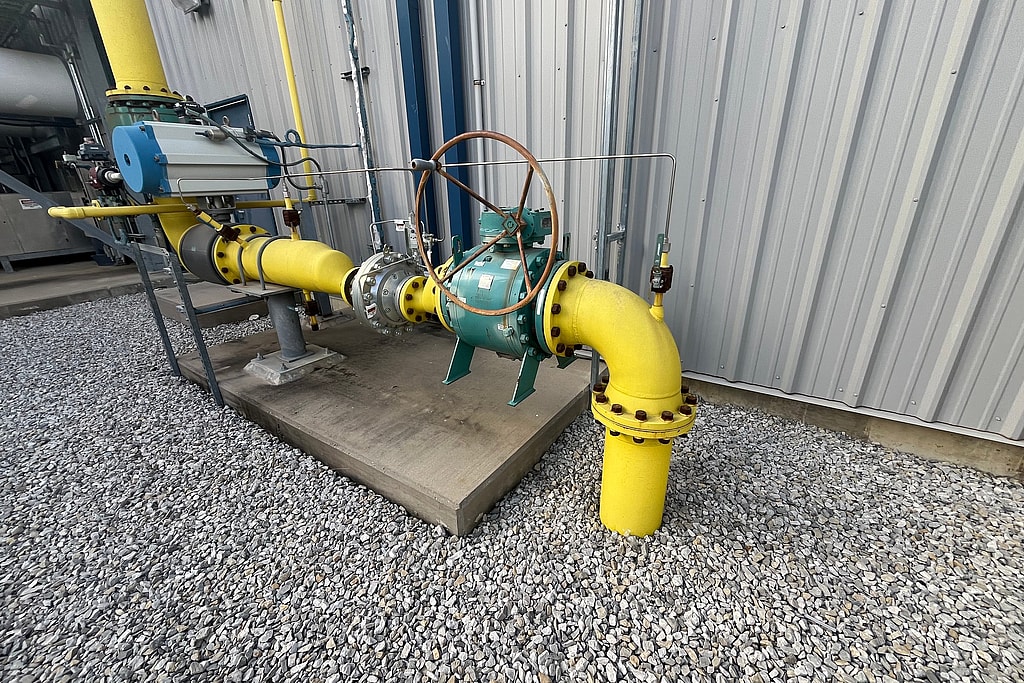
Small systems need the same attention. The buried gas piping at the Denton power plant is only about 400 feet long, and we have surveyed it every January since 2024. Its instant off readings have drifted 125 to 185 mV less negative over two years while still meeting the criterion, which is the kind of trend an annual survey is there to catch.
Start-up visits find what drawings cannot. In McKinney the anode stations had been built with 7 anodes instead of 12, and the flange kit at the tie-in to an existing main was not insulating. The contractor fixed both, and the final readings met the -850 mV criterion. In Dallas, flange kits missing their washers on one side were shorting the new pipe to building steel.
Project write-ups
Write-ups from Dallas-Fort Worth
A few examples from over 1,100 completed projects. Client details stay confidential.
Corrosion and CP
Water Line CP Designs, Fort Worth Area and Mansfield
Corrosion and CP
Water Line Soil Study, CP Design and Commissioning, McKinney
Corrosion and CP
Hot Water Piping CP Design and Start-Up at a Wastewater Plant, Dallas
Corrosion and CP
Annual Gas Piping CP Surveys at a Power Plant, Denton
Multi-site write-ups with a site in the area
- Galvanic Anode Designs for Steel Casings at Crossings, TexasTexas, three sites
- Arc Flash Studies at Manufacturing Plants in Temple, Grand Prairie and HumbleTemple, Grand Prairie and Humble, TX
- Ufer Tests on Commercial and Multifamily FoundationsAustin area and Fort Worth, TX
- Soil Resistivity Tests for Grounding Design, Comfort and MidlothianComfort and Midlothian, TX
Forensic write-ups from North Texas
Services
What we offer here
- Soil Corrosivity AnalysisWenner four-pin testing and a corrosivity rating for the route.
- Cathodic Protection DesignGalvanic and impressed current systems, PE-stamped where required.
- Start-Up and CommissioningConstruction visits, start-up testing and acceptance readings.
- Cathodic Protection Potential SurveysAnnual and compliance surveys with interrupted readings.
- CP Interference TestingStray current and interference tests between structures.
Who does the work
Served from Coldspring, Texas
Dallas-Fort Worth work is run from our office and engineering lab in Coldspring, Texas.
Our corrosion engineers include Stepan V. Eero, P.E., an AMPP (formerly NACE) CP4 Cathodic Protection Specialist, and Brian J. Brackensick, P.E., an AMPP CP3 Cathodic Protection Technologist. Designs are PE-stamped where required.
Also in the area
Request a free quote for your project
We typically respond within one business day.