Consulting Areas
Pipeline Coating Holiday Detection
We typically respond within one business day.
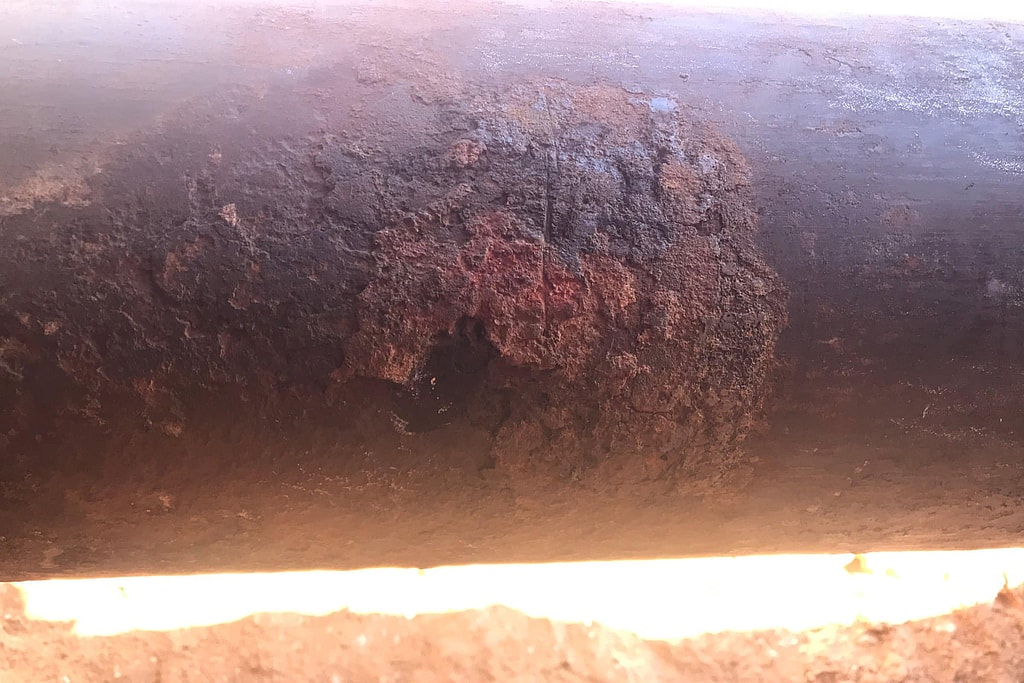
What a coating holiday is
A holiday is a break in the pipe coating where bare steel meets the soil. Holidays form from construction damage, rocks in the backfill, soil stress and the ageing of the coating. At a holiday the pipe depends entirely on cathodic protection, and corrosion becomes likely if protection there is weak. Finding holidays, and deciding which ones matter, is one of the most effective ways to prevent external corrosion.
Without cathodic protectionYear 20
With cathodic protectionYear 20
Without CPWith CPWall thickness
A holiday is a small gap in the coating. Where bare steel meets wet soil, it can corrode there. Cathodic protection drives current onto the bare steel at the holidays so that it does not.
Before backfill: holiday testing
Federal rules require the coating on a gas pipeline to be inspected just before the pipe is lowered into the ditch and backfilled, and any damage that could impair corrosion control to be repaired (49 CFR 192.461). Hazardous liquid lines follow a parallel rule in 49 CFR 195.561. The usual tool is a holiday detector, which passes a high voltage over the coating and signals when it finds a gap. NACE SP0490 covers holiday detection on fusion bonded epoxy coatings 10 to 30 mils thick.
On a new gas line at an Austin semiconductor plant, we tested the coating each time the contractor had a new run of pipe ready, following NACE SP0490. Each session started with a deliberate pinhole to set the detector voltage, and over six visits more than a hundred holidays were marked, repaired and tested again until the detector stayed quiet.
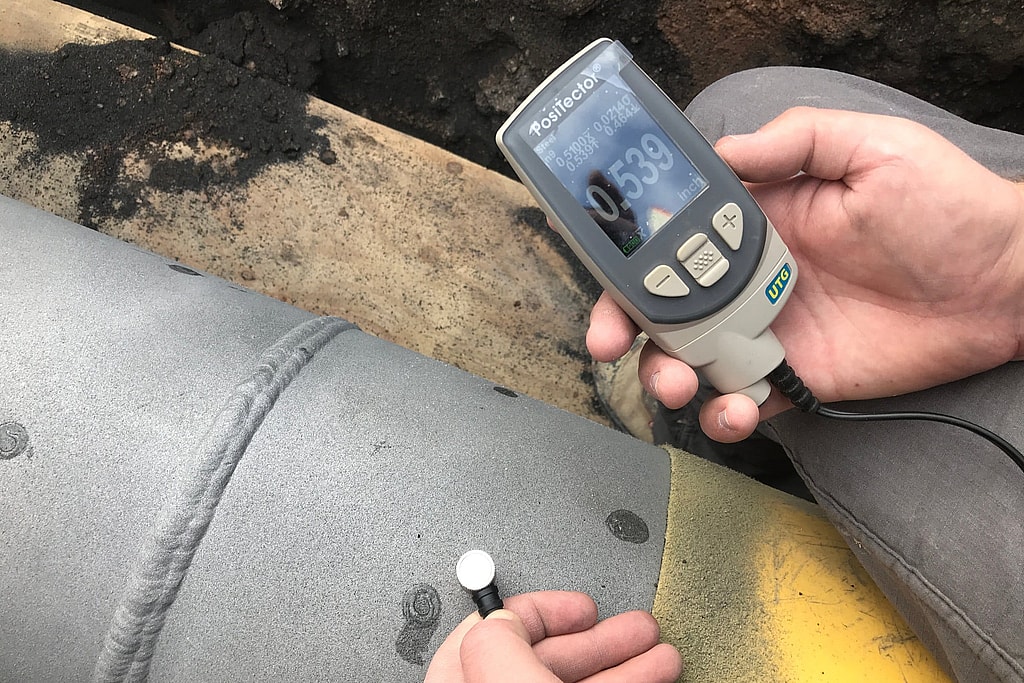
How a holiday detector works
A holiday detector passes a charged electrode over the coating while the detector is grounded to the pipe. Where the electrode crosses a holiday, current flows through the gap to the steel and back through the ground lead, and the detector alarms. In the pipeline industry the test is also called jeeping. ASTM® G62 describes two methods:
- Low voltage, wet sponge (Method A). For thin film coatings, using a sponge wetted with tap water and less than 100 V DC. It covers coatings 1 to 10 mils thick, or up to 20 mils with a wetting agent added to the water.
- High voltage (Method B). For thick film coatings over 20 mils, and usable down to 10 mils when the voltage is set correctly, with flat wire brush, rolling spring or similar electrodes.
For the high voltage method the test voltage is set from the coating thickness, following the governing standard, such as NACE SP0490 for fusion bonded epoxy, and the coating manufacturer’s recommendation. The detector’s output is verified before and after each period of use, if the detector is dropped, and whenever the electrode or the coating thickness changes. Before testing starts, the electrode is passed over a known holiday to confirm that the alarm sounds.
Building a new line and need holiday testing during construction? Request a free quote. We typically respond within one business day.
After burial: DCVG and ACVG surveys
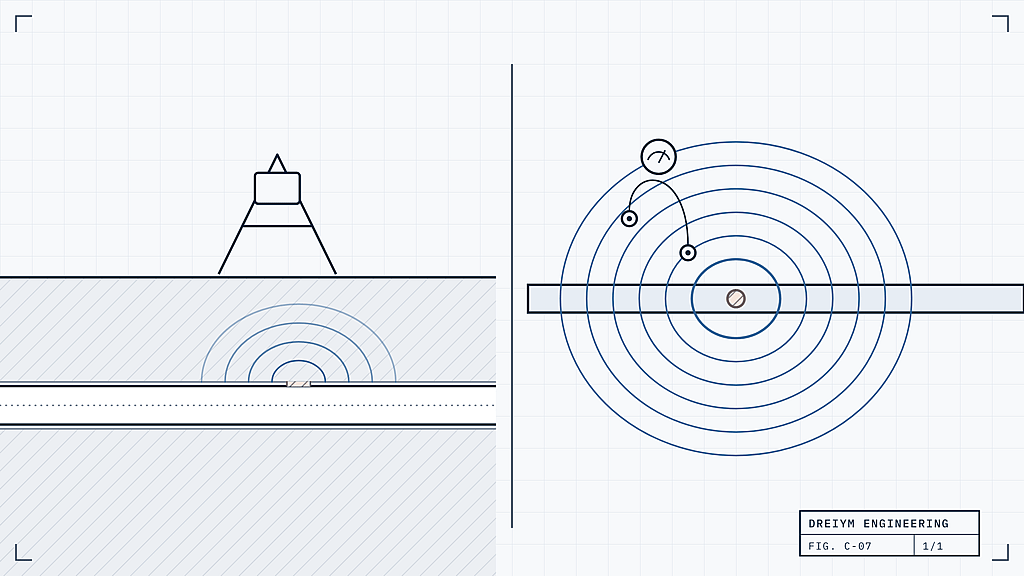
Once the pipe is in the ground, holidays are found from the surface. A DCVG survey measures the small voltage gradients that cathodic protection current sets up in the soil around each defect, grades each indication by its percent IR, and shows whether the steel there is corroding or protected. An ACVG survey uses an alternating current signal applied to the line instead, so it works whether or not the line has cathodic protection.
A post-construction DCVG survey is also a good acceptance test. On three new crude oil lines in southeast New Mexico, the project specifications required one before closeout. Those reports also noted two limits of any aboveground survey: it may miss a defect hidden under a poorly applied girth weld wrap, and it loses sensitivity below about 10 to 15 feet of cover, which matters on bores.
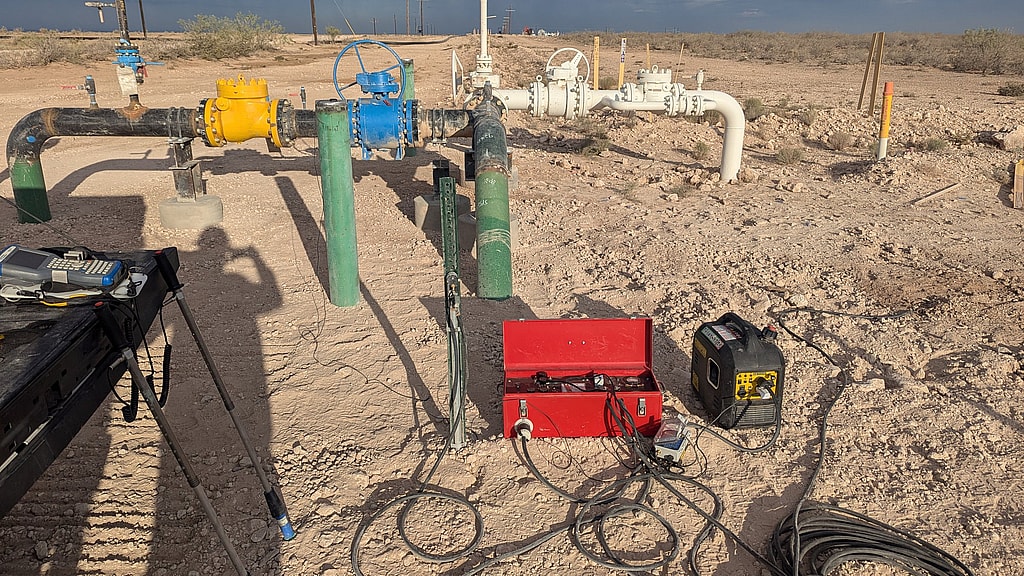
When a coating survey after backfill is required
For onshore steel gas transmission lines, federal rules now go beyond the inspection before backfill. When a repair or replacement leaves 1,000 feet or more of backfilled pipe, the operator must assess the coating promptly after backfill, and no later than six months after it, using DCVG, ACVG or another technology that gives comparable information about the coating. The operator then has six months from that assessment to develop a remedial action plan and apply for any permits the repairs need (49 CFR 192.461(f) and (h)).
Lines outside that rule can still need a survey after backfill. Project specifications required one on the New Mexico crude lines described above, and an acceptance survey before closeout is the last chance to find construction damage while the contractor is still on the job.
Choosing a method
- New pipe beside or in the ditch: holiday testing, then repair and retest
- A newly buried line before closeout: a DCVG acceptance survey
- A line in service with cathodic protection: DCVG, often with a close interval survey
- A line without working cathodic protection: ACVG, or DCVG with temporary current applied
Indications from any survey are ranked so that excavation goes first to the defects most likely to be corroding. A few validation digs confirm that the survey grades match what is found on the pipe.
What you receive
- Holiday test records for each run of pipe: the detector and electrode used, the coating thickness, the test voltage and its verification
- The location of each holiday found, and a record that each repair was tested again
- For DCVG and ACVG surveys, each indication with its position, its grade and photographs
- A ranked list of indications for excavation, with the validation digs we recommend
- A report reviewed by a licensed Professional Engineer, PE-stamped where required
A new line also needs its cathodic protection designed, started and checked; see cathodic protection design and start-up and commissioning. On older lines, a current mapping survey can rank long sections by coating condition before a DCVG or ACVG crew pinpoints the faults, and a close interval survey shows whether protection reaches them.
Frequently asked questions
What is a holiday in a pipeline coating?
A gap in the coating where bare steel is exposed, such as a pinhole, a scratch, a crack or an area of missing coating. At a holiday the steel depends on cathodic protection to keep from corroding.
What voltage is used for holiday testing?
It depends on the method and the coating. Low voltage wet sponge testing of thin films uses less than 100 V DC. High voltage testing of thicker coatings uses a voltage set from the coating thickness, following the governing standard and the coating manufacturer’s recommendation, and checked on the detector before and after use.
Is holiday testing required on new pipelines?
For gas pipelines, 49 CFR 192.461 requires the coating to be inspected just before the pipe is lowered into the ditch and backfilled, and any damage that would impair corrosion control to be repaired. A holiday detector is the usual tool. Hazardous liquid lines have a parallel rule in 49 CFR 195.561.
What is the difference between holiday testing and a DCVG survey?
Holiday testing checks the coating directly, on exposed pipe before it is buried. A DCVG survey finds coating defects from the surface after burial, by measuring the voltage gradients that cathodic protection current sets up in the soil, and grades each one.
Talk to an engineer
Building a new line, or need to know the coating condition of an old one? Request a free quote. We typically respond within one business day.
Get your project started
We typically respond within one business day.