Consulting Areas
Sour Corrosion (H2S Corrosion) and Sour Service Cracking
We typically respond within one business day.
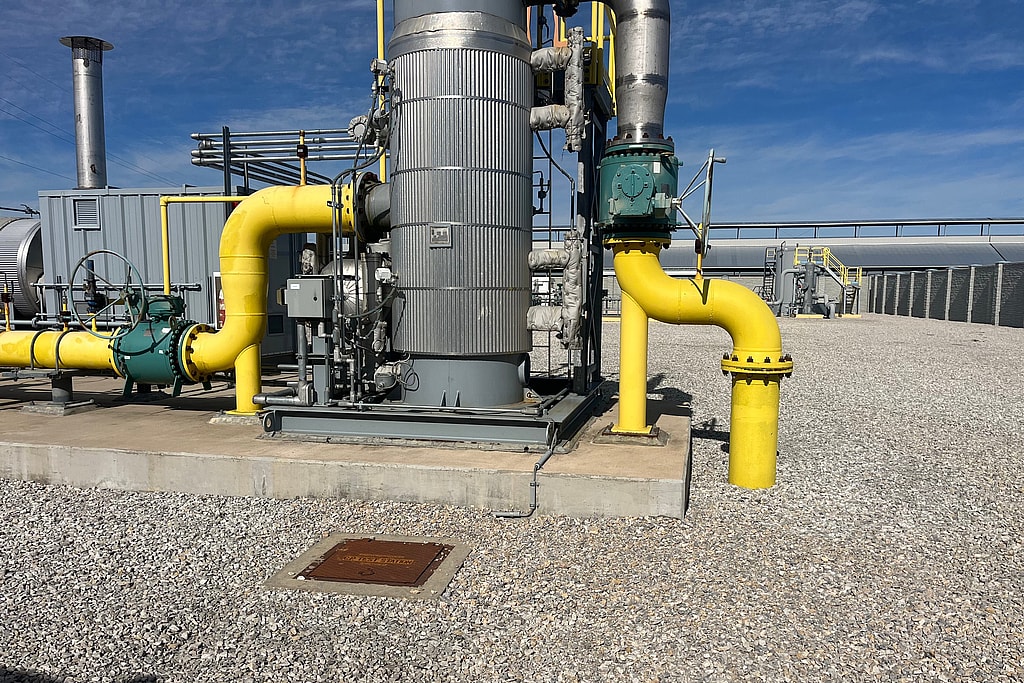
Sour corrosion is internal corrosion of steel by hydrogen sulfide (H2S) dissolved in water. H2S forms a weak acid in water and supplies hydrogen at the steel surface, and the corrosion product it leaves is iron sulfide. Our internal corrosion overview introduces sour corrosion alongside CO2, oxygen and bacteria. This page covers what makes sour service different: H2S causes metal loss and it can also crack steel, and those two problems are controlled in different ways.
Two separate problems: metal loss and cracking
Metal loss. Like CO2, H2S needs liquid water to corrode steel. The result can be uniform corrosion or pitting, often under iron sulfide deposits. PHMSA lists hydrogen sulfide among the contaminants naturally contained in the commodity that cause most internal corrosion, and federal internal corrosion direct assessment rules (49 CFR 192.927) name H2S along with CO2, oxygen and microorganisms as sources of internal corrosion to be assessed.
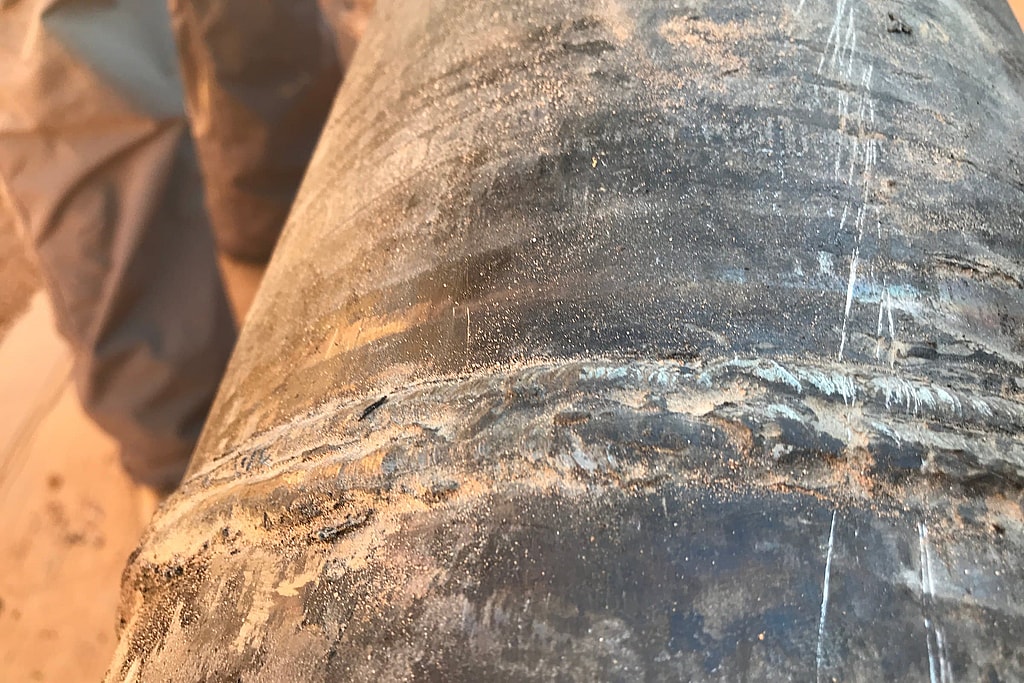
Cracking. Hydrogen produced by the corrosion reaction can enter the steel. Depending on the steel, its hardness, its stress and the environment, that hydrogen can crack it, sometimes with little visible metal loss. NACE MR0175/ISO 15156 lists the cracking mechanisms H2S can cause:
| Mechanism | What it looks like |
|---|---|
| Sulfide stress cracking (SSC) | Cracking under tensile stress, strongly linked to hardness, so hard welds and heat-affected zones need attention |
| Hydrogen-induced cracking (HIC) | Cracks in the plane of the plate, usually starting at inclusions, that can form even without applied stress |
| Stepwise cracking (SWC) | HIC cracks at different depths linked into a stepped path through the wall |
| Stress-oriented hydrogen-induced cracking (SOHIC) | Stacks of small in-plane cracks lined up across the direction of stress and linked together |
| Soft zone cracking, stress corrosion cracking and galvanically induced hydrogen stress cracking | Further mechanisms the standard addresses for particular materials and conditions |
Research by TWI notes that steels chosen for HIC resistance can still be susceptible to SOHIC under some stress and hydrogen charging conditions, which is one reason sour service materials are qualified mechanism by mechanism.
NACE MR0175/ISO 15156: what it covers and what it does not
NACE MR0175/ISO 15156 sets requirements for selecting and qualifying metallic materials for equipment in oil and gas production and natural gas sweetening plants in H2S-containing environments, where failure could put the public, personnel or the environment at risk. Part 1 lists the equipment it applies to, including wells, flowlines, gathering lines, field facilities, water injection equipment and transportation pipelines, with some exclusions, such as lines handling gas already prepared for commercial and domestic use. The standard supplements design codes rather than replacing them, and it is not necessarily applicable to refining or downstream equipment.
For carbon and low alloy steels, Part 2 draws its main line at an H2S partial pressure of 0.3 kPa (0.05 psi). At or above it, SSC-resistant steels must be selected from the standard’s annex or qualified by testing. Below it, no special precautions are normally needed, although highly susceptible steels can still crack. Partial pressure is the total absolute pressure multiplied by the mole fraction of H2S, so a gas at 1,000 psia with 50 ppm H2S sits right at 0.05 psi. Our article on NACE certification explains what “NACE certified” means on pipe and valves.
The point owners most often miss: Part 2 says plainly that it deals only with cracking, and that loss of material by general or localized corrosion is not addressed. A line built entirely from MR0175-compliant materials can still corrode through. Metal loss in sour service has to be managed the same way as any other internal corrosion: by controlling water, inhibition, monitoring and inspection.
Federal rules that touch sour service
- 49 CFR 192.475: corrosive gas may not be transported until its corrosive effect has been investigated and steps taken to minimize internal corrosion, and gas with more than 0.25 grain of H2S per 100 cubic feet (4 ppm) may not be stored in pipe-type or bottle-type holders.
- 49 CFR 192.477 and 195.579: coupons or other monitoring must be checked at least twice each calendar year, at intervals not exceeding 7 1/2 months, where corrosive gas is carried or inhibitors are relied on.
- 30 CFR 250.490: offshore, wellhead, blowout preventer and pressure control equipment exposed to H2S-bearing fluids must conform to NACE MR0175.
Running a line or facility with H2S in the stream and need an independent review? Request a free quote. We typically respond within one business day.
How we evaluate sour corrosion
External cathodic protection does not reach the inside of a line, so we evaluate internal corrosion from H2S, CO2, oxygen and bacteria as a separate question. Depending on what you need, the work covers:
- Service conditions. We review what the line or vessel carries and how it operates: gas and water analyses, H2S and CO2 content, pressure, temperature and water handling. Those give the H2S partial pressure that decides how MR0175/ISO 15156 applies.
- Materials and records. Our code and standards compliance reviews can compare material and weld records with the requirements that apply to the service.
- Metal loss. We review coupon and probe data, in-line inspection results and leak or cut-out history, and calculate the remaining strength of corroded pipe.
- Failed or cracked components. A section that leaked or cracked can come to our engineering lab in Coldspring, Texas, where it is documented as received and kept in video-monitored storage under chain of custody. Non-destructive steps such as photography, microscope examination and real-time X-ray come first. Sectioning and other destructive steps follow a protocol agreed with the interested parties, consistent with ASTM® E860 and E1188.
- Cause and recommendations. We test each possible cause against the evidence and the operating history, then recommend what should change: materials, water handling, monitoring or inspection.
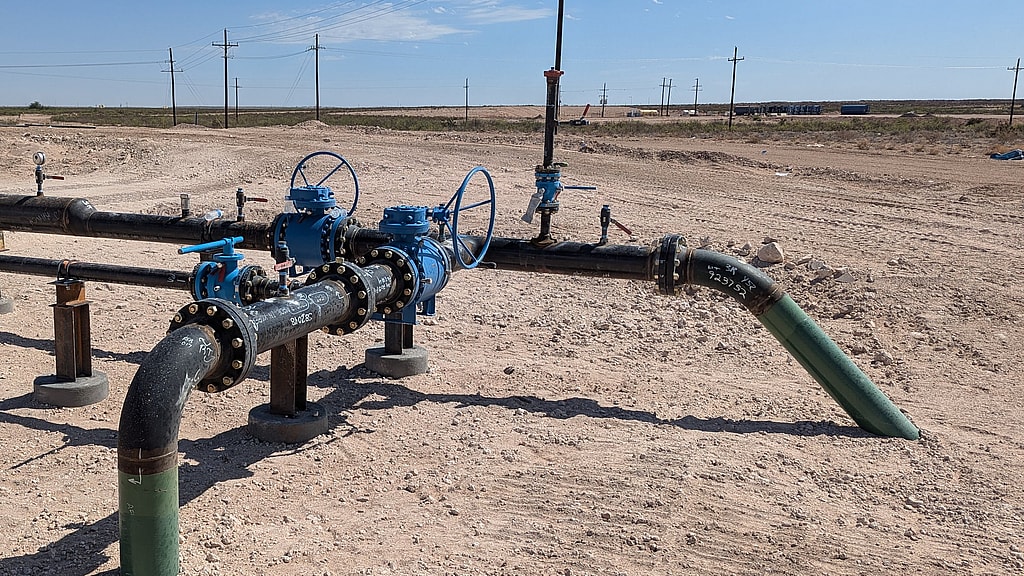
Our article on corrosion in shale operations covers produced fluids, sour-service materials and inhibitors in more depth for oilfield operators.
What you receive
- A written report, PE-stamped where required, separating the metal-loss findings from the cracking findings
- The H2S partial pressure calculation and how the standard applies to the service
- Findings on the materials and weld records reviewed
- Remaining strength results for measured metal loss
- For a failure, the cause, the contributing factors and the basis for each opinion
When to call us
- H2S has appeared in a stream that used to be sweet, or its concentration has risen
- Equipment is being bought, reused or moved into sour service and the materials need checking
- A line or vessel has leaked or cracked and you need the mechanism identified
- A sour service failure is headed for a claim or litigation; see our forensic corrosion engineering
Frequently asked questions
What is considered sour service?
For carbon and low alloy steels under NACE MR0175/ISO 15156, the usual dividing line is an H2S partial pressure of 0.3 kPa (0.05 psi) in the gas. At or above it, SSC-resistant materials are required. Operators and other codes may set their own definitions, so check which one governs your equipment.
What is the difference between SSC and HIC?
Sulfide stress cracking needs tensile stress and is closely tied to hardness. Hydrogen-induced cracking forms in the plane of the steel, usually at inclusions, and can occur without applied stress. Different tests and material controls address each one.
Does MR0175 compliance prevent corrosion?
No. It addresses cracking. Part 2 of the standard states that loss of material by general or localized corrosion is not addressed, so metal loss still needs water control, inhibition, monitoring and inspection.
Why is iron sulfide a concern?
Iron sulfide is the product H2S leaves on steel. Deposits of it, together with sand, scale and biological growth, can trap water against the wall and lead to pitting underneath, so cleaning and inspection matter in sour lines.
Talk to an engineer
Tell us what the stream contains and what the equipment is made of. Request a free quote. We typically respond within one business day.
Get your project started
We typically respond within one business day.