Consulting Areas
Sweet Corrosion (CO2 Corrosion) in Pipelines and Vessels
We typically respond within one business day.
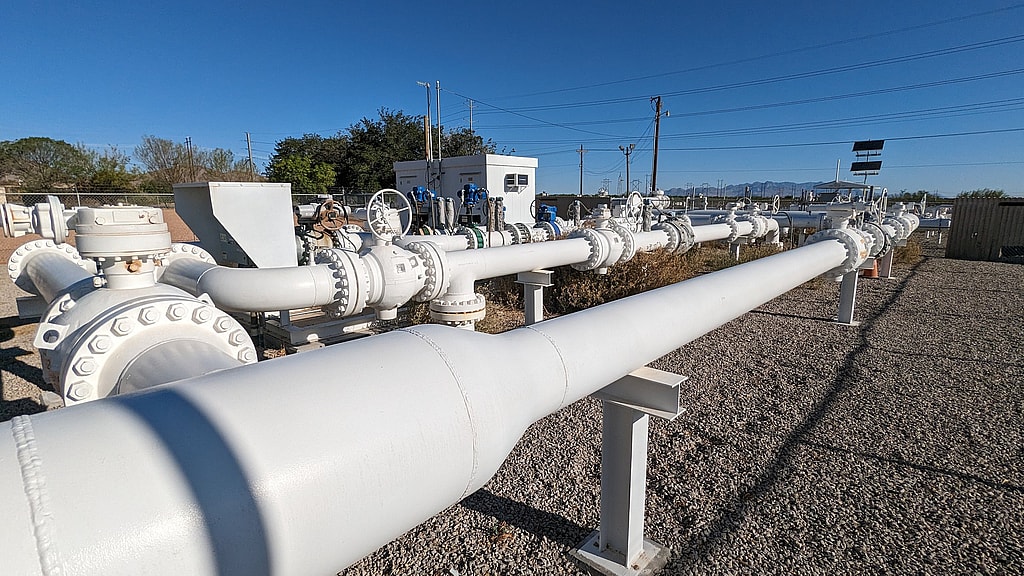
Sweet corrosion is internal corrosion of carbon steel by carbon dioxide dissolved in water. CO2 comes out of the ground with oil and gas, and it is also injected into reservoirs for enhanced oil recovery. Dry CO2 does little to steel, but once it dissolves in a water phase it forms carbonic acid, and that water attacks the inside wall of flowlines, gathering lines, separators, tanks and well tubulars. Our internal corrosion overview puts sweet corrosion next to sour corrosion, oxygen and bacteria. This page goes further into CO2 corrosion: why it concentrates in pits and mesa attack, where to look for it, and how we evaluate it.
The word “sweet” only means the stream carries little or no hydrogen sulfide. It does not mean the stream is harmless. The same chemistry also appears outside the oil field: in steam systems, CO2 released in the boiler dissolves in the condensate, forms carbonic acid and corrodes mild steel condensate piping.
Why CO2 corrosion turns into pitting and mesa attack
When steel corrodes in CO2-saturated water, iron carbonate (FeCO3) can precipitate on the surface. Whether that layer protects the steel depends on the conditions. Research at Ohio University’s Institute for Corrosion and Multiphase Technology (ICMT) names temperature, pH, CO2 partial pressure, salt concentration and flow velocity as the key factors in localized CO2 corrosion. A protective iron carbonate layer forms more readily above about 50 °C (122 °F), and higher salt concentrations make protective layers harder to form.
The real danger is a patchy layer. Where part of the surface is covered and part is bare, the two areas form a galvanic cell: the bare steel corrodes as the anode and the covered surface serves as the cathode. The same ICMT work reports that localized CO2 corrosion can penetrate one or more orders of magnitude faster than uniform corrosion, which is why a line with a modest average corrosion rate can still leak. The typical forms are:
- Pitting: isolated pits that grow where the iron carbonate layer has broken down, and can merge with neighboring pits.
- Mesa attack: wide areas that have corroded severely and are free of corrosion product, sharply bounded by surrounding areas that are still covered and protected. The name comes from flat-topped geological mesas.
- Flow-induced localized corrosion: turbulence sweeps corrosion product off a fast-corroding area and keeps the protective layer from forming again.
ICMT also lists field conditions associated with the start of localized attack: poor corrosion inhibition, water separating out of oil and water flow, differential condensation in wet gas lines, and flow disturbances such as weld beads and flanges, along with bacteria, solids, organic acids and hydrogen sulfide.
Why it matters: risk and regulation
PHMSA describes internal corrosion as gradual and usually localized metal loss on the inside of the pipe that, if it is not repaired, can end in a pinhole leak, a crack, a split or a rupture. In PHMSA’s figures, about 12% of incidents on gas transmission, gas gathering and hazardous liquid pipelines from 2013 to 2017 were caused by internal corrosion.
Federal rules treat CO2 corrosion as a known threat:
- 49 CFR 192.475: corrosive gas may not be transported unless its corrosive effect has been investigated and steps taken to minimize internal corrosion, and whenever pipe is removed for any reason, its inside surface must be inspected.
- 49 CFR 192.476: new gas transmission lines must be configured to reduce liquid collection, have effective liquid removal where liquids can collect, and allow corrosion monitoring devices at locations with significant potential for internal corrosion.
- 49 CFR 195.579: hazardous liquid operators must investigate and mitigate internal corrosion from any hazardous liquid or carbon dioxide that would corrode the line. Where inhibitors are used, coupons or other monitoring equipment must be examined at least twice each calendar year, at intervals not exceeding 7 1/2 months; 49 CFR 192.477 sets the same interval for gas lines carrying corrosive gas.
Where to look for sweet corrosion
CO2 corrosion follows the water. The places that hold water longest, or wet the steel most often, are where metal loss usually starts:
- Low points such as sags, drips, valves, manifolds and dead legs, which federal internal corrosion direct assessment rules (49 CFR 192.927) name as the first places to examine.
- The bottom of the pipe in slow, stratified flow, where water drops out and pools.
- The top of the line in wet gas service, where water condenses on the cooler pipe wall.
- Welds, flanges and fittings that disturb the flow.
- Vessel and tank bottoms where water settles. On a tank farm assessment in Tampa, internal corrosion came down to what each tank stored and whether water could settle on the floor.
Seeing wall loss on a line that carries CO2, or need a second look at your monitoring data? Request a free quote. We typically respond within one business day.
How we evaluate sweet corrosion
Cathodic protection protects the outside of a buried or submerged pipe and does nothing for the inside. As part of our corrosion practice, we evaluate internal corrosion from CO2, H2S, oxygen and bacteria. A typical evaluation runs like this:
- What the line carries and how it runs. We review what the line carries and how it operates: gas or liquid analyses, water content, pressure, temperature, flow rates, shut-in periods and any inhibitor program. CO2 partial pressure, the total absolute pressure multiplied by the mole fraction of CO2, is a basic input to any CO2 corrosion assessment.
- Monitoring and inspection records. Coupon and probe results, in-line inspection data, cut-out and leak reports show whether metal is being lost, where and how fast.
- Where water collects. The elevation profile and operating history show which locations are most likely to hold water, and those locations are ranked.
- Field checks. At selected locations, ultrasonic wall thickness readings show the remaining wall. We took this kind of reading on an El Paso fuel gas line. Spot readings can miss an isolated pit, so the locations are chosen with care.
- Removed pipe. When a section is cut out after a leak, our engineering lab can receive, examine and store it. Corrosion products and deposits stay in place until they are documented, because they help tell CO2 attack apart from H2S, oxygen or bacteria.
- Remaining strength. Measured metal loss feeds a remaining strength calculation with a method such as ASME® B31G or API® 579-1/ASME FFS-1.
Monitoring methods and what each one tells you
| Method | What it shows | Limits |
|---|---|---|
| Weight loss coupons | Average corrosion rate over the exposure period, and pitting on the coupon surface | Shows conditions at the coupon location only |
| Electrical resistance probes | Metal loss over time from the change in an element’s resistance | Measures loss on the probe element, not on the pipe wall itself |
| Ultrasonic thickness readings | Remaining wall at the point measured, from outside the pipe | Spot readings can miss isolated pits |
| In-line inspection data | Internal and external metal loss along the line | The line must be able to pass an inspection tool |
| Examination of removed pipe | Corrosion morphology, deposits and the mechanism behind them | Only available when pipe is cut out |
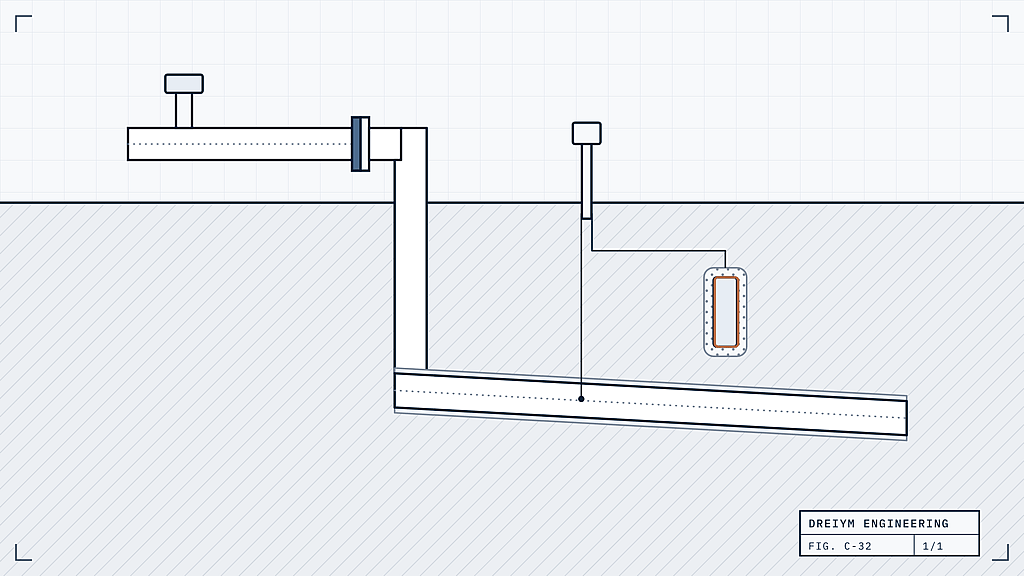
On new systems, our corrosion control design work can include corrosion coupon and probe monitoring. Our engineers have also run field corrosion rate testing with buried electrical resistance probes, on a solar farm pile project in Central Texas.
What you receive
- A written report, PE-stamped where required, that names the corrosion mechanism and the conditions driving it
- A ranked list of the locations most at risk, with the reasons for each
- Remaining strength results where metal loss has been measured
- Recommendations on water removal, monitoring locations and reassessment
- Notes on the federal internal corrosion requirements that apply to the line
When to call us
- A leak or cut-out shows internal pitting and you need to know why
- Coupons or probes show rising rates, or inhibitor results are hard to read
- A line is changing service, pressure or throughput, or will start carrying more water
- A failure may lead to a claim, and you need a forensic corrosion investigation
Frequently asked questions
What is the difference between sweet and sour corrosion?
Sweet corrosion is driven by CO2 dissolved in water and leaves iron carbonate. Sour corrosion is driven by hydrogen sulfide and leaves iron sulfide, and it adds the risk of hydrogen-related cracking. Many production streams contain both gases.
What causes CO2 corrosion in pipelines?
Liquid water with CO2 dissolved in it. The rate and the form of attack depend on temperature, pH, CO2 partial pressure, salt content and flow, and the attack concentrates where water collects or where a protective iron carbonate layer breaks down.
What is mesa attack?
A form of localized CO2 corrosion: wide, flat-bottomed areas that have corroded severely, sharply bounded by surrounding steel that is still covered by a protective corrosion product layer.
Can cathodic protection stop CO2 corrosion?
No. Cathodic protection works on the outside surface in contact with soil or water. Inside the pipe, the controls are removing water, inhibitors, internal coatings, cleaning pigs and monitoring to confirm they work.
Talk to an engineer
Have a line that carries CO2 and water? Send us what you know about it. Request a free quote. We typically respond within one business day.
Get your project started
We typically respond within one business day.