Electrical Failure Analysis: What You Need to Know
What is electrical failure analysis? It finds the root cause of outages, equipment damage and fires. Common failure types and how engineers trace them.

Contents
What is Electrical Failure Analysis?
What is electrical failure analysis? It is the process of identifying and diagnosing the root causes of electrical failures in various systems and components. Electrical failures can occur due to many factors, such as design flaws, manufacturing defects, environmental stress, human error, aging, corrosion, overload, or sabotage. Electrical failure analysis can help determine the nature, extent, and impact of the failure, as well as provide recommendations for corrective and preventive actions.
Key takeaways
- Electrical failures are classified by mode, mechanism or location, such as an open circuit, a break that stops the flow of current.
- The engineer documents the scene and the failed equipment before anything is moved, gathers the electrical history and preserves the parts.
- In the lab, parts are examined by eye and under magnification, often X-rayed before disassembly, and taken apart in a joint examination when other parties have an interest.
- Electrical tests and comparison with an undamaged exemplar help separate the cause of a failure from the damage it produced.
- After a failure, disconnect the power source and isolate the affected area.
Need an investigation? See our electrical failure analysis services for failed breakers, wiring, transformers and other equipment, from the scene to the lab bench.
From our project files: Chiller Drive Fire Analysis, Texas
Recent examples: utility equipment failure investigations in Alabama and lightning damage analyses in Charlotte.
Have an electrical failure to investigate?
Our licensed forensic electrical engineers investigate equipment and electrical failures for insurers, attorneys, and owners: laboratory examination, expert reports, and testimony.
Related project: Bench Examinations of a Burned Control Panel and Two Breakers
Why is Electrical Failure Analysis Important?
Electrical failures can have serious and costly consequences for any industry or application. Depending on the severity and scope of the failure, it can result in:
- Loss of power, data, or functionality
- Damage to equipment, property, or environment
- Injury or death to personnel or customers
- Legal liability or regulatory penalties
- Reputation damage or customer dissatisfaction
- Revenue loss or increased expenses
Electrical failure analysis can help you avoid or minimize these risks by providing you with valuable information and insights on the causes and effects of the failure, as well as the best practices and solutions to prevent or resolve them. Electrical failure analysis can also help you improve your design, manufacturing, testing, maintenance, and operation processes to enhance the reliability, performance, and safety of your electrical systems and components.
What are the Types of Electrical Failures?
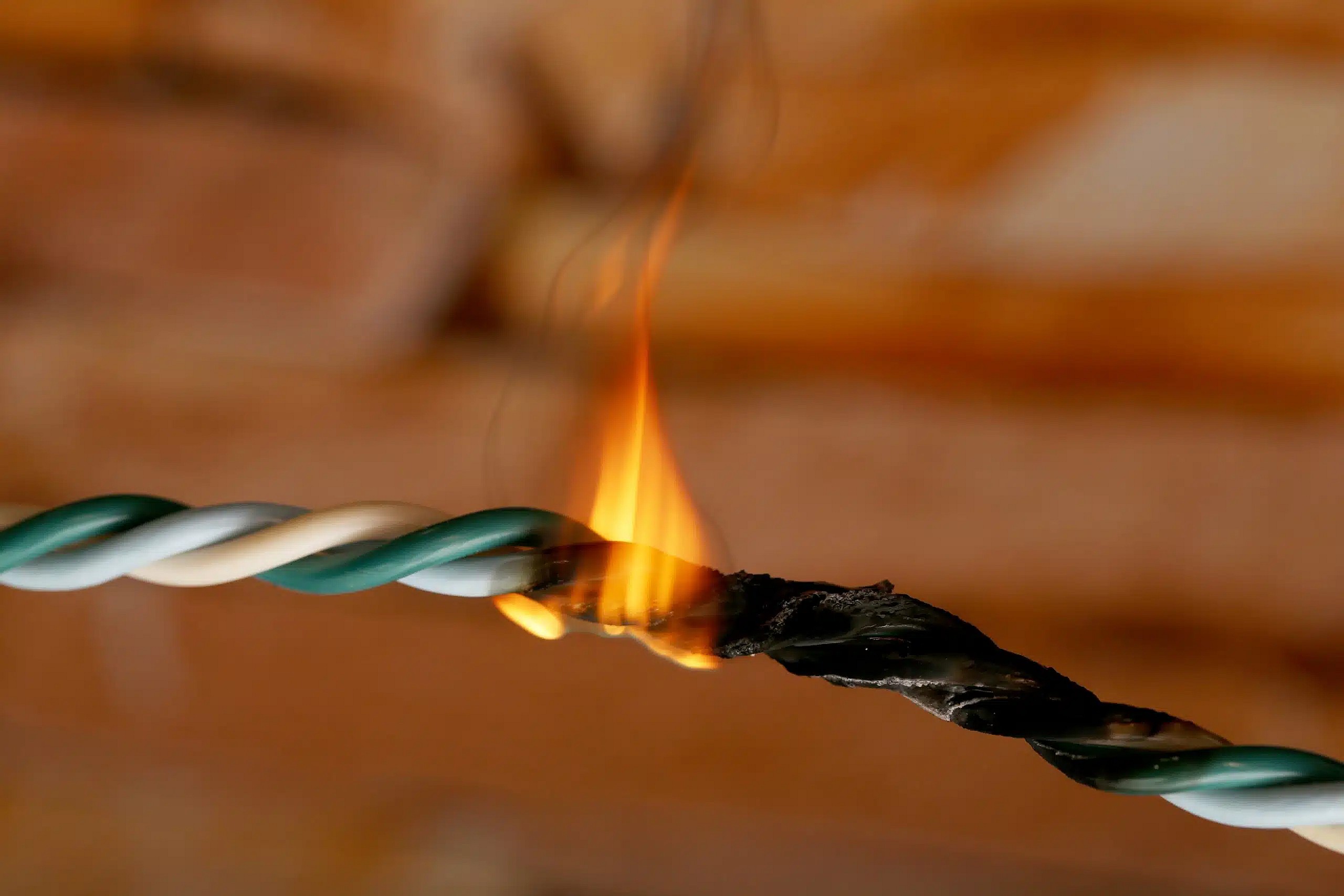
Electrical failures can be classified into different types based on the mode, mechanism, or location of the failure. Some of the common types of electrical failures are:
- Open circuit: A break or discontinuity in a conductive path that prevents the flow of current.
- Short circuit: An unintended connection between two points of different potential that causes excessive current flow.
- Ground fault: A type of short circuit that occurs when a conductive part of a circuit comes in contact with the ground or another conductive surface.
- Arcing: A discharge of electricity across a gap or between two electrodes that generates heat, light, and noise.
- Overvoltage: A condition where the voltage in a circuit exceeds the normal or rated value.
- Overcurrent: A condition where the current in a circuit exceeds the normal or rated value.
- Overheating: A condition where the temperature of a component or a system exceeds the normal or rated value.
- Corrosion: A chemical or electrochemical reaction that deteriorates the material or surface of a component or a system.
- Wear and tear: A gradual degradation of the material or performance of a component or a system due to normal use or aging.
- Electromagnetic interference: A disturbance or noise that affects the signal or function of a component or a system due to external or internal electromagnetic sources.
Many of these failures leave their evidence inside a housing. Real-time X-ray lets an engineer see it before anything is opened, as in the short video below from our laboratory.
How Electrical Failure Analysis Is Done
Most electrical failure analyses follow the same sequence. The engineer documents the scene and the failed equipment before anything is moved, gathers the electrical history (maintenance records, protective device trips and any monitoring data) and preserves the parts. In the lab, the parts are examined by eye and under magnification, often X-rayed before disassembly, and then taken apart in a joint examination when other parties have an interest. Electrical tests and comparison with an undamaged exemplar help separate the cause of the failure from the damage it produced. The findings are then tested against each possible cause, following the scientific method in NFPA® 921 for fire cases.
When the failed equipment is an oil-filled transformer, its dissolved gas analysis results belong in that history. The transformer DGA calculator on our site lays them out sample by sample, so any rise in the gases before the failure stands out.
A common first question about a burned conductor is whether it shows arc damage or melting from the heat of the fire, and the figure below compares the two.
Where aluminum or another low-melting metal sat near the copper, our eutectic melting calculator checks whether alloying was possible at the temperature of the fire.
A Arc damage
Drawing of two copper conductors after an arc: a round bead with a sharp edge where the upper wire was cut through, full-size wire up to it, and a matching notch in the lower wire.B Melted by the fire's heat
Drawing of two copper conductors melted by a fire: both wires thin and taper over a length inside the hot zone, with drips and loose globules and no sharp edge.Compare one feature
| Feature | A Arc damage | B Melted by the fire's heat |
|---|---|---|
| 1 End shape | A round, smooth bead, or a clean cut where the arc melted through the wire (arc severing). Both cut ends often carry a bead. | Thinned, tapered or necked ends. The melted metal collects in irregular globules. |
| 2 Boundary | A sharp line between melted and unmelted metal. | No sharp line. The wire changes gradually from sound to melted over a length. |
| 3 How far it reaches | One spot. The wire keeps its full diameter right up to the damage. | Spread along the length that sat in the hottest part of the fire, with drips where gravity pulled the metal down. |
| 4 Neighboring wire | Often a matching notch or bead on the other conductor at the same spot. | Wires and metal parts in the same heat melt the same way, whether or not they were energized. |
These are first-look features. Some fire-melted ends look like beads and some arc sites are small, so we examine conductors under the microscope, and by metallography when needed, before drawing a conclusion. An arc site shows that the circuit was energized when it formed; on its own it does not show that the circuit caused the fire.
What to Do After an Electrical Failure?
If you experience an electrical failure, you should take the following steps to ensure your safety and recovery:
- Disconnect the power source and isolate the affected area.
- Notify the relevant authorities and personnel.
- Assess the damage and identify the potential hazards.
- Photograph and document conditions as you found them, then leave the evidence alone. Do not remove, clean or discard failed components, conductors, appliances or debris: NFPA® 921 (opens in a new tab) calls for physical evidence to be documented in place before it is moved and then collected, packaged and tracked under an unbroken chain of custody, and collection or disposal by one interested party invites a spoliation claim. Secure and restrict access to the area, and notify your carrier and your engineer so that evidence is collected properly and, where appropriate, with the other interested parties present.
- Contact Dreiym Engineering for professional electrical failure analysis.
Our reference on arc bead vs fire melting compares the features of arc melting, fire melting and alloying on copper wire, with the published studies.
Why Choose Dreiym Engineering for Electrical Failure Analysis?
Dreiym Engineering is a trusted and experienced provider of electrical failure analysis services for various industries and applications. We have a team of qualified and certified engineers who can perform comprehensive electrical failure analysis using state-of-the-art equipment and techniques. We can help you identify the root causes and effects of electrical failures, as well as provide you with practical and cost-effective solutions to prevent or resolve them. We can also help you improve your design, manufacturing, testing, maintenance, and operation processes to ensure the reliability, performance, and safety of your electrical systems and components.
Whether you need electrical failure analysis for power generation, transmission, distribution, or utilization, we can handle it with professionalism and efficiency. We offer flexible and customized electrical failure analysis services to meet your specific needs and requirements. We also adhere to the highest standards of quality, integrity, and confidentiality. We are committed to delivering exceptional results and customer satisfaction. Contact us today to get a free quote or to learn more about our electrical failure analysis services.
Discussion
Comments are reviewed before they appear. We cannot give opinions on specific incidents or cases in comments.