Consulting Areas
Forensic Electrical Engineers and Electrical Expert Witnesses
We typically respond within one business day.
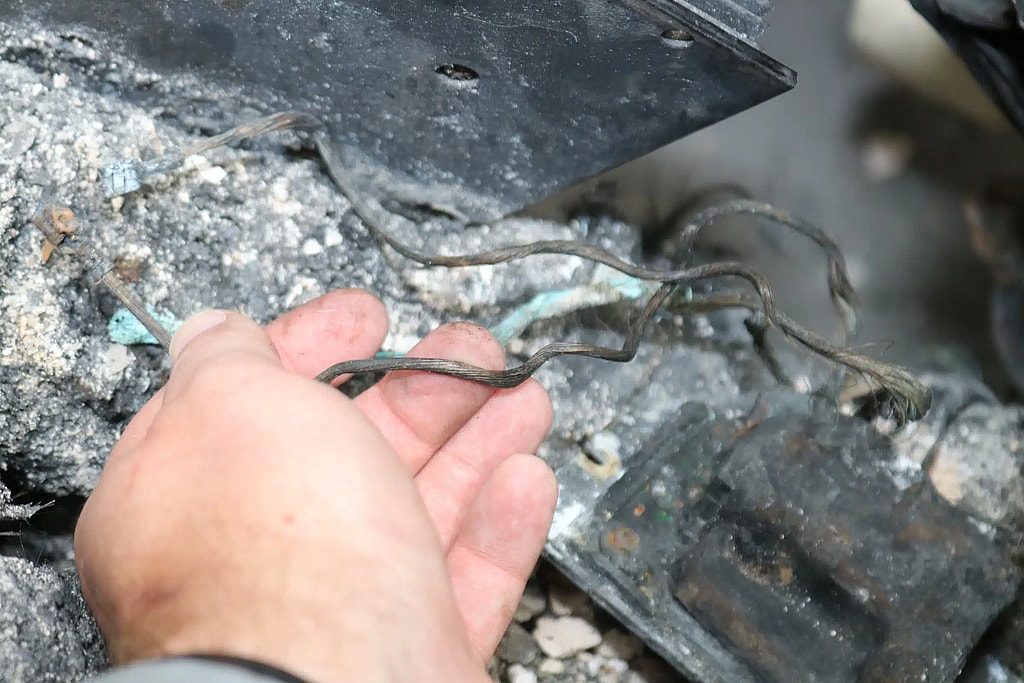
What Forensic Electrical Engineers Do
A forensic electrical engineer is a licensed Professional Engineer who determines whether an electrical failure caused a fire, an injury or an equipment loss, and explains how and why it happened. Our PEs investigate electrical losses for insurers, attorneys and property owners, and serve as electrical expert witnesses from the written report through deposition and trial.
New to fire investigation? Our fire investigation guide puts our articles, explainers and services in the order to read them.
Have a loss to assign? Submit a forensic assignment for a free quote, or request our CVs and rate schedule. We typically respond within one business day.
Get in Touch
Submit an assignment for a free quote.
When something fails, electrical is often the first place everyone looks. An unbiased review by a licensed engineer confirms that suspicion or rules it out. We determine the cause of the failure and the conditions that existed before it, explain how and why it happened, and can recommend how to keep it from happening again.
Founded in 2014, Dreiym Engineering PLLC is owned, led and managed by licensed professionals with over 30 years of combined experience. We provide forensic electrical engineering in Austin, Houston, San Antonio, Dallas, the rest of Texas and the surrounding states, from offices in Coldspring, Texas, and Westcliffe, Colorado. We get an engineer to your loss site as soon as possible.
Hiring us as your electrical expert witness
- Every investigation is led by a licensed Professional Engineer. Dreiym Engineering is Texas Registered Engineering Firm F-16324, and our engineers are licensed Professional Engineers with active and past licensure in multiple states.
- Brian J. Brackensick, M.S., P.E. and Stepan V. Eero, M.S., P.E. are both NAFI Certified Fire and Explosion Investigators (Certified Fire and Explosion Investigator, a certification from the National Association of Fire Investigators (NAFI). Candidates qualify through training and experience and pass an exam based on NFPA 921 and NFPA 1033.See the glossary) and Certified Vehicle Fire Investigators (Certified Vehicle Fire Investigator, a NAFI certification for investigating fires in cars, trucks and heavy equipment. Candidates qualify through training and experience and pass an exam.See the glossary).
- Current CVs, our rate schedule and our standard letter of agreement are available on request, so you can review them before you assign the file.
- We write expert reports, PE-stamped where required, and give deposition and trial testimony when a matter goes that far. We also accept consulting-only (non-testifying) retentions.
- Physical evidence, such as a failed breaker or a section of wiring, is examined in our in-house forensic engineering laboratory in Texas and held in secure, video-monitored storage.
- Quotes are free and carry no obligation. Submit an assignment online, and we typically respond within one business day.
How a forensic electrical investigation works
- Intake. Send the date of loss, address, parties involved, claim or file number and a short description. We check for conflicts, confirm the questions you need answered and send a free quote.
- Scene examination. We get to the scene as soon as possible and photograph it as found before anything is moved. Each item of evidence is numbered, photographed in place and tracked from the scene to storage. Fire scenes are worked with a method consistent with NFPA 921, Guide for Fire and Explosion Investigations, 2024 editionThe reference most fire investigators follow. It is a guide, not a code. It lays out a systematic approach based on the scientific method: gather data, form hypotheses about origin and cause, and test each against the evidence.Plain-language summary, not the standard’s wording.See the glossary.
- Joint examinations. Any examination that would alter the evidence is coordinated with the other interested parties first, following the consensus practices in ASTM E860, Standard Practice for Examining and Preparing Items That Are or May Become Involved in LitigationBefore any test that could change or destroy evidence, the other interested parties are told what is planned and given the chance to attend.Plain-language summary, not the standard’s wording.See the glossary and ASTM E1188, Standard Practice for Collection and Preservation of Information and Physical Items by a Technical InvestigatorHow an investigator documents, collects, labels and stores evidence, so its condition and chain of custody can be shown later.Plain-language summary, not the standard’s wording.See the glossary.
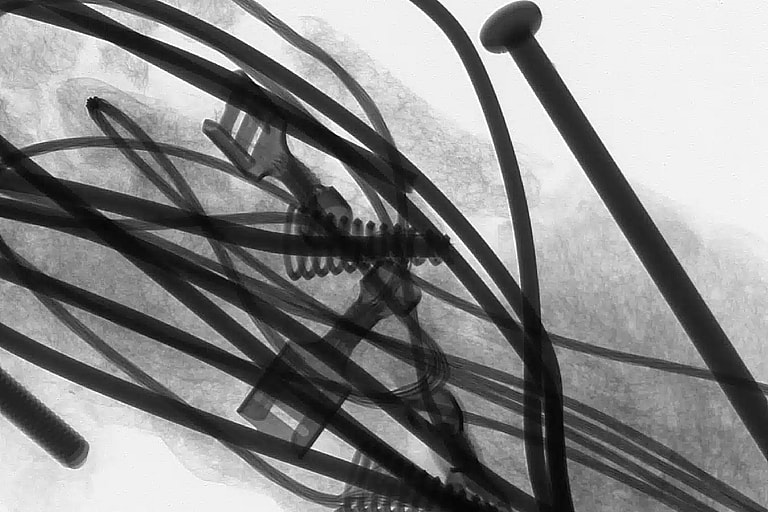
- Laboratory examination. X-ray imaging lets us see inside a failed breaker or appliance component before anything is opened.
- Analysis. We test each hypothesis against the physical evidence and rule out what it does not support. For a fire, origin comes first, and we do not call a fire electrical just because no other cause turned up.
- Report and testimony. A licensed PE sets out each opinion with its basis. If the evidence cannot support a conclusion, the report says so plainly.
Electrical engineering expert witness services
Plaintiff and defense attorneys, insurers and property owners retain our engineers as electrical engineering expert witnesses. The work is the same whichever side calls us: we report what the evidence supports.
- Investigation: we examine the scene and the failed equipment, preserve the evidence and test components in our Coldspring, Texas lab, following a method consistent with NFPA 921 at fire scenes.
- Expert report: a licensed Professional Engineer sets out each opinion, the facts and data behind it and the method used, PE-stamped where required.
- Deposition: we explain the investigation and the basis for each opinion under questioning from both sides.
- Trial testimony: we explain the physical evidence to the judge or jury and defend the analysis under cross-examination.
Our opinions rest on recognized standards: NFPA 921 for fire investigation, NFPA 70® (the National Electrical Code®) and NFPA 70E® where an installation or work practice is in question, and ASTM E860 and E1188 for handling evidence. Brian J. Brackensick and Stepan V. Eero are NAFI Certified Fire and Explosion Investigators, a certification built on the job performance requirements of NFPA 1033.
Before you retain anyone, compare qualifications on our Subject Matter Experts page, which lists the credentials of each engineer.
We prepare our findings so they can hold up in court under either admissibility standard, and we confirm the governing standard with counsel at the start of every engagement. Our guide to Frye vs. Daubert expert testimony standards explains how judges evaluate forensic engineering evidence.
Recent projects include our electrical failure and fire origin investigations in Louisiana, lightning-strike analyses in Charlotte, North Carolina and recloser and transformer failure investigations in Alabama.
If you are an attorney or adjuster comparing experts, our guide to choosing an electrical and corrosion engineering expert witness covers what to screen for, and our Attorney Intake and Retention Checklist (PDF) lists what we need for a conflict check and scoping.
A failed service neutral is one of the causes we look for when several appliances in a house fail at once, or when a fire starts at a service connection. The repair usually destroys the evidence. Our article on investigating an open neutral explains what to preserve before anyone fixes it. To see why, model a 120/240 V service with a failed neutral in our free online circuit solver: the numbers show why one side gets pushed toward overvoltage.
What We Investigate

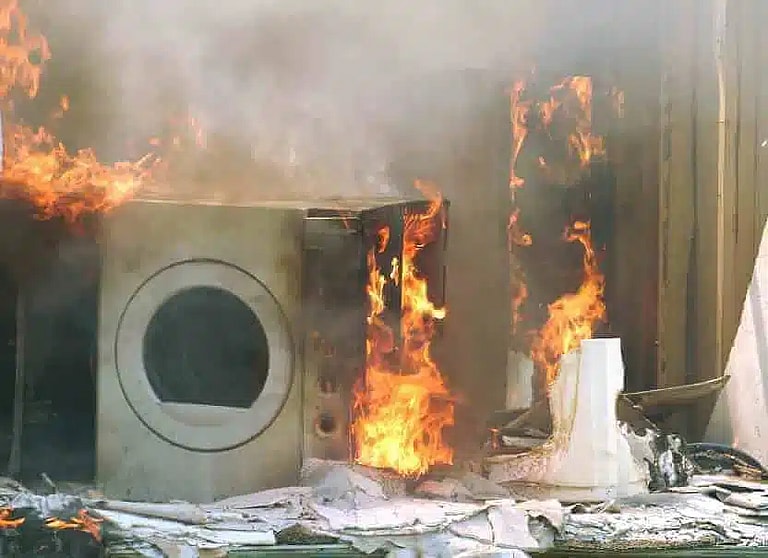
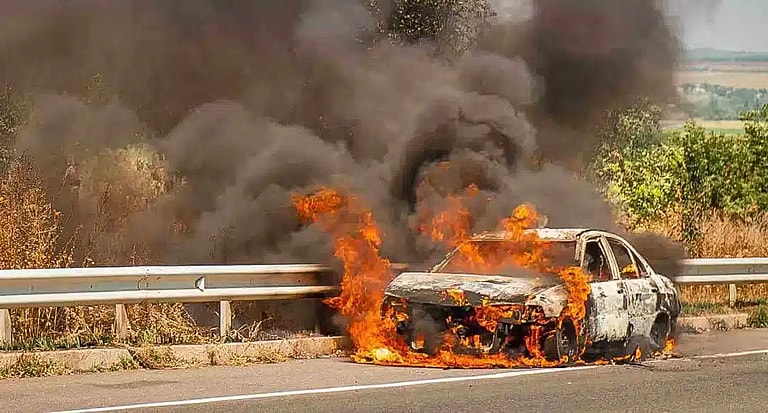

Electrical Fire, Failure and Injury Investigations
Electrical fire investigation
Residential and commercial fires where wiring, a device or the service equipment is a suspected ignition source. We identify the potential electrical ignition sources in the The room or space where the fire began, narrowed down from fire patterns, witness accounts, the timeline and, where wiring is present, arc mapping.See the glossary and use Locating and plotting every arc site on the circuits in a burned area. Once an arc severs a conductor, the circuit beyond it goes dead, so the arc site farthest along a circuit is usually the earliest. That helps narrow the area of origin.See the glossary to check whether the arcing evidence agrees with the origin. A spreading fire also causes arcing, so much of the work is telling the two apart (see arcing versus melting damage). In a commercial building we trace from the service equipment through the distribution and branch circuits to the loads, which also tells the owner what is safe to re-energize. See residential electrical fire investigation and our fire and explosion investigation practice.
Appliance failure
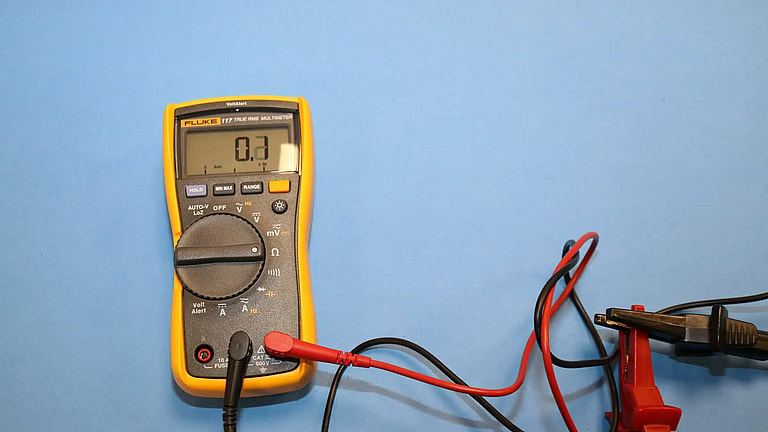
Fires, shocks and water leaks traced to HVAC systems, washers and dryers, refrigerators, ovens and ranges, small kitchen appliances, heaters, fans and chargers. We determine whether it was properly installed and operated, whether there is a design or manufacturing defect, and whether it actually caused the loss. Sometimes the appliance was not the problem and the electrical work was. Learn more about appliance failure investigation.
Shock, electrocution and arc flash injury
We identify the source of the hazardous energy and the path it took, whether safeguards were properly designed and installed, whether safe work procedures were developed and followed, and whether personal protective equipment worked as intended. Learn more about electrical injury investigation.
Lightning and utility surge damage
Many failures look like surge damage on the surface. We determine whether a strike or surge actually occurred, document each claimed item, separate surge damage from age and wear, and say whether each item is a total loss or repairable, with an estimated cost of repair. Learn more about lightning and surge damage investigation.
Equipment and component failure
Breakers, wiring, service equipment, transformers, reclosers and motor drives. The answer usually comes from the bench rather than the scene: we X-ray the part before anything is opened and work out what failed and in what order. Learn more about electrical failure analysis.
Vehicle electrical systems
Vehicle and heavy-equipment fires, where the electrical system sits close to the fuel and hydraulic systems. Our lab has an 18,000-lb vehicle lift for these examinations. Learn more about vehicle fire investigation.
What a Forensic Electrical Investigation Answers
As an independent third party, we report what the evidence supports, whoever retained us. The questions usually include:
- Did an electrical failure cause the incident, or was the electrical damage a result of it?
- What failed first, and in what sequence?
- Was the system or component properly designed?
- Was it properly assembled and installed?
- Was it properly operated and maintained?
- Were the applicable codes and standards followed?
- Was it a manufacturing issue, an installation issue, a misapplication, an external event such as lightning or a utility surge, or ordinary end of life?
Need an answer on a loss? Submit a forensic assignment or request our CVs and rate schedule. Quotes are free, and we typically respond within one business day. For our other disciplines, see our forensic engineering services.
How we investigate
How an electrical investigation reaches a finding
We follow the scientific method set out in NFPA 921. Here is each step on an electrical loss, and how the evidence travels from the scene to our lab.
Step 1 of 8
Recognize the need
An electrical fire, failure or injury has caused a loss, and the question is whether electricity caused it: a failed connection, a defective product, faulty wiring, or an electrical system that was only damaged by the fire.
- Claim or file number, loss date and location
- Fire, failure or injury, and what must be answered
- Testifying or consulting-only retention
This step produces The questions in writing and a named engineer
Step 2 of 8
Define the problem
We work out what the investigation needs: which circuits, devices and products to examine, which utility and maintenance records to request, and who must be told so that interested parties can attend before anything is altered.
- Circuits, devices and products in scope
- Records to request
- Notice to interested parties
This step produces A plan for the scene and notice to the other parties
Step 3 of 8
Collect data
At the scene the electrical system is documented before it is disturbed: service, panels, branch circuits and the devices on them. Arc mapping locates arcing damage along each circuit. Products and wiring are collected with their positions recorded.
- Arc mapping of branch circuits
- Panel, breaker and device positions recorded
- Photographs, measurements and 3D capture
This step produces Scene documentation and an evidence list
Step 4 of 8
Analyze the data
Conductors, breakers, cords and products are examined in our lab. Real-time X-ray shows the inside of a device before anyone opens it, and the microscope helps tell arcing damage from melting caused by the fire’s heat.
- Real-time X-ray before disassembly
- Microscope with an 18 MP camera
- Exemplar comparison and joint examinations
This step produces Radiographs, photographs and examination notes
Step 5 of 8
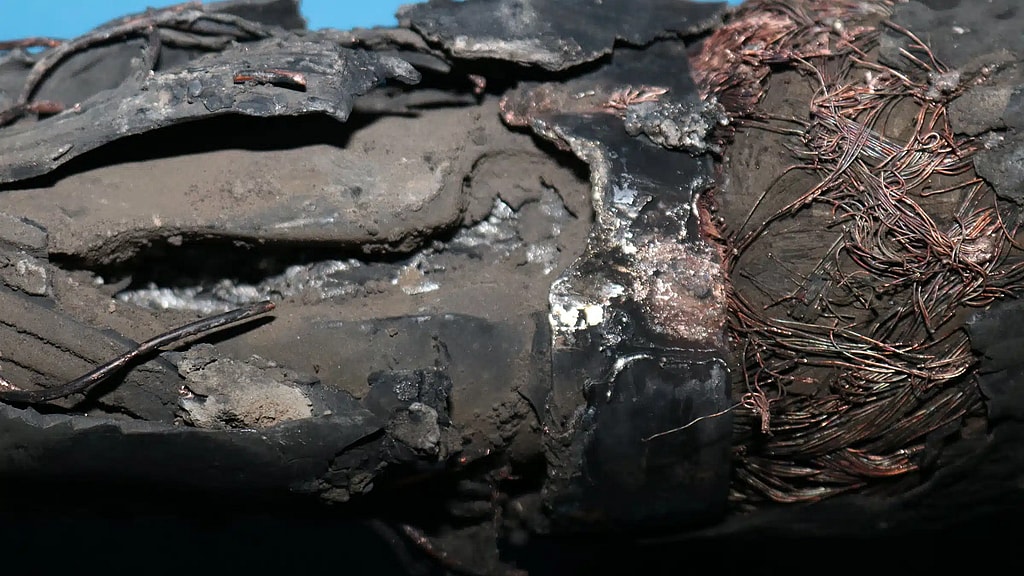
Develop hypotheses
For each circuit and product near the origin, the engineer asks how it could have failed, whether that failure could have started the fire, and whether its damage could instead have come from the fire.
- Every circuit and product in the area of origin
- Failure modes: connections, insulation, overload, product defects
- Cause of the fire, or damaged by it
This step produces A list of hypotheses to test
Step 6 of 8
Test the hypotheses
Each hypothesis is checked against all the data: the arc map, how the fire spread, the device’s design and ratings, and the lab results. Exemplar products can be tested to see how they behave. A hypothesis that conflicts with reliable data is revised or discarded. A cause is never chosen only because the others were ruled out.
- Arc map compared with fire spread
- Ratings, design and exemplar tests
- Alternatives kept open until the data decide
This step produces Test results and the reasoning behind them
Step 7 of 8
Select the final hypothesis
The hypothesis that survives testing becomes the finding, stated with the confidence the data support. When none survives, the cause is undetermined, and the report says why.
- One explanation consistent with all the data
- Stated with its level of certainty
- Undetermined when the data do not decide
This step produces The finding and its basis
Step 8 of 8
Report the findings
The report gives the finding and the basis for it, with photographs, radiographs, diagrams and lab results, written for adjusters, attorneys and courts. Consulting-only (non-testifying) retentions are accepted.
- Finding and the basis for it
- Photographs, radiographs and lab results
- Testimony when retained to testify
This step produces A report, PE-stamped where required
- 01TagEach artifact gets its own tag: item number, where it was found, who collected it and when.
- 02Sealed containerPacked and sealed at the scene, so the seal shows whether it has been opened since.
- 03Storage logLogged into video-monitored evidence storage. Every transfer is signed and dated.
- 04Lab check-inChecked in to the lab under the custody record. Interested parties are notified so they can attend the examination.
- 05Real-time X-rayRadiographed in real time before disassembly, so the inside is on record before anyone opens it.
- 06Return or disposalHeld until the client instructs: returned, released to another party or disposed of, and the record closed.
Timeline analysis Illustrative
Line up the clocks
Devices on a site do not all keep the same time. An alarm panel set by hand drifts by minutes, and a camera recorder may not have been set since it was installed. Before we read an order of events into the records, we line their clocks up on an event several of them saw. Here four records of one night disagree until you do.
Its power loss is 9 min 06 s after the meter’s.
Its power loss is 4 min 12 s before the meter’s.
Arrow keys move a clock by one second, Page Up and Page Down by one minute. You can also drag a lane sideways.
As these clocks read, the one power loss shows up at three different times, 13 min 18 s apart, and the smoke alarm comes 2 min 41 s after the power loss. Correct the alarm panel and camera clocks until their power loss sits on the meter’s line.
- Smoke alarm
- 2 min 41 s after the power loss
- 911 call
- 3 min 40 s before the power loss
- Three records of the power loss
- 13 min 18 s apart
Every event, in corrected order
| Corrected time | Record | Event | Time on its own clock |
|---|---|---|---|
| 02:09:20 | Camera recorder | Haze first visible on the storage room camera | 02:09:20 |
| 02:16:18 | Camera recorder | Recording stops as the power is lost | 02:16:18 |
| 02:16:50 | Phone call log | Night guard calls 911 | 02:16:50 |
| 02:20:30 | Smart meter event log | Loss of voltage, all phases | 02:20:30 |
| 02:23:11 | Fire alarm panel log | Smoke detector, storage room: alarm | 02:23:11 |
| 02:29:36 | Fire alarm panel log | AC power lost, panel on battery | 02:29:36 |
Why the clocks disagree
Alarm panels and camera recorders keep time on their own. They are set by hand when they are installed, drift a little every week, and often miss the change to or from daylight saving time. Smart meters and phone carriers usually take their time from a network, but their records are often kept in UTC or standard time; converted to local time, they make the better reference.
How we line them up
We look for one event that several records saw at the same moment, such as the power going off: the alarm panel logs it, the camera recorder stops, and the meter records it. The difference in their times, after allowing for how each device logs the event (a panel’s delay before it reports AC loss, a recorder’s write buffer, how a meter stamps an outage), is each clock’s error. We note every correction and the event it rests on, so anyone can check it.
What the order can and cannot show
A corrected timeline shows what came first, not why. Lined up, these records read: haze on the camera at 02:13:32, the smoke alarm at 02:14:05, the 911 call at 02:16:50, and the power lost at 02:20:30. The cause is still a question for the scene and the lab.
Frequently asked questions
What does a forensic electrical engineer do?
A forensic electrical engineer investigates electrical failures after the fact: examining the scene and the failed equipment, preserving the evidence, testing components in a lab, and determining whether an electrical failure caused a fire, injury or loss, or was a result of it. The findings go into a written report, and if the matter is litigated, the engineer testifies as an expert witness. For the wider field, see what a forensic engineer does.
What is the role of an expert witness in a trial?
An expert witness helps the judge or jury understand technical evidence they could not evaluate on their own. Unlike a fact witness, an expert may give opinions, but under Rule 702 those opinions must rest on sufficient facts or data and on reliable methods reliably applied to the case. An electrical expert typically explains what the physical evidence shows, how the failure happened, and whether the installation met applicable codes and standards, then defends that analysis under cross-examination.
How do you find and qualify an electrical engineering expert witness?
Start with the questions in dispute, then look for an engineer whose license, field experience and lab capability match them. Verify the license with the state board (our article on PE stamp and seal fraud lists four checks), review the CV, and ask how the expert would rule out alternative causes. In court, the judge decides whether the witness is qualified and whether the method is reliable.
How fast can you get to a loss site?
We get an engineer to the scene as soon as possible and schedule the examination around your needs. The sooner an engineer is involved, the more evidence can be documented where it was found, so contact us before the scene is cleared or repaired.
What should we do before the engineer arrives?
Leave the scene and the failed equipment as undisturbed as safety allows. Don’t let anyone repair, discard or take apart the suspect device, panel or wiring. Photograph what you can without moving anything, keep any parts already removed, and notify the other interested parties so a joint examination can be arranged.
Do you accept consulting-only retentions?
Yes. We accept consulting-only (non-testifying) retentions as well as testifying assignments. Request our CVs and rate schedule or submit an assignment for a free quote. We typically respond within one business day.
Related Reading
- Fire Scene Evidence Preservation: A Checklist for Insurers and Attorneys
Fire scene evidence preservation after a loss: notice to interested parties, joint scene exams, labeling, chain of custody and lab exams.
- Electrical Failure Analysis: What You Need to Know
What is electrical failure analysis? It finds the root cause of outages, equipment damage and fires. Common failure types and how engineers trace them.
- Loose Wires and Loose Electrical Connections: Warning Signs, Fire Risk and Prevention
What a loose connection is, why loose electrical connections heat up and start fires, the warning signs, and what fire investigators look for afterward.
- 3 Common Myths About Arc Mapping Forensics
Arc mapping helps fire investigators narrow a fire's area of origin, but myths persist. We debunk 3 common misconceptions about arc mapping forensics.
Related Services

Lightning / Surge Damage

Residential Electrical
Appliance Failure
Project experience
Related projects
Hawaii
Underground Cable Failures at an Energy Site, Hawaii
Cable failure analysis
North Texas
Wiring Loss at a Vacant Commercial Building, North Texas
Electrical loss analysis
North Dakota and Texas
Bench Examinations of a Burned Control Panel and Two Breakers
Component examination
Florida
Shock Complaints at Drive-Through ATMs, Florida
Shock investigation
West Texas
RV Park Underground Cable Failures, West Texas
Electrical failure analysis
Lake Charles, LA
Lake Charles Commercial Investigations
Electrical investigation
Have a loss to investigate?
We typically respond within one business day.