Consulting Areas
Cathodic Protection Potential Surveys
A cathodic protection survey measures structure-to-soil potentials on a pipeline, tank or other buried structure and compares them with the AMPP (NACE) criteria, to show whether the CP system is protecting it. We run annual and compliance surveys, close interval, DCVG and ACVG surveys, and interference tests.
We typically respond within one business day.
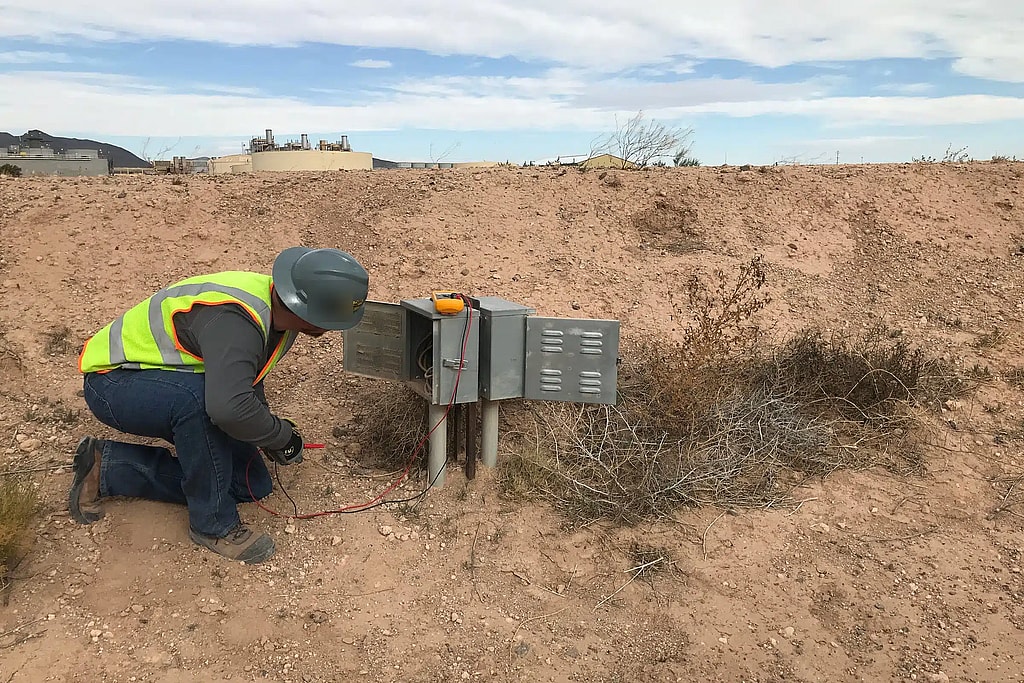
Test station Illustrative
On, instant-off and IR drop at a test station
An interrupter switches the rectifier off for a moment. Read just after switch-off, the instant-off potential has the IR drop removed. Change the current, when the reading is taken, or measure a coupon instead of the pipe.
Neither criterion is met: polarization is under 100 mV and the instant-off reading is short of −850 mV.
The 100 mV polarization criterion is met. The instant-off reading is still short of −850 mV.
The on reading looks protected, but part of it is IR drop in the soil. Instant-off is short of −850 mV; the 100 mV criterion is met.
Both are met: instant-off is more negative than −850 mV and polarization is over 100 mV.
Too early: the switching spike is still in this reading, so it is not yet the polarized potential.
The anode’s current is not interrupted, so this instant-off still holds IR drop and looks more protected than the steel is. A coupon reading avoids this.
Late: the steel has begun to depolarize, so this reading is less negative than the polarized potential.
Taken after the switching spike and before noticeable depolarization: a fair instant-off reading.
The coupon is disconnected, so no current reaches it through the soil: its off reading has no IR drop, even with an anode connected.
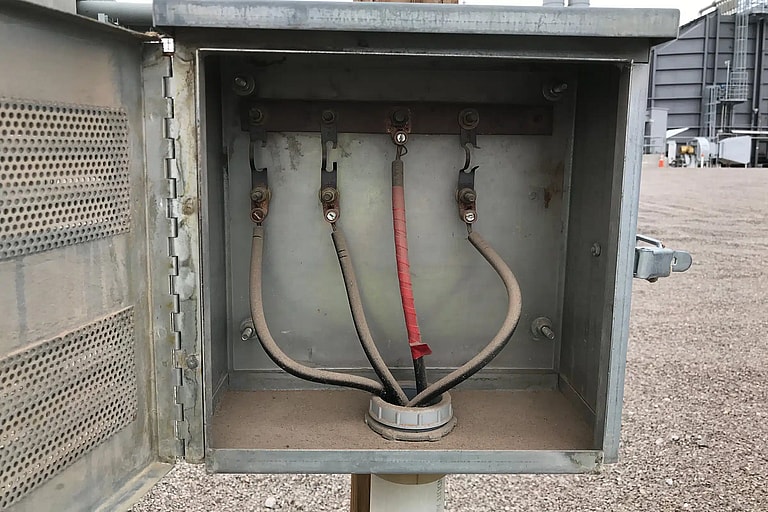
Annual and regulatory
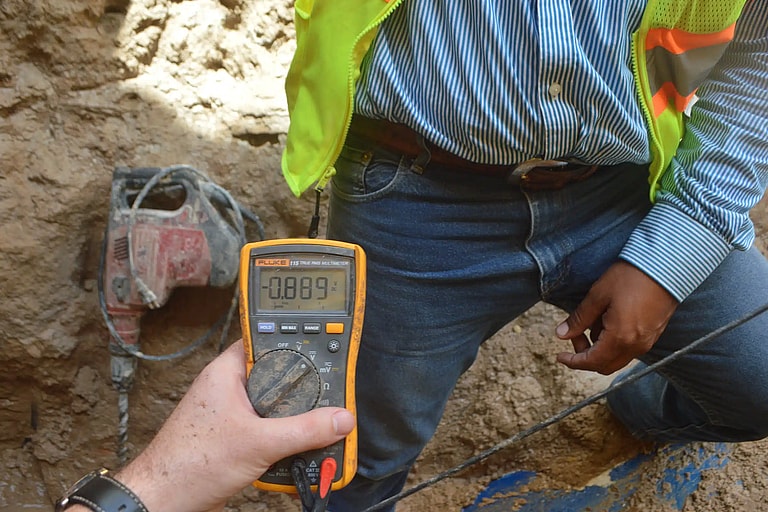
Close Interval surveys (CIS)
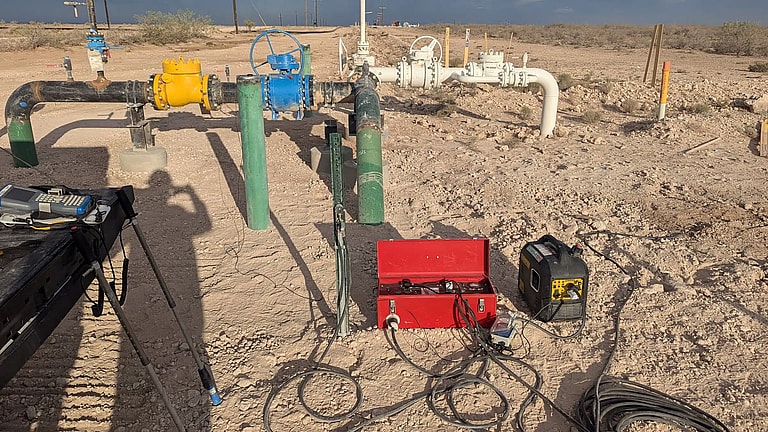
Direct Current Voltage Gradient Survey (DCVG)
Alternating Current Voltage Gradient Survey (ACVG)
On-Potential Surveys
Interrupted Potential Surveys
Cathodic Protection Interference
Direct Assessment
Native Potential Surveys
Alternating Current
Depth of Cover
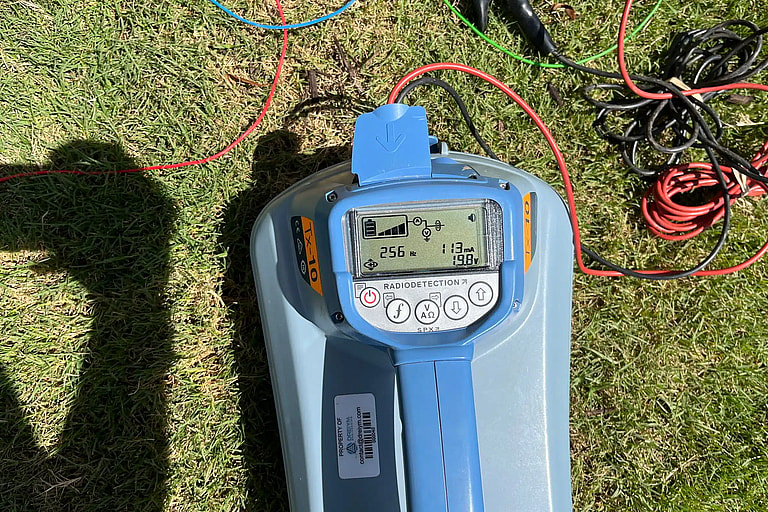
Pipeline locating
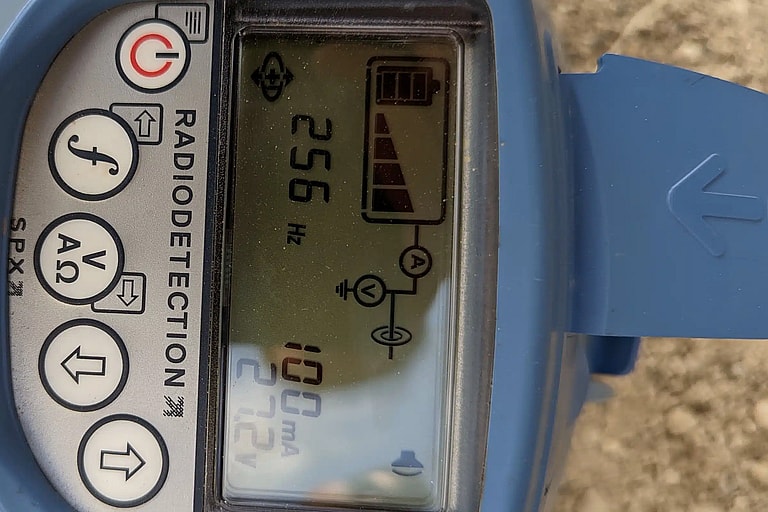
Pipeline current mapping
Protect Your Infrastructure from Corrosion
Cathodic protection surveys and CP testing
A cathodic protection survey measures whether a buried or submerged structure is actually protected. Field crews read The voltage between a buried metal structure and a reference electrode on the soil above it, the basic reading of a CP survey. Readings are compared with criteria such as −850 mV.See the glossary against a copper/copper-sulfate reference electrode and compare them with the AMPP SP0169 (formerly NACE SP0169), Control of External Corrosion on Underground or Submerged Metallic Piping SystemsThe main industry practice for protecting buried and submerged pipe. It covers coatings, CP design, and the criteria used to judge protection, such as −850 mV and 100 mV polarization, with how to measure them.Plain-language summary, not the standard’s wording.See the glossary, such as a polarized potential of An AMPP SP0169 criterion for steel: a polarized potential of −850 mV or more negative, measured against a copper/copper sulfate reference electrode (CSE). It is judged with the IR drop removed, usually on instant-off readings.See the glossary or more negative, or at least An AMPP SP0169 criterion for steel: at least 100 mV of cathodic polarization, the shift from the native or depolarized potential to the polarized potential. It helps where −850 mV is hard to reach, but does not suit every structure, such as mixed metals.See the glossary. The survey shows where protection is adequate, where it falls short and why.
Our cathodic protection survey services cover the annual compliance survey and the specialized surveys that locate problems:
- Close interval surveys (CIS), which read potentials every few feet along a pipeline to find gaps in protection between test stations
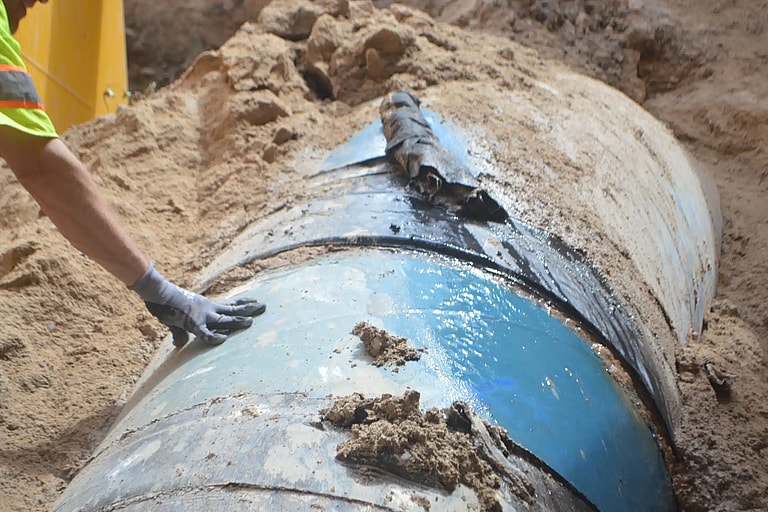
- DCVG coating defect surveys, which locate coating defects and grade how serious each one is
- ACVG coating fault surveys, which locate coating faults with their own AC signal, even before CP is energized
Regulated pipelines have to be tested at least once each calendar year, at intervals not exceeding 15 months (49 CFR 192.465 and 195.573), and rectifiers six times a year. Underground storage tanks with CP are tested every 3 years. We survey pipelines, tanks, docks, water systems and other structures, and we also run interference testing and mitigation.
Annual cathodic protection testing
Our cathodic protection testing services cover the annual survey and the routine checks between surveys:
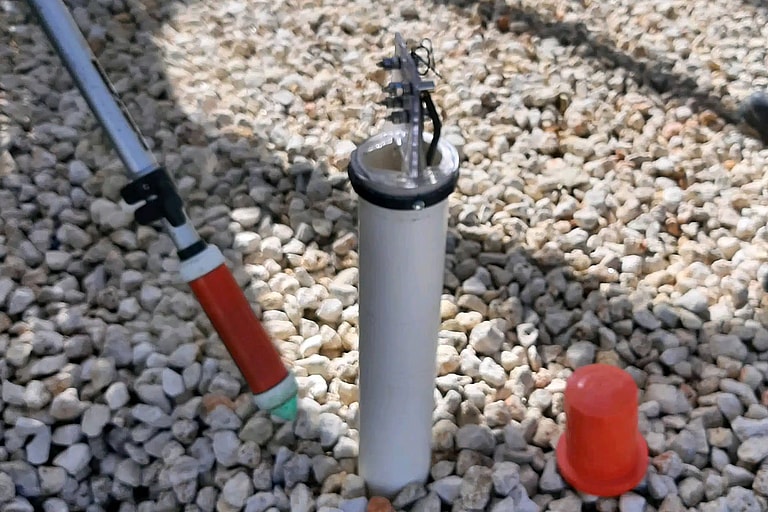
- Pipe-to-soil potential readings at every test station, taken with the current interrupted where the criterion calls for it
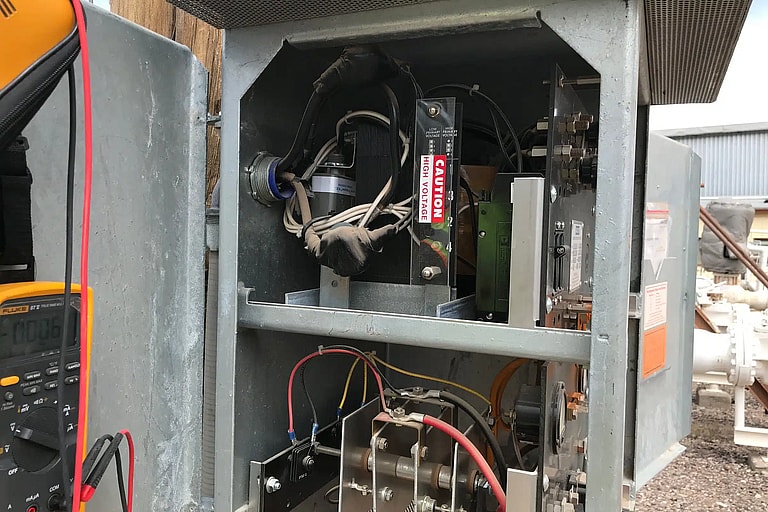
- Rectifier inspections: output voltage and current, tap settings and the condition of the unit
- Bond and isolation checks on critical bonds, insulating joints and casings
- Test station records, updated each year so readings can be compared from one survey to the next
Each reading is compared with the applicable criterion, and the report lists what fell short and why.
New to cathodic protection? Our cathodic protection guide puts our articles, calculators and services in the order to read them.
Contact us for a free quote on your survey. We typically respond within one business day.
Which cathodic protection survey do you need?
Each survey answers a different question, so we start by asking what you need to know.
| The question | The survey |
|---|---|
| Is my structure protected right now? | Structure-to-soil potential survey (on and interrupted off potentials) |
| Where is my coating damaged? | DCVG survey, graded by severity, or ACVG |
| Is the whole line protected, or are there gaps? | Close-interval survey (CIS) |
| Is AC or someone else’s system interfering? | Interference testing and AC gradient work |
| What’s the baseline before CP is turned on? | Native potential survey |
| Is the pipe where the records say it is, and how deep? | Depth-of-cover and current attenuation work |
We’ll help you pick the fewest surveys that get you an answer, then check the data against the NACE criteria and explain what the numbers mean for your system.
The readings and the report
AMPP (NACE) certified personnel take the field readings with calibrated instruments, and a licensed Professional Engineer reviews and interprets the data. The report says whether the structure meets the criteria that apply. It lists the places where readings fall short, in priority order, and recommends the fix. That might be a rectifier adjustment, a bond, a coating repair, or a design change. On regulated work, such as annual pipeline surveys under 49 CFR 192.465 or triennial Colorado UST tests, we format the report for your compliance records, since an inspector may ask for it later. Reports are PE-stamped where required.
When to schedule a survey
- On your compliance cycle (yearly for pipelines, every 3 years for USTs, or whatever schedule your program sets)
- After any CP repair or rectifier change, and after a new installation goes in
- If there’s been construction along the right-of-way, like new utilities or powerline work
- When rectifier output creeps up, potentials drop, or coatings fail and nobody can say why
If your last survey is more than a cycle old, you can’t be sure the system is still working.
The Dreiym difference
You work directly with the engineers who do the survey, not a sales representative who has to check with a manager before anything happens. A licensed Professional Engineer and AMPP (NACE) certified cathodic protection personnel are on site, and our team includes a NACE Cathodic Protection Specialist (CP4). That lets us move from readings to a recommendation quickly, and we can lead the mitigation work too. We serve Texas, Colorado and the surrounding states.
Below are the cathodic protection and corrosion surveys we perform. Every survey is led by a licensed professional engineer.
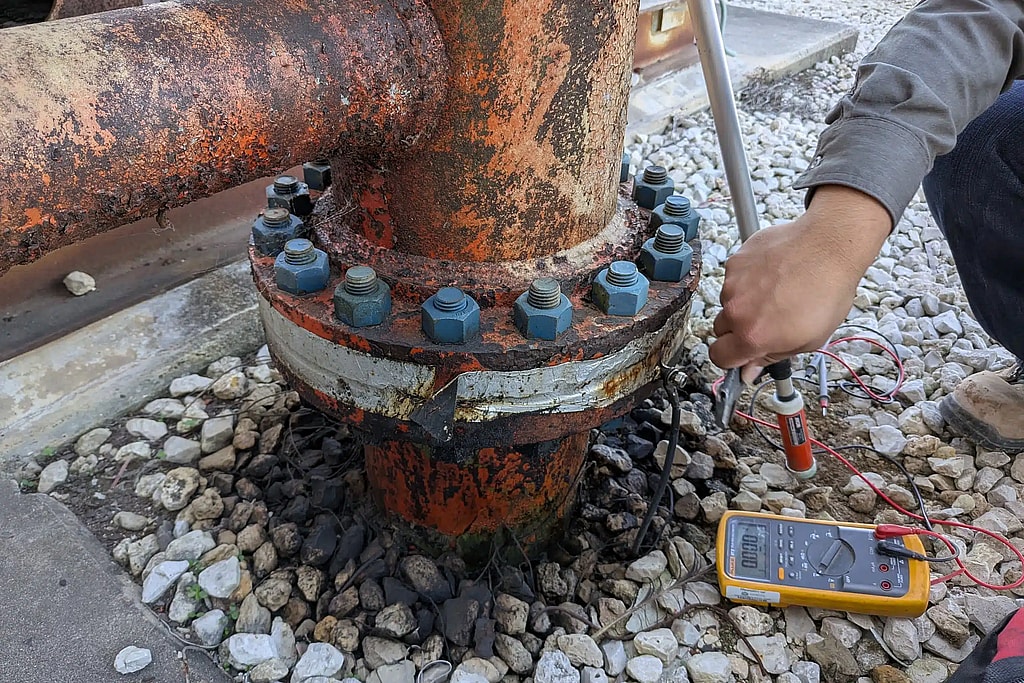
Trust it to Us
We send engineers to personally supervise all cathodic protection testing and surveys under their control.

Ready to Troubleshoot.
We can solve any issue you have.
Get Started with a Quote
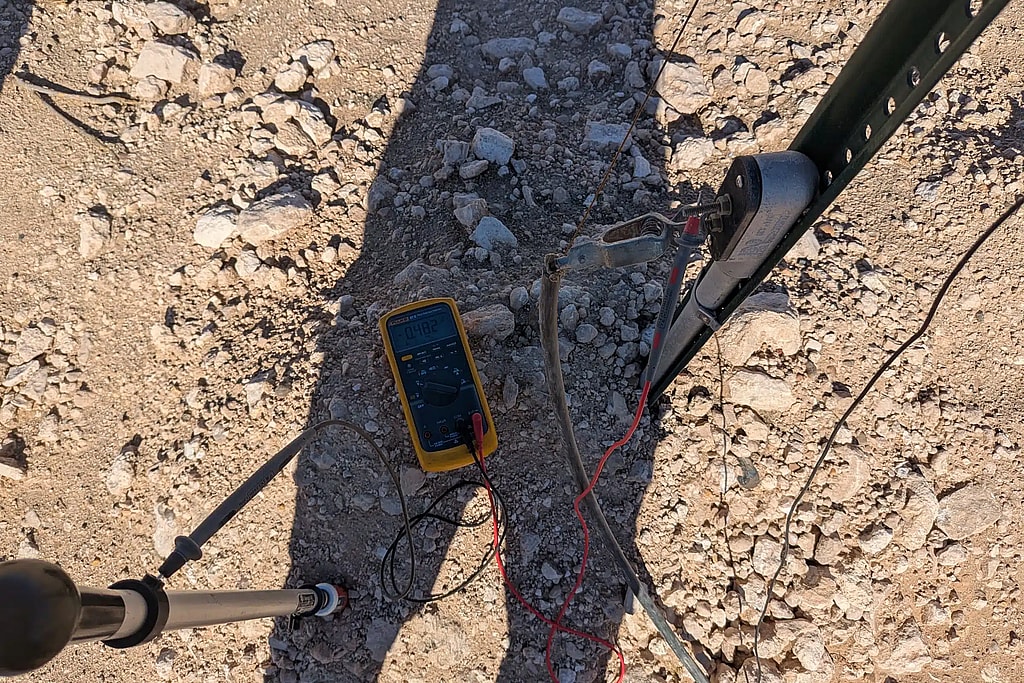
Protect Your Infrastructure with Cathodic Protection Surveys from Dreiym
Corrosion that goes unmeasured is corrosion that goes unmanaged. Dreiym Engineering designs, installs, tests and troubleshoots cathodic protection systems for companies throughout Texas and neighboring states, and our Westcliffe office covers CP surveys in Colorado; see our statewide Colorado pipeline surveys.
Contact us for a free quote. We typically respond within one business day.
Cathodic protection design Illustrative
Turn up the rectifier and watch the pipeline answer
Set the taps, change the coating or add a second station, and see which miles of a 10 mile line meet the −850 mV criterion.
Open the rectifier explorerFrequently Asked Questions
How often does cathodic protection have to be tested?
Gas and hazardous liquid pipelines under 49 CFR Parts 192 and 195 are tested at least once each calendar year, at intervals not exceeding 15 months, and impressed current rectifiers are inspected six times each calendar year. Underground storage tanks with CP are tested within 6 months of installation and at least every 3 years after that. Your integrity program or permit may require more.
What is the difference between an on potential and an instant-off potential?
An on potential is read while the CP current flows, so it includes a The voltage error in a potential reading caused by CP current (I) flowing through the resistance (R) of the soil and coating. It makes on potentials look more protective than they are, so criteria are judged with it removed.See the glossary in the soil. An A structure-to-soil potential read a fraction of a second after the CP current is interrupted, before the steel starts to depolarize. It removes most of the IR drop and is used as the polarized potential.See the glossary is read a fraction of a second after the current is interrupted, which removes most of that drop and shows the structure’s real polarized potential. The −850 mV criterion is judged on the polarized potential.
Which survey finds coating damage?
A defect in a coating that leaves metal exposed to the soil or water, from a pinhole to a large gouge. CP current collects at holidays, and DCVG and ACVG surveys find them.See the glossary are located with a DCVG or ACVG survey. A close interval survey shows where protection is weak along the line, which often points to coating damage or interference.
Who takes the readings and writes the report?
AMPP (NACE) certified personnel collect the data, and a licensed Professional Engineer reviews it and signs off on the findings and recommendations, PE-stamped where required.
Where do you work?
Our offices are in Coldspring, Texas and Westcliffe, Colorado, and we survey across Texas, Colorado and neighboring states. Request a free quote. We typically respond within one business day.
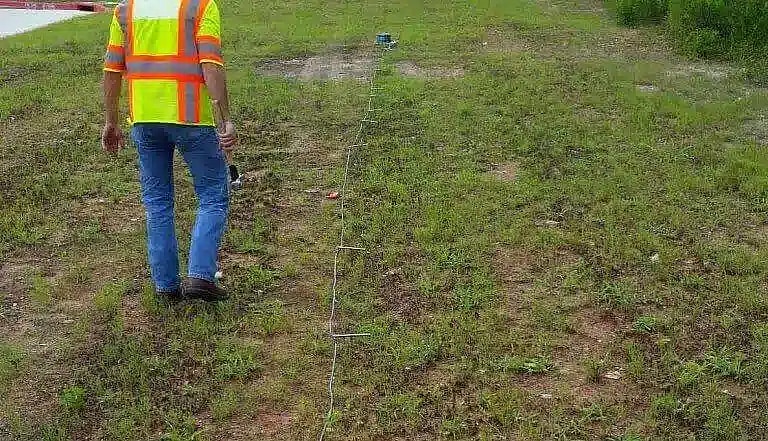
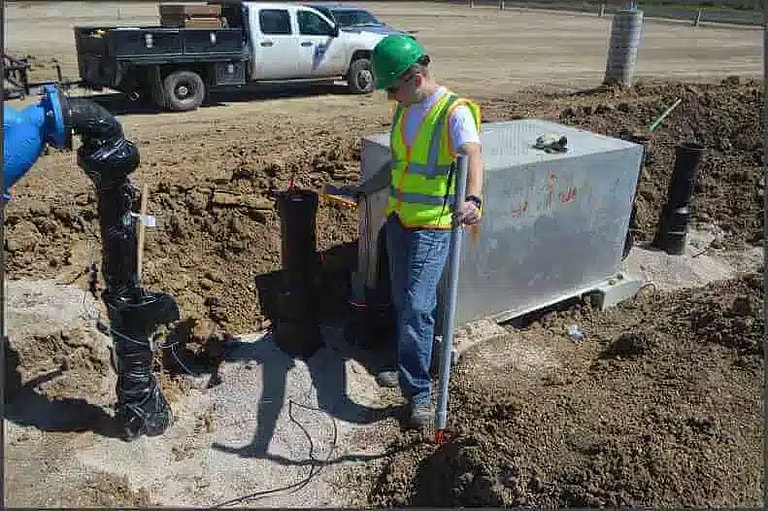
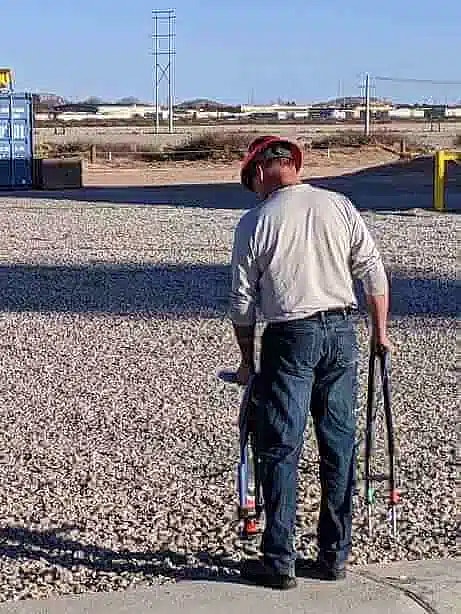
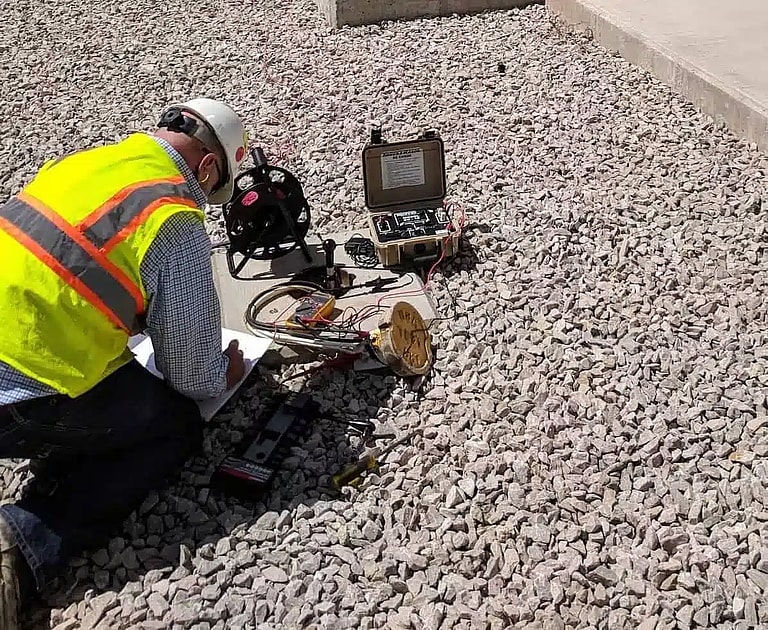
Cathodic Protection Survey Pictures






Related Reading
- Annual Cathodic Protection Survey: What 49 CFR 192.465 Requires and What to Expect
What 49 CFR 192.465 and 195.573 require of an annual cathodic protection survey: intervals, criteria, rectifier and bond checks, records and repairs.
- How To Interpret Cathodic Potential Protection Survey Data
Learn how to interpret cathodic protection survey data (on, instant-off, and depolarized potentials) and what the -850 mV criterion means for your pipeline.
- Why Cathodic Protection Systems Stop Working: 7 Problems Operators Should Know
Cathodic protection systems fail quietly. Here are 7 common causes, from rectifier faults to stray current, and the test readings that flag trouble early.
Related Services

Start-Up and Commissioning
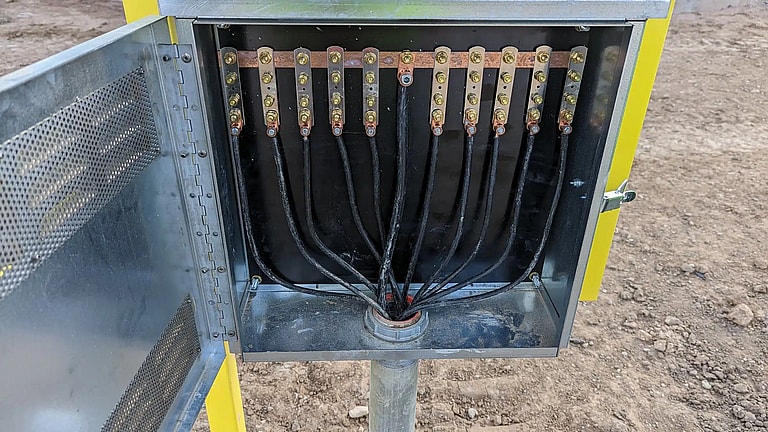
Corrosion Control Design
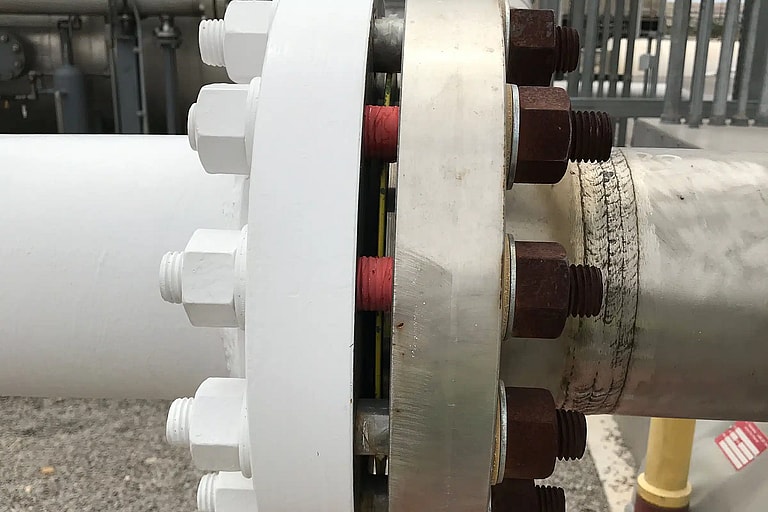
Interference Testing
Project experience
Related projects
El Paso, TX
Follow-Up CP Survey of Gas Lines at a Power Station, El Paso
CP survey, rectifier adjustment
Austin, TX
Gas Line Holiday Testing, CP Start-Up and a Chilled Water Survey, Austin
Holiday testing, CP start-up, CP survey
Eastland area, TX
Annual CP Survey and Ground Patrol of a Gas Line, Eastland Area
CP survey, ground patrol
Highland Lakes area, TX
CP and Ground Grid Survey at a Power Plant, Highland Lakes Area
CP survey, ground grid survey
Central Texas
Low CP Readings on a Crude Pipeline in a Gravel Trench, Central Texas
CP troubleshooting, coupons
El Paso, TX
Annual CP Surveys at a Power Station, El Paso
Annual CP surveys
Get your project started
We typically respond within one business day.