Benefits of Ground Testing Your Commercial Building
The benefits of commercial building ground testing, from preventing shocks and arc flash to protecting equipment against surges and lightning.
Reach out to Dreiym Engineering for any Corrosion, Electrical or Forensic Questions.
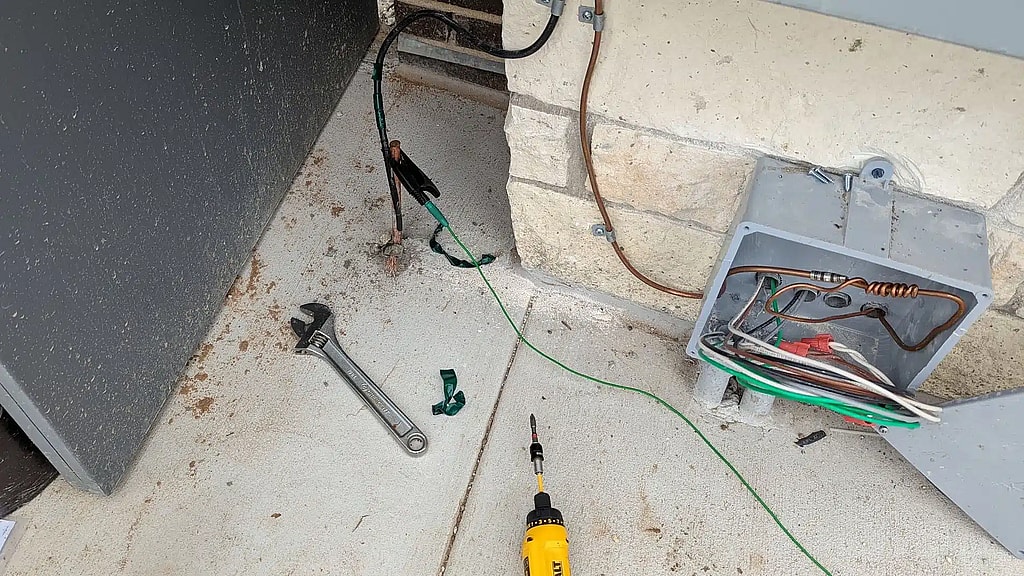
Electricity can do real harm when something goes wrong, which is why businesses all over the world have their electrical systems tested to cut down on specific risks. Ground testing your commercial building is one of those tests, and it helps to know what it is and isn’t before you schedule one.
What Ground Testing Covers
Ground testing isn’t a procedure in the National Electrical Code. The NEC® sets the rules for how grounding electrodes are built and installed. That includes the 250.53(A)(2) exception: if a single rod, pipe, or plate electrode has a resistance to earth of 25 ohms or less, no supplemental electrode is required. But the code doesn’t give a test method, and it doesn’t call for periodic retesting. The test methods come from IEEE Std 81, and for substations, IEEE Std 80 sets the step- and touch-voltage criteria. Before design, soil resistivity is measured with a four-point Wenner test so the grounding system can be sized. After installation, fall-of-potential, selective, or clamp-on testing is used to check the grounding electrodes, and it’s repeated on a schedule the facility’s maintenance program sets.
Connecting the system to earth limits the voltage that lightning and line surges put on it and keeps the system’s voltage to earth stable. That connection isn’t the path that clears a fault, though. Fault current goes back to its source over the equipment grounding conductor and the bonding path, and that low-impedance return path is what lets an overcurrent or ground-fault device operate. So ground testing has two parts. One measures the electrode system’s resistance to earth. The other uses continuity and bonding checks to confirm that the equipment grounding conductors and bonding jumpers are intact and still low in impedance. A high reading, or one that rises from one test to the next, points to a corroded or broken conductor, a loose connection, a damaged electrode, or dry soil with high resistivity. An electrical engineering company then compares the readings with the design values and the facility’s acceptance criteria and recommends what to fix.
A Safer Workplace
Nobody wants to work somewhere more dangerous than it needs to be, so employee safety is a good reason for regular ground testing in commercial buildings. A person gets a shock when they become part of a circuit, and grounding doesn’t prevent that by itself. Grounding and bonding lower the risk indirectly. They hold metal that isn’t meant to carry current close to earth potential. They also give fault current a low-impedance path back to the source, so the overcurrent or ground-fault device operates quickly. How bad a shock is depends on the path the current takes, how much of it flows, and for how long. Hand-to-hand currents of roughly 9 to 25 mA can leave a person unable to let go, and currents on the order of 100 mA, flowing for a second or more, can cause ventricular fibrillation. Higher currents and longer exposures add burns and deep tissue injury. Ungrounded systems carry a different risk. A single line-to-ground fault on one of them doesn’t draw enough current to operate the overcurrent protection, so it can sit there undetected. If the fault is intermittent and keeps restriking, it puts transient overvoltages on the system that stress insulation elsewhere. If a second fault develops on another phase while the first is still there, you have a phase-to-phase fault, which is one of the ways an arcing fault and arc flash start. Loose or corroded connections are a separate ignition risk. Their high impedance makes them heat up under load, and they can arc. Testing is how you find out whether the intended paths are still there. Soil resistivity is measured before design, and the installed electrodes and bonding are verified at commissioning and then retested on the interval in the owner’s electrical maintenance program. NFPA 70B describes that kind of program.
Protecting Equipment
Keeping employees safe comes first for any building manager, but ground testing isn’t only about preventing injuries. Grounding and bonding, together with surge protective devices, limit the voltage a surge puts on connected electrical equipment, and testing confirms that those low-impedance paths still exist. A surge protective device diverts surge current into the conductors and reference it’s bonded to. If one of those connections is corroded, or the bonding conductor is long and high in impedance, the voltage left across the equipment the device is meant to protect goes up. Poor bonding also leaves interconnected equipment at different reference potentials, and that difference can damage electronics and corrupt data on the signal circuits running between them. Still, no grounding system makes a building immune to lightning. Limiting damage during lightning strikes and storms also means bonding every system to a common reference and having coordinated surge protection at the service and at branch equipment. Where the exposure warrants it, the building needs a lightning protection system installed in accordance with NFPA 780.
Ground testing your commercial building is about protecting your employees and your equipment. The readings are your evidence of whether the grounding and bonding system still matches its design. If you’d like help with the testing and commissioning of grounding systems, contact our team at Dreiym Engineering.